Shoreham Cement Works
May 2021 | England | Extant
The first Vickers-Armstrong rotary kilns ever built…
***
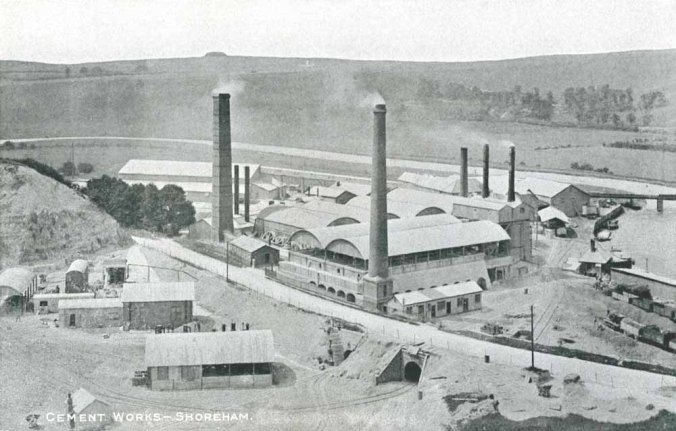
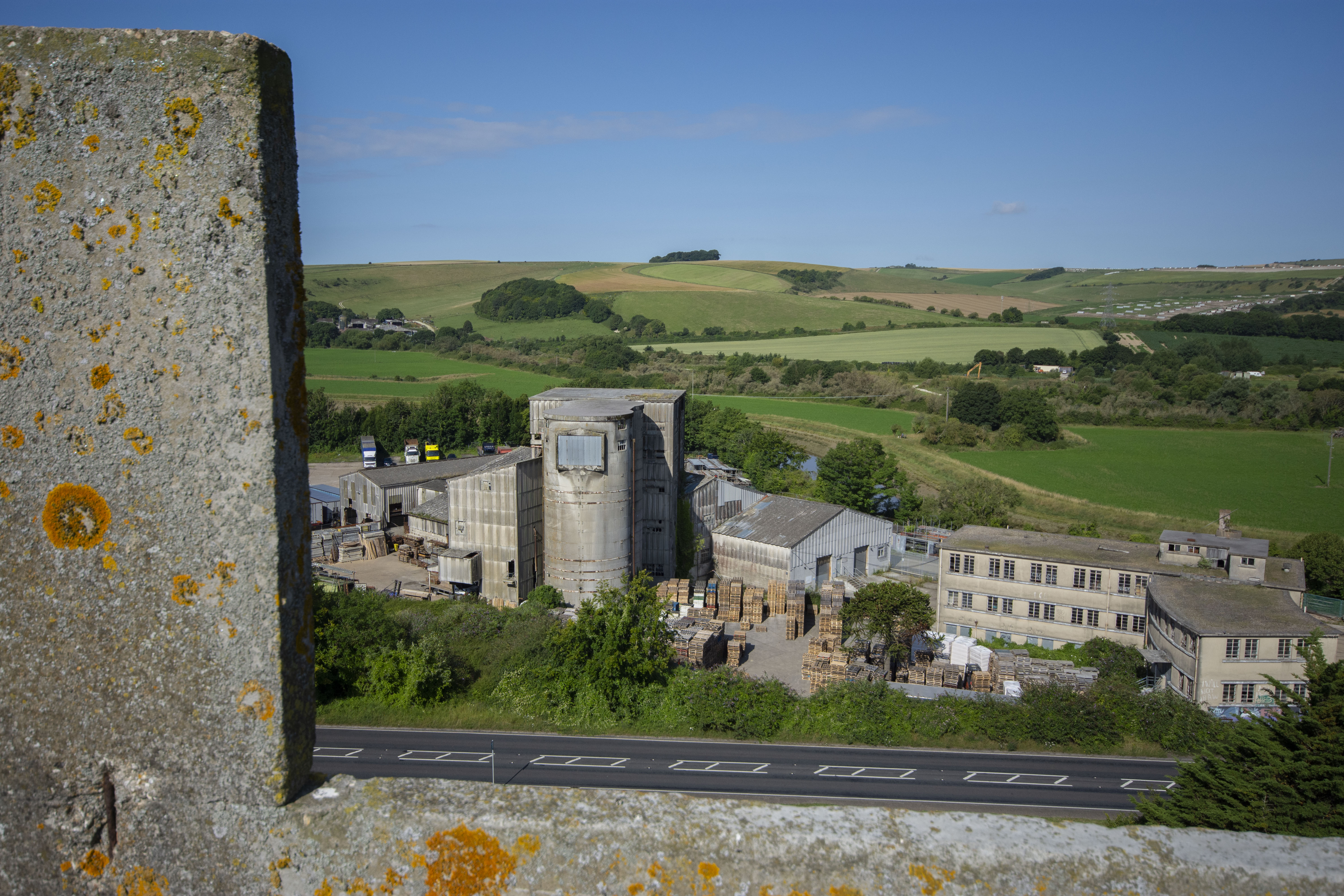
HISTORY: The current cement works at Shoreham is sited within the Beeding Chalk Pit which has been used since 1725. In 1878, the Beeding Portland Cement Company was founded and began cement production at the site in 1883, with production capacity of 144 tonnes of cement per week. This old cement works was situated on the site of the current packing plant.
Right: the original Shoreham Cement Works.
The facility was extended in around 1902 which included the construction of several rotary kilns and wash mills, bringing up the production capacity to around 800 tons a week. A railway spur was built, enabling cement and ingredients for production to be transported by rail to the site. In WWII, the cement works was shut down.
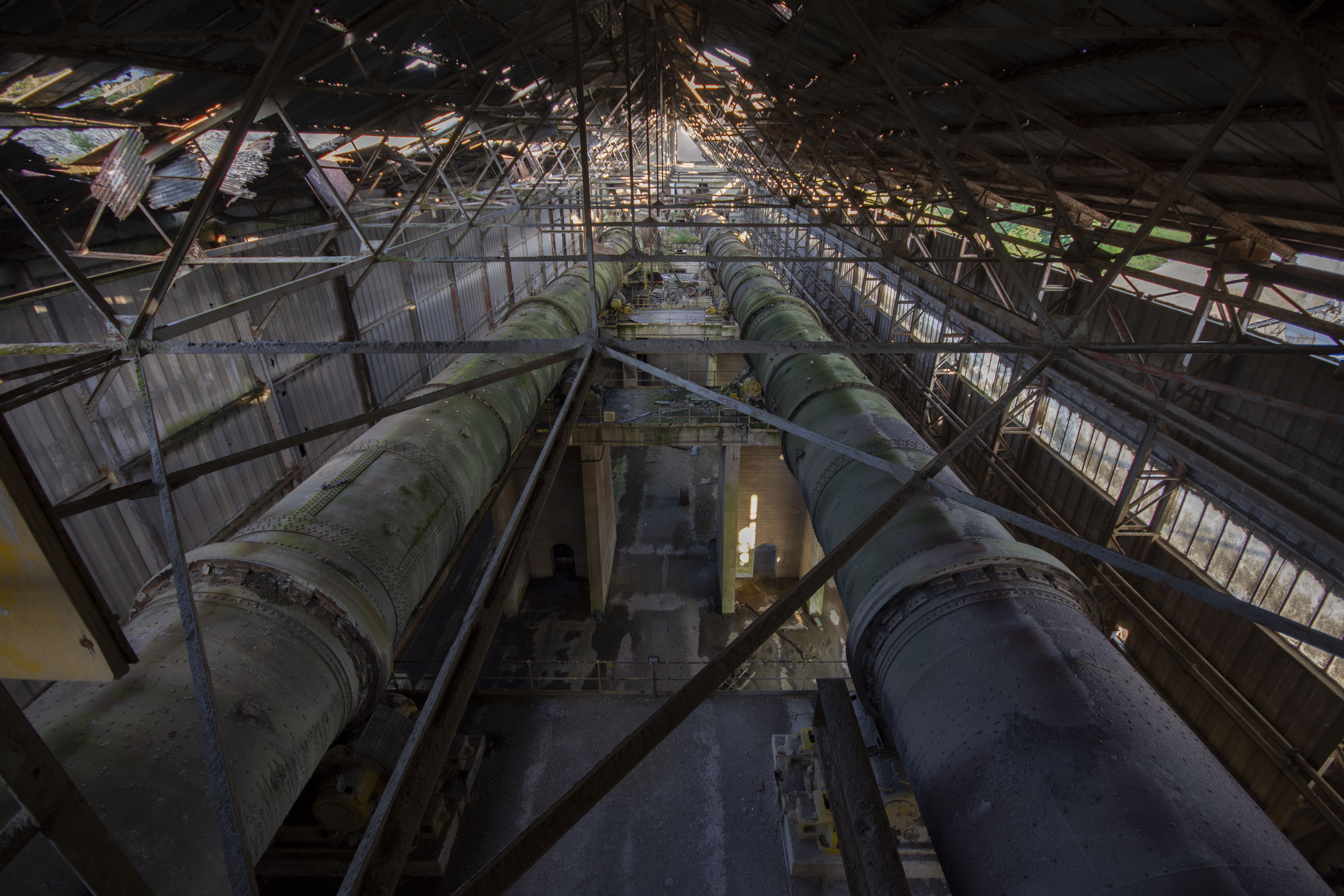
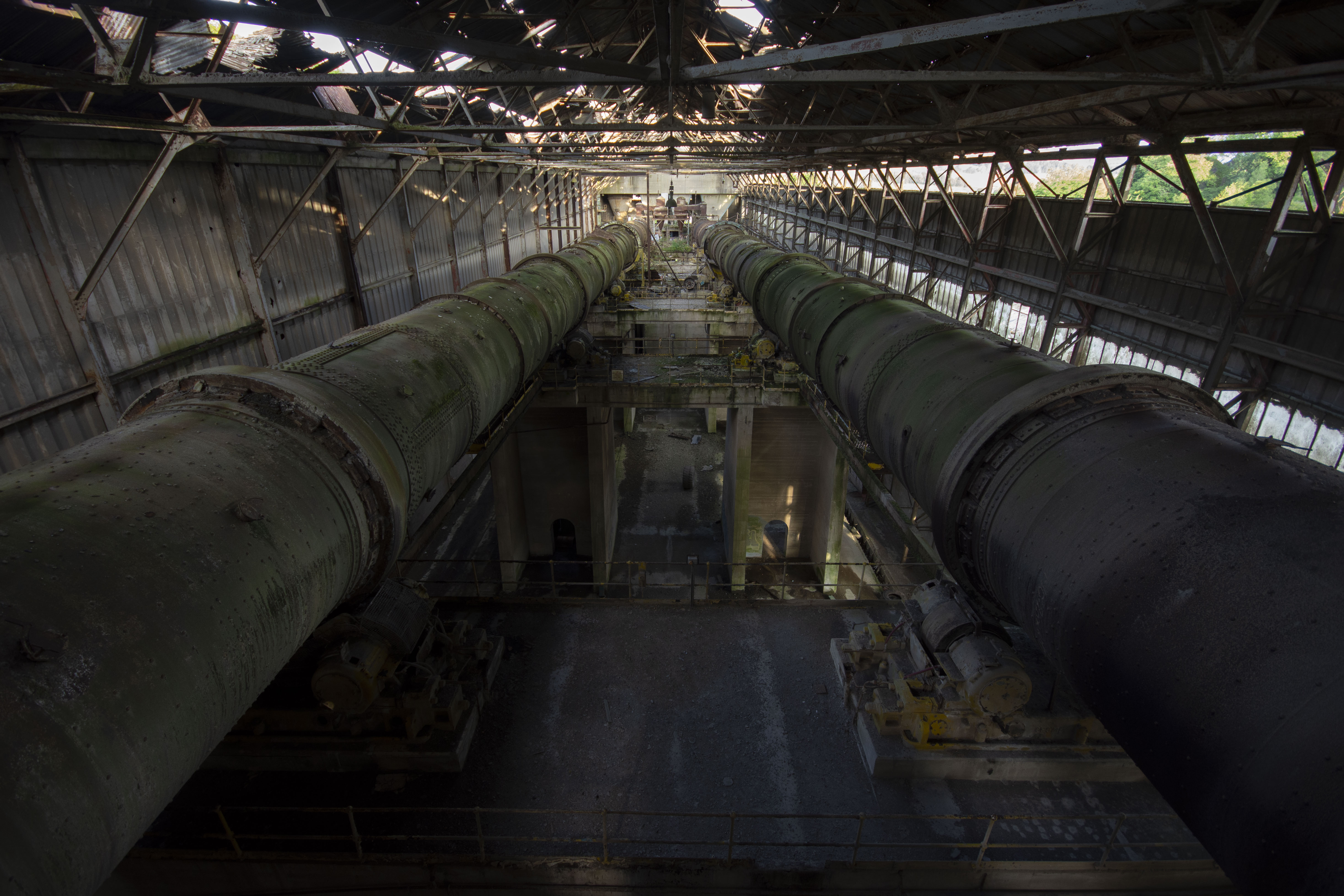
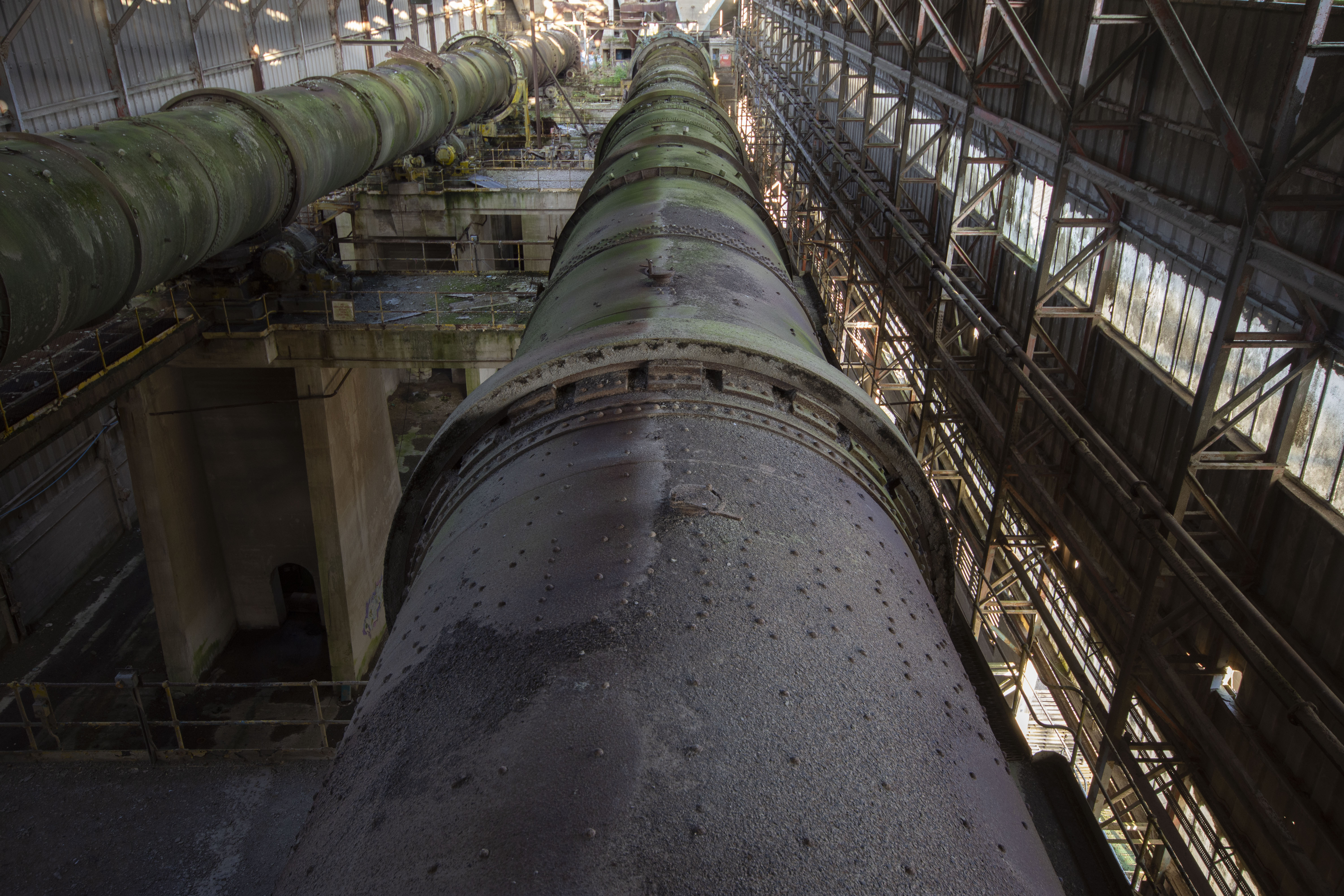
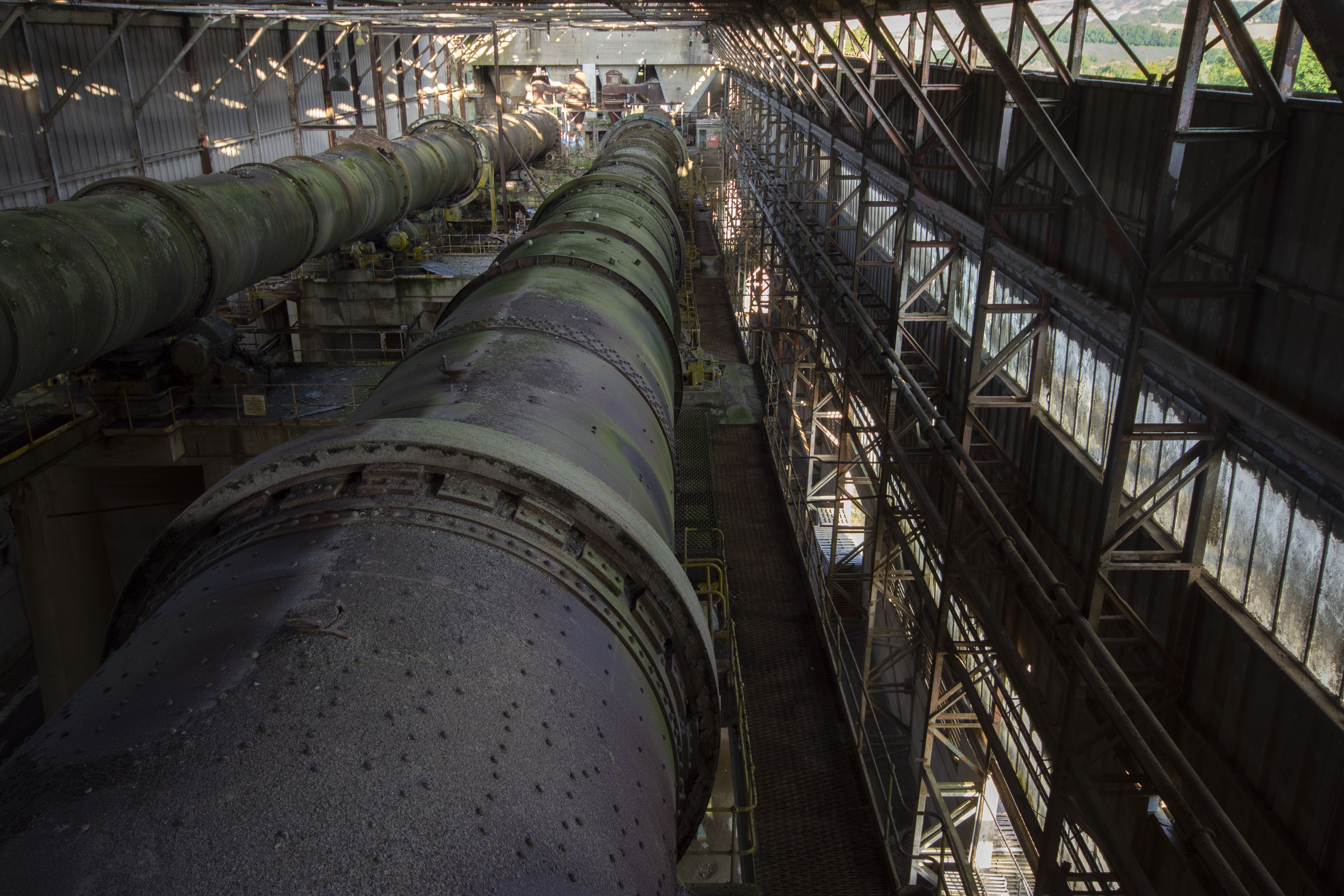
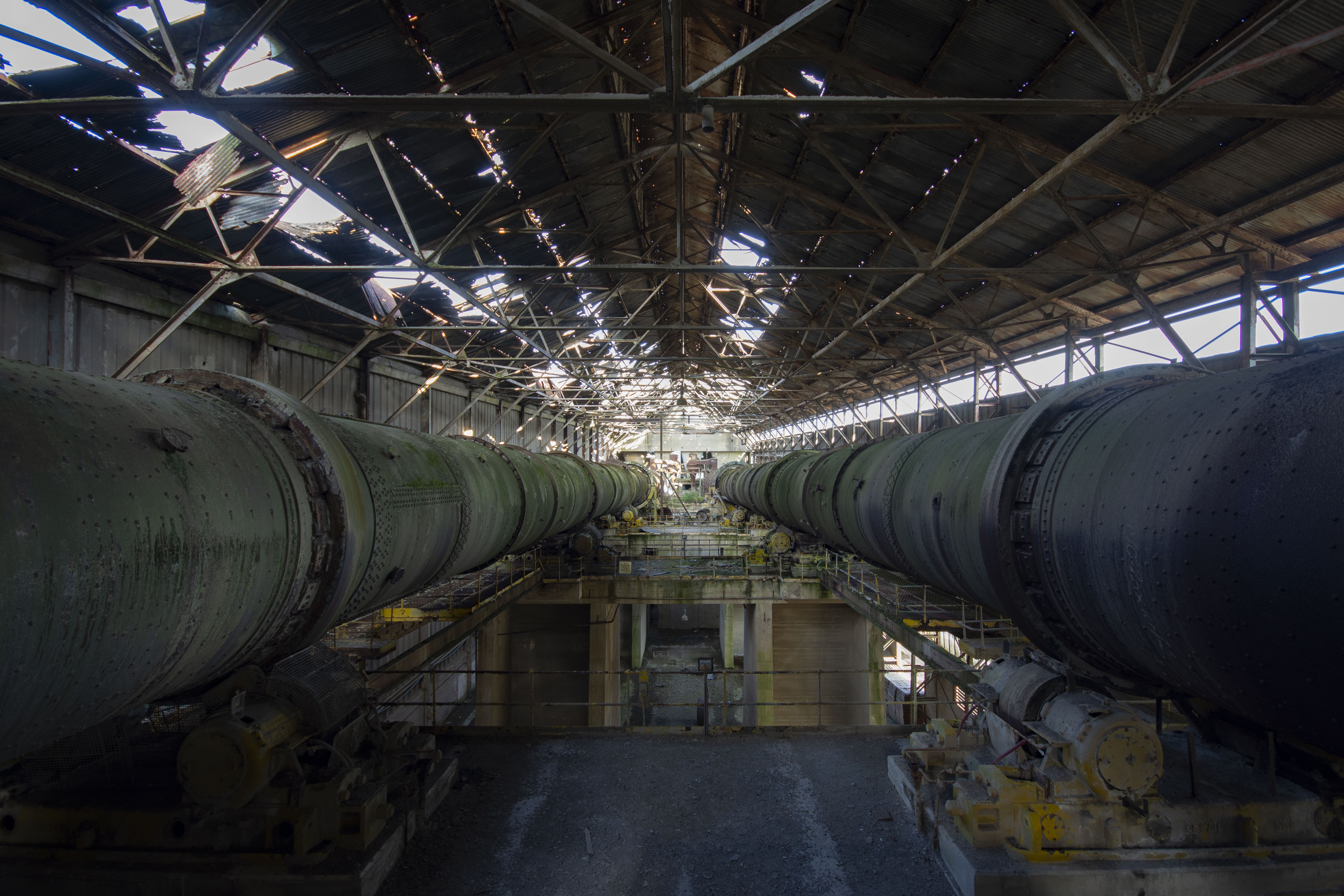
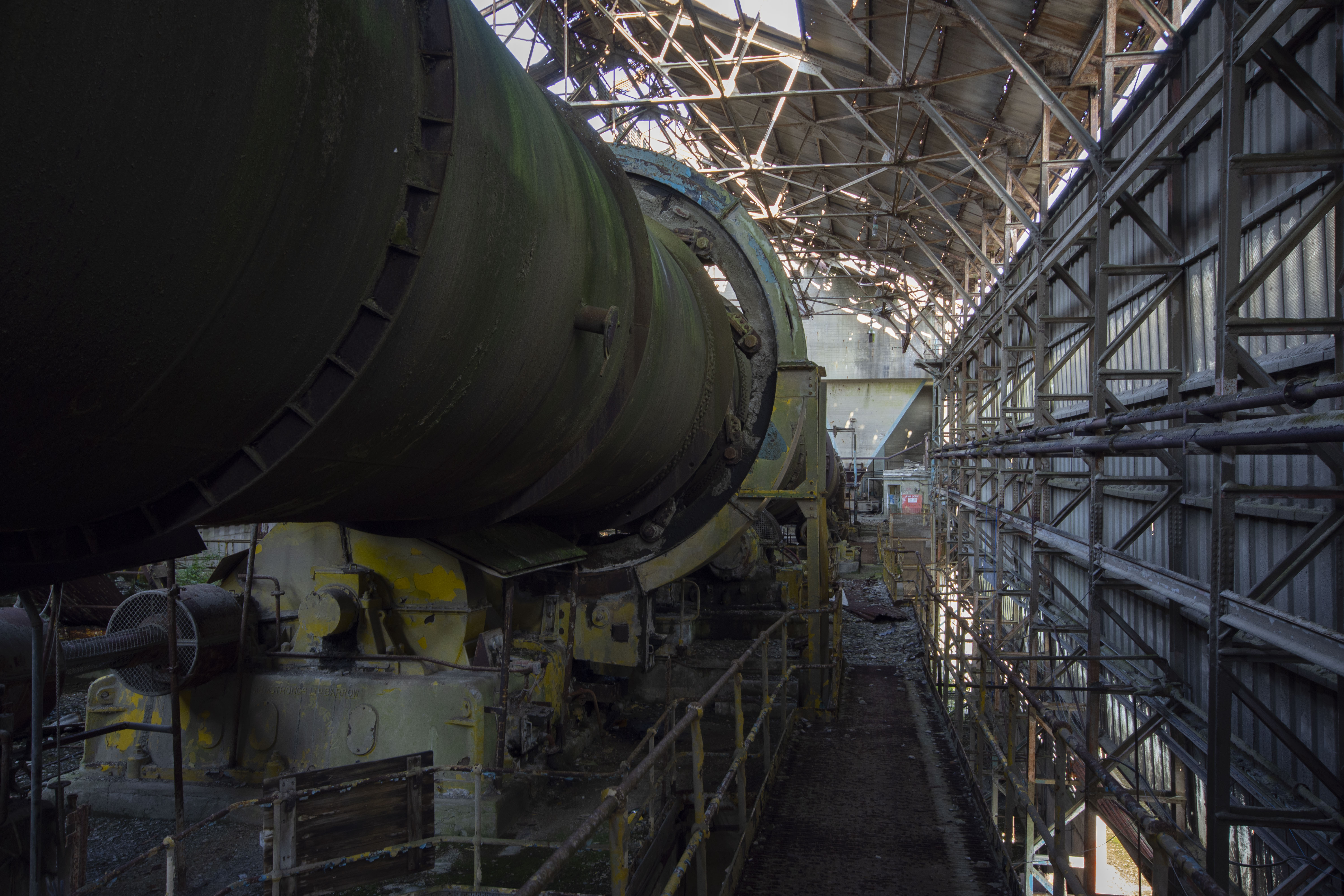
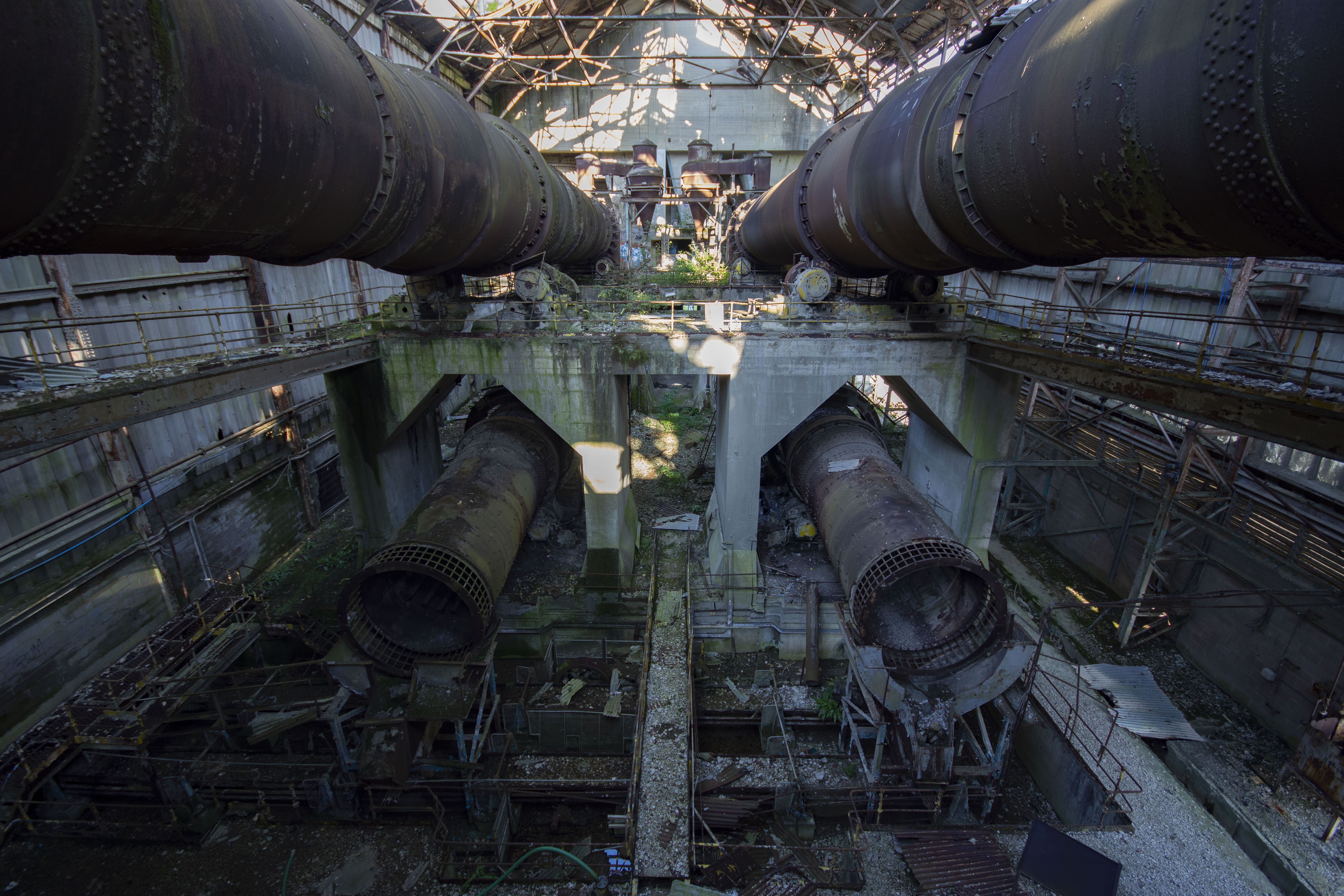
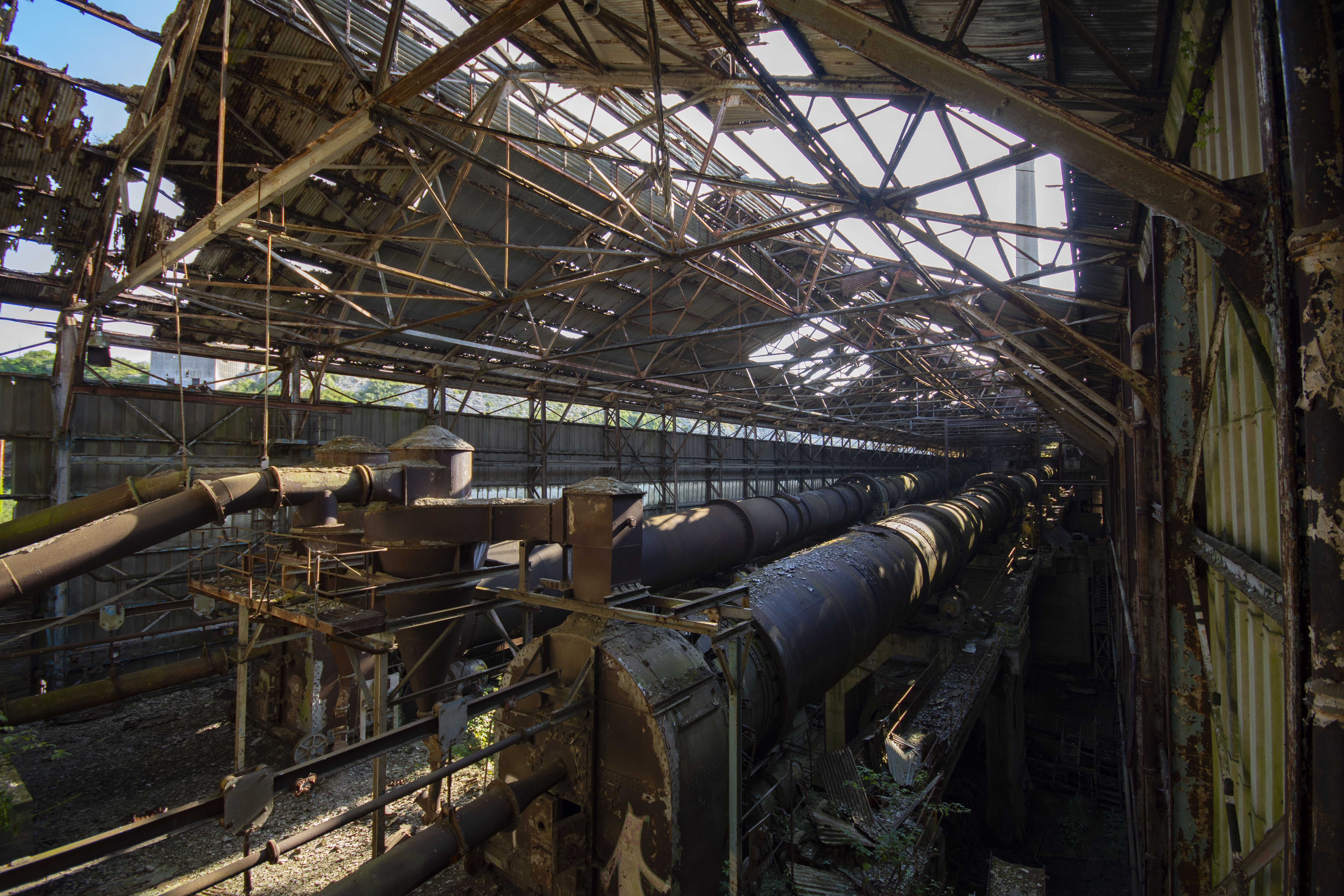
The cement works was completely rebuilt in the chalk pit across the road from the old site between 1946 and 1952, to accommodate the rising demand for cement after the Second World War, and was re-named the Shoreham Cement Works. New sections of the new factory comprised of two 110 meter long Vickers-Armstrong rotary kilns, chalk crushing plant, wash mills (now demolished), mixing plant (also demolished) and a dozen cement storage silos to the south of the main cement works.
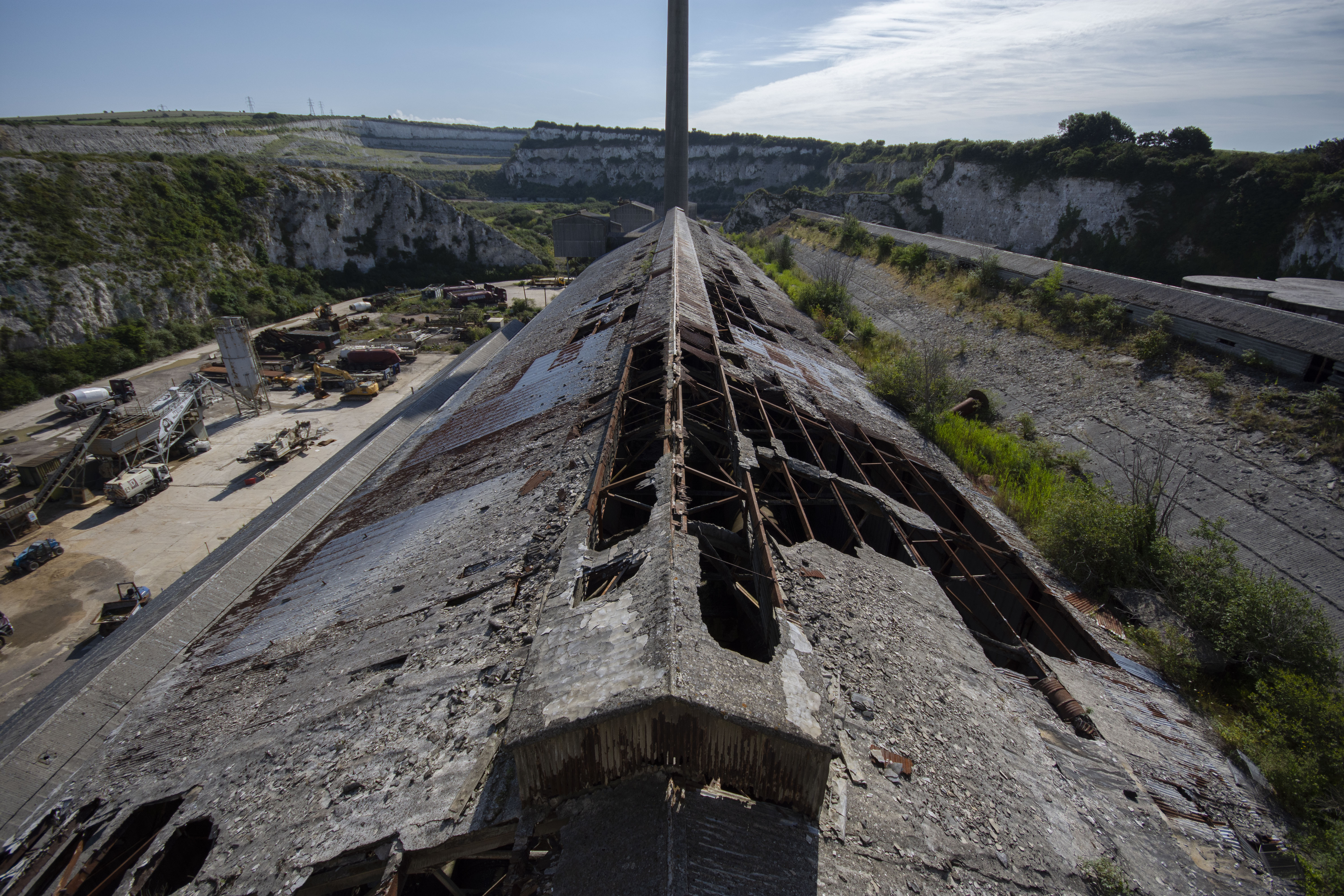
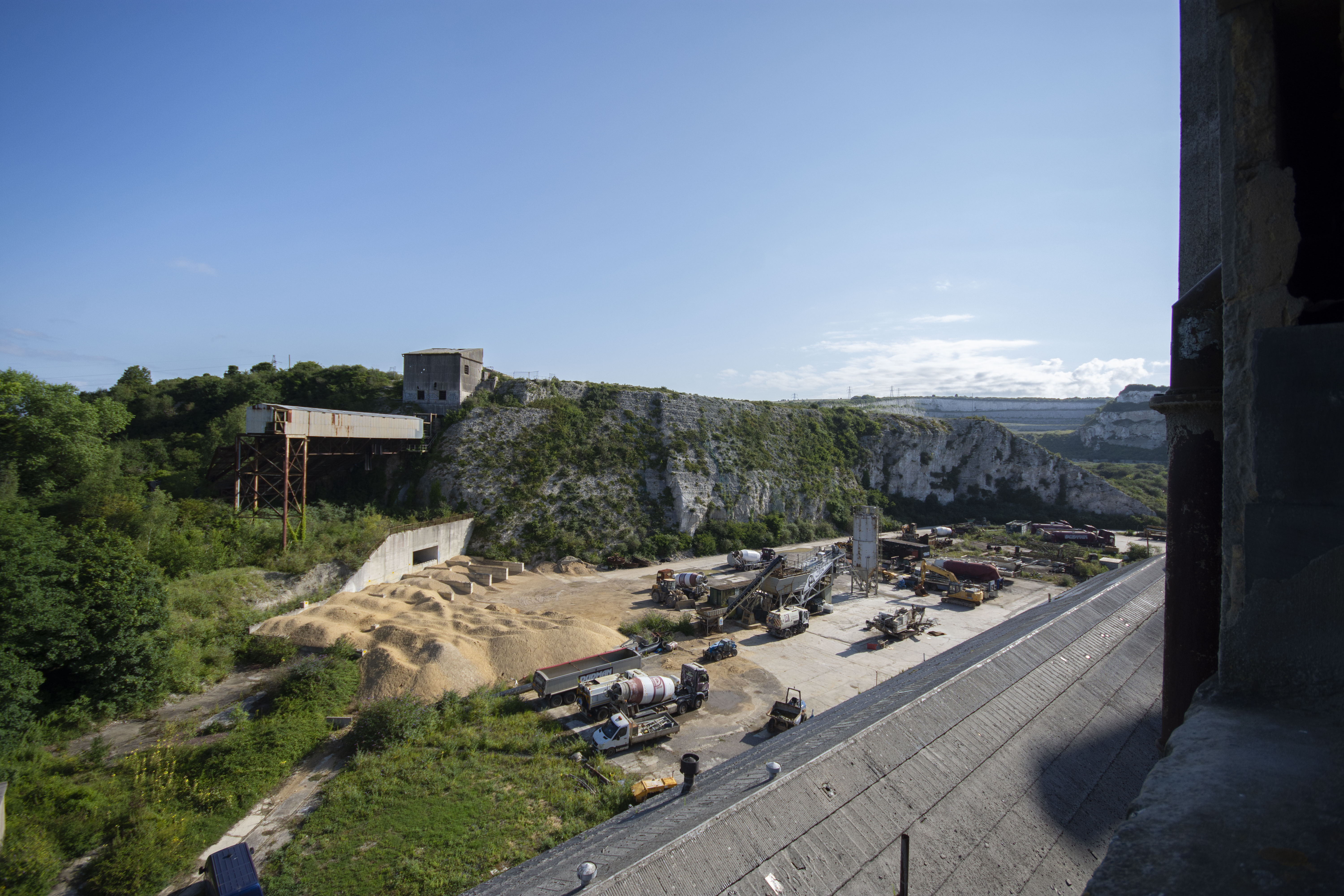
Production of cement carried on until 1991, when the cement works was closed down due to not being able to compete with newer, more efficient cement plants. There were also concerns at the amount of dust the works produced which settled on the surrounding landscape. Since the closure 33 years ago as of 2024, the site has sat derelict and has been increasingly reclaimed by nature. The vast buildings are situated within an industrial aggregates and lorry storage yard.
***
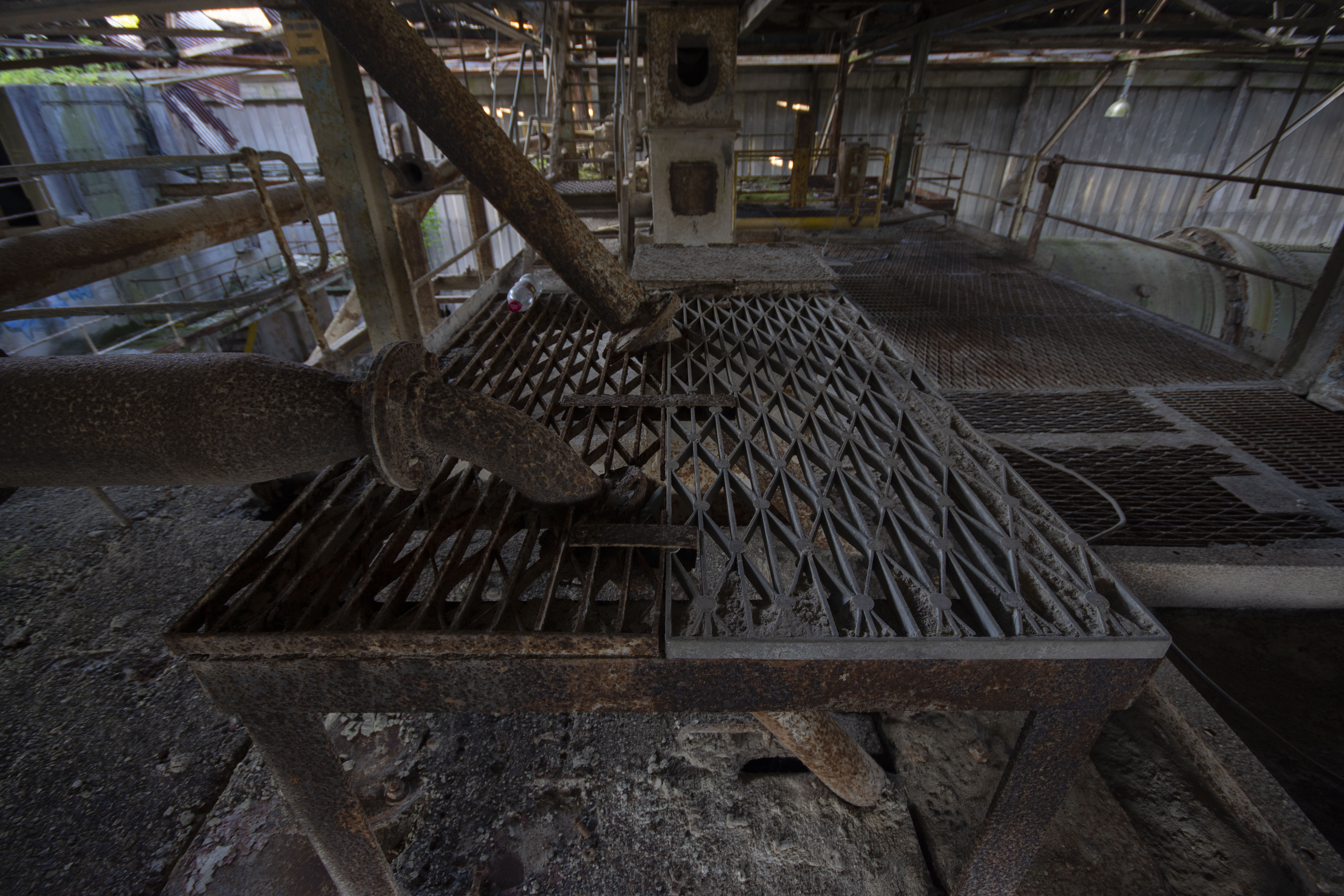
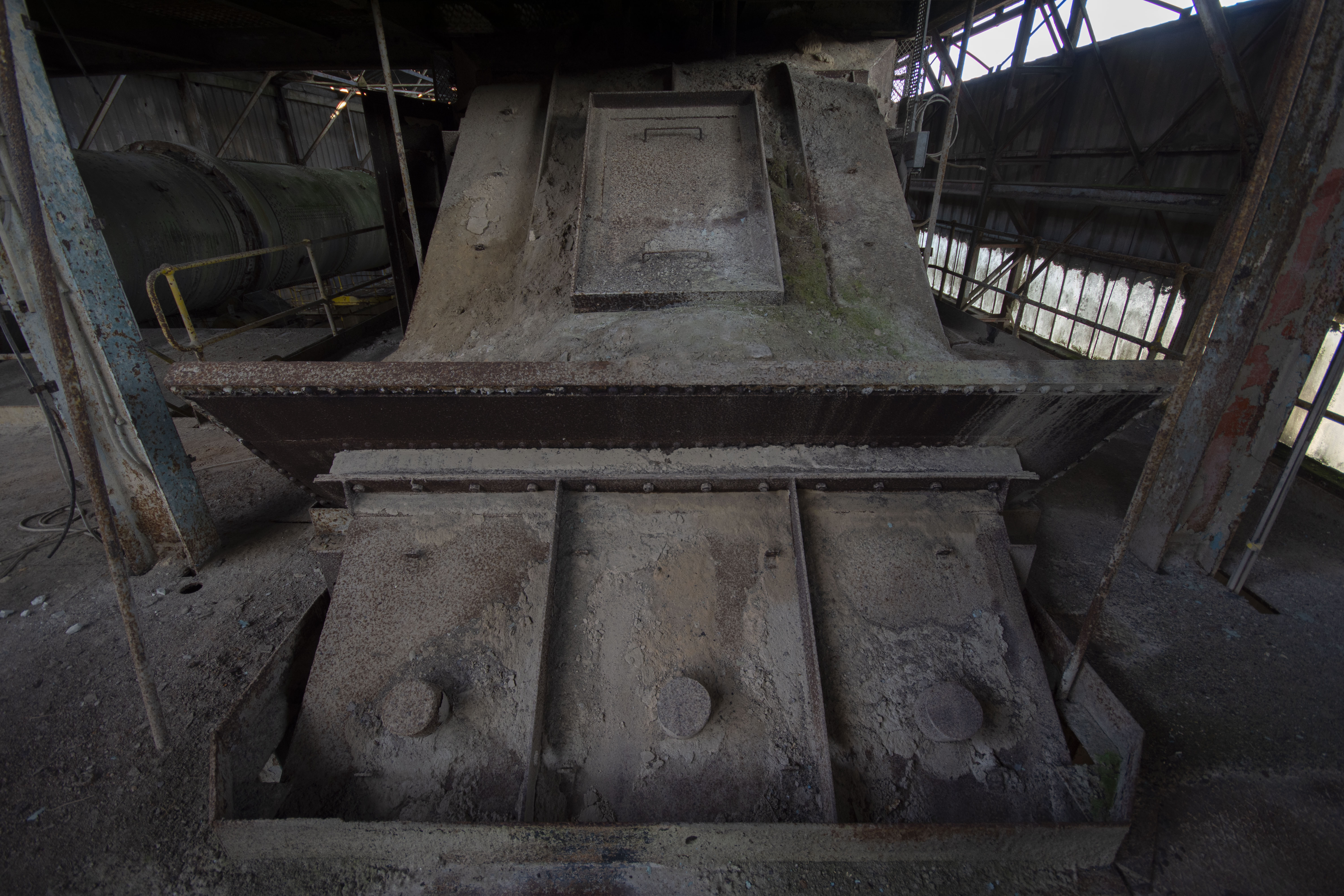
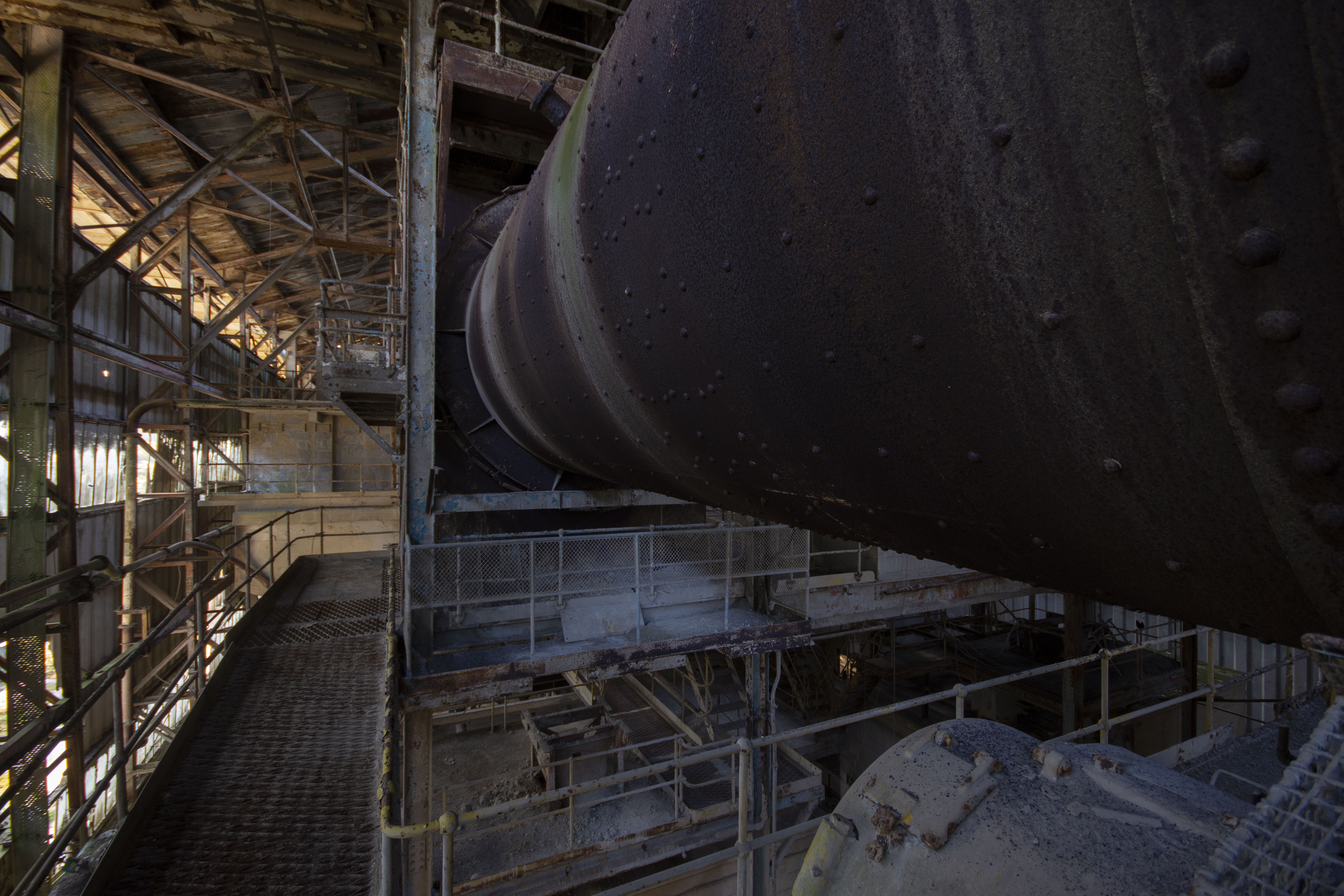
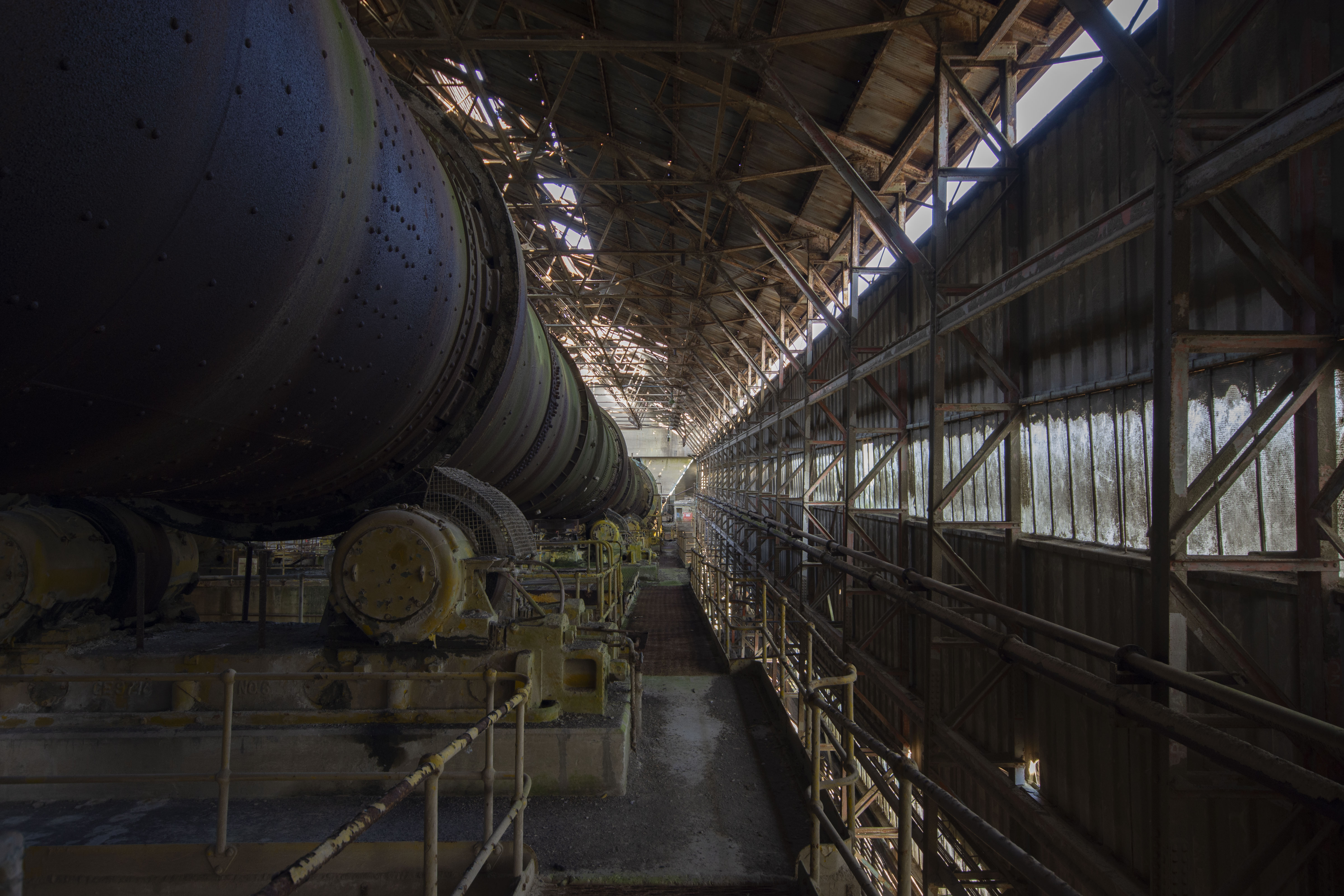
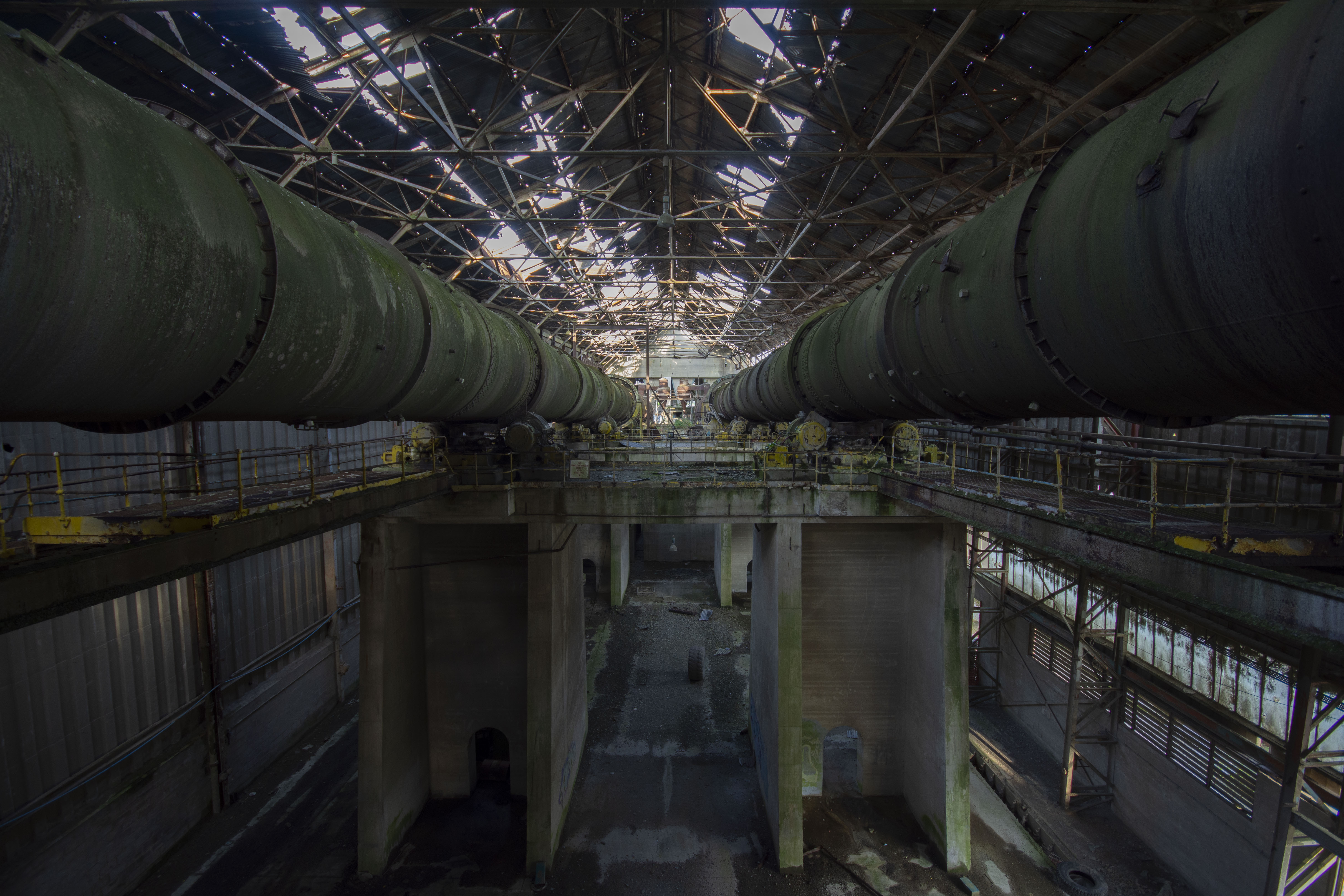
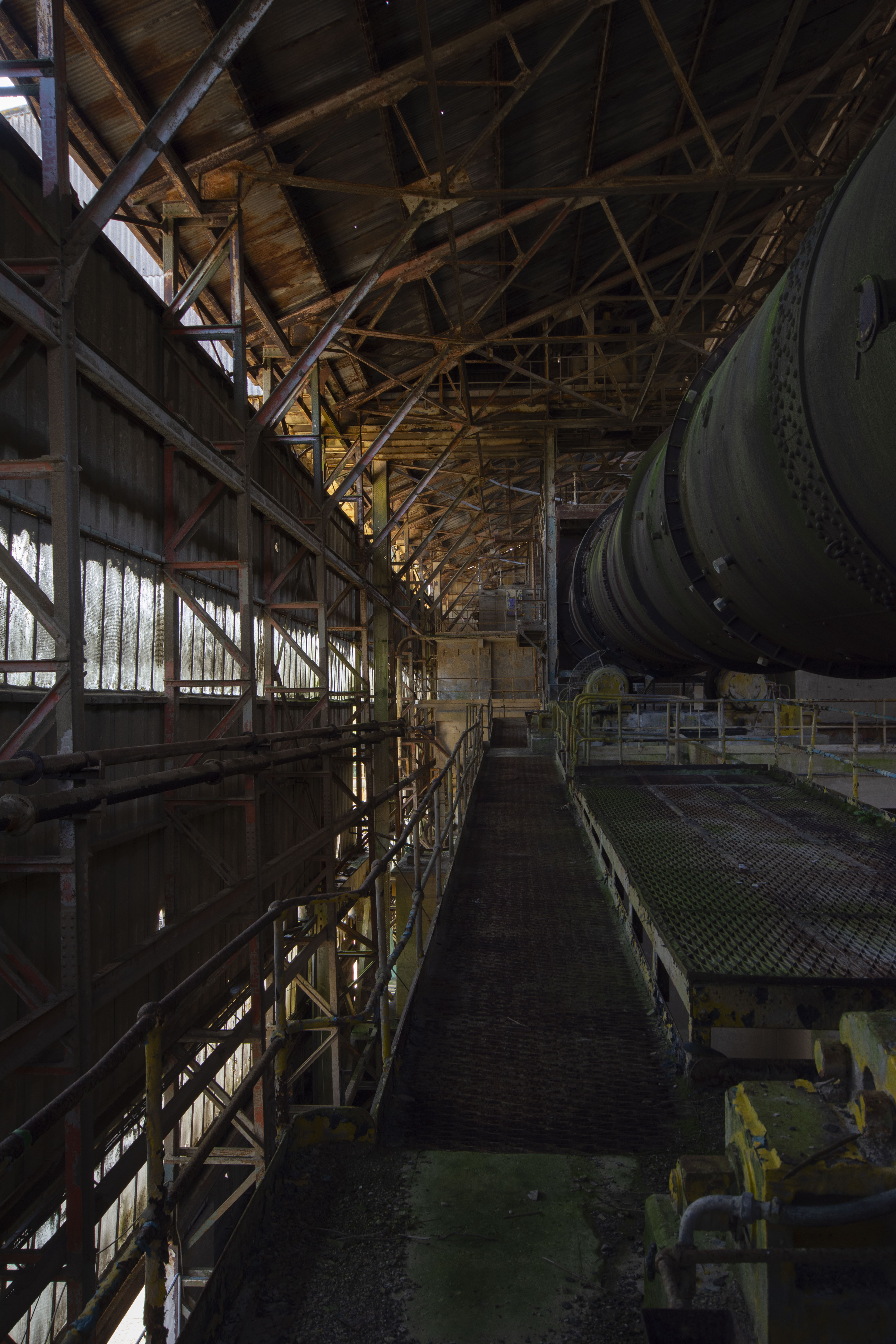
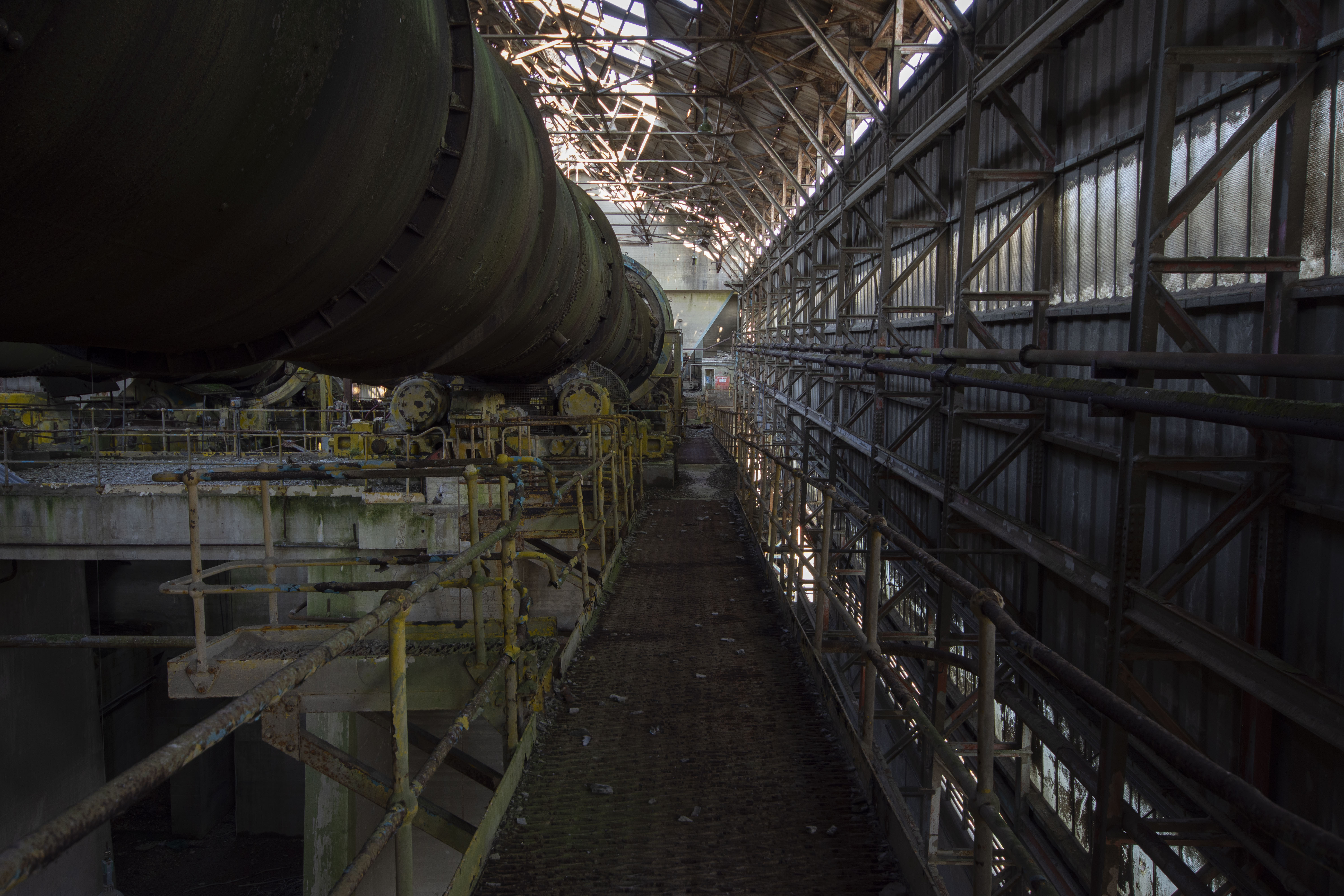
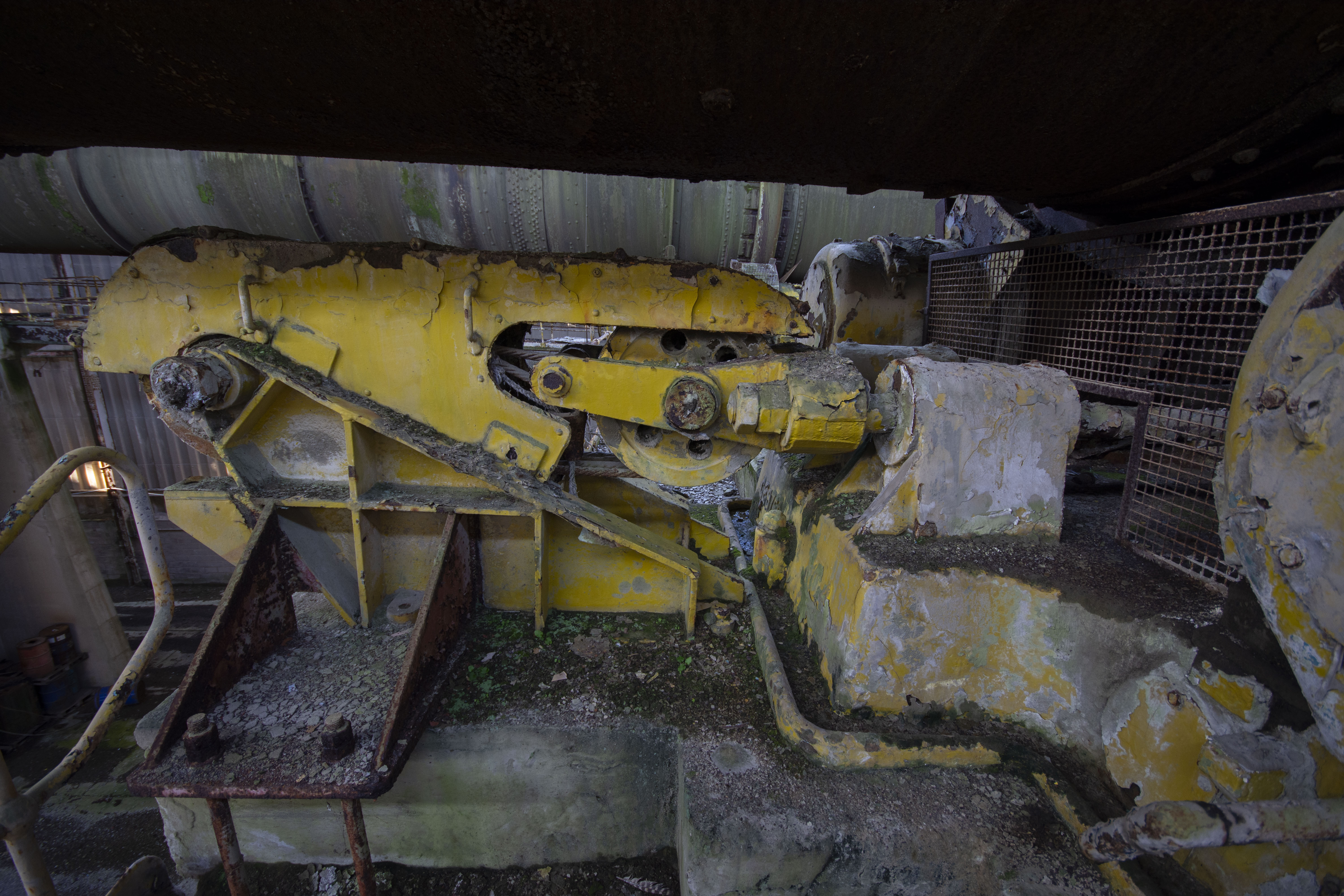
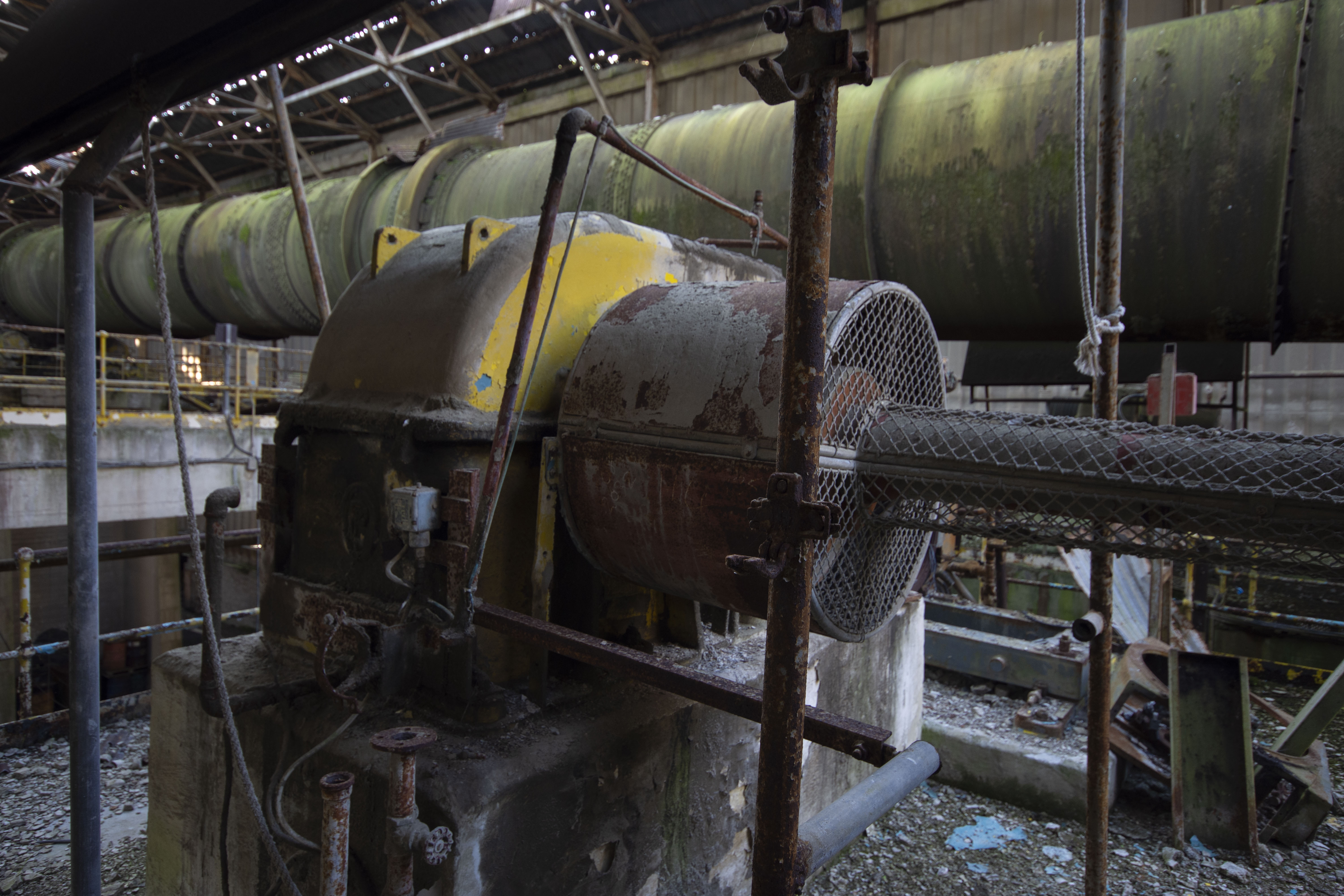
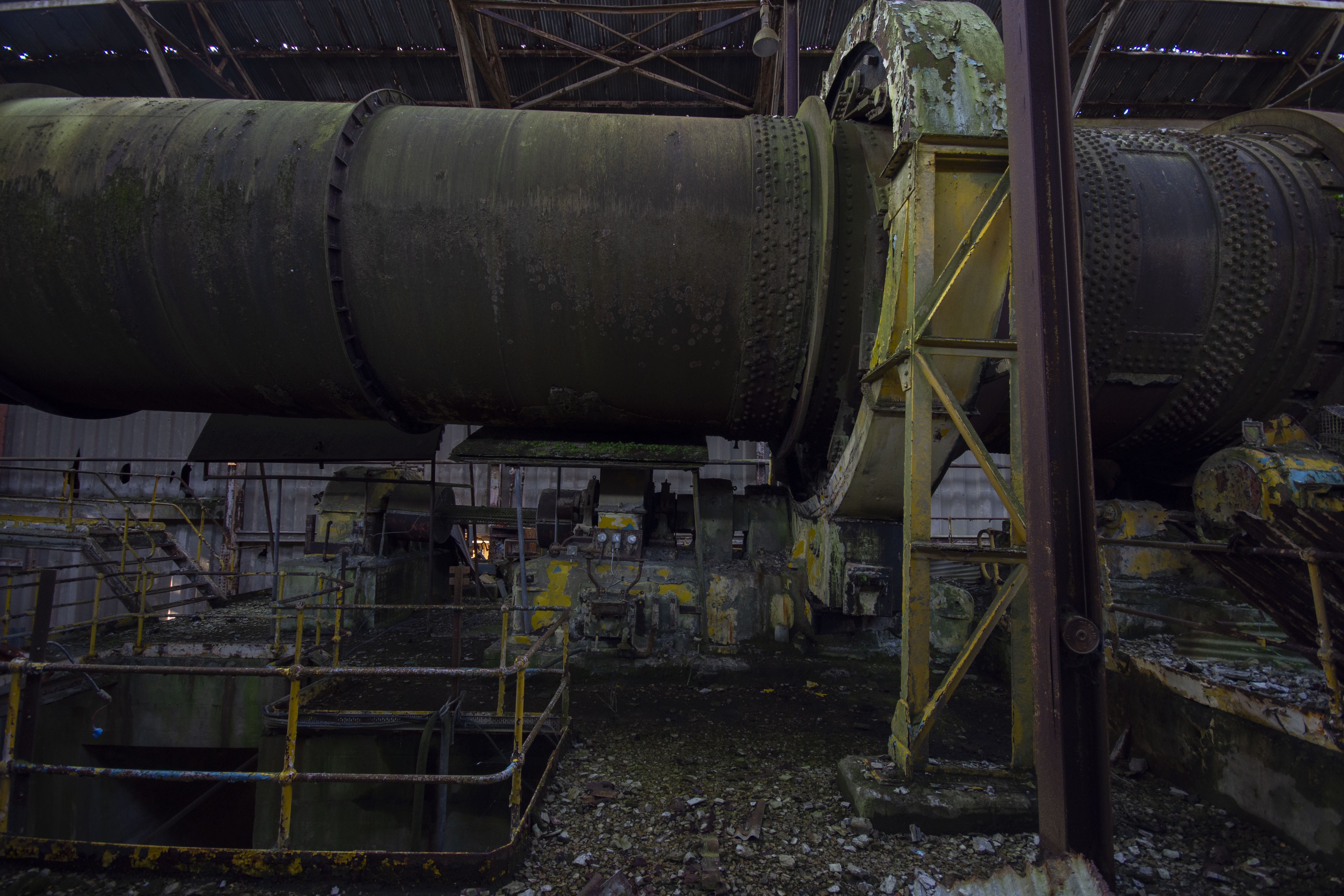
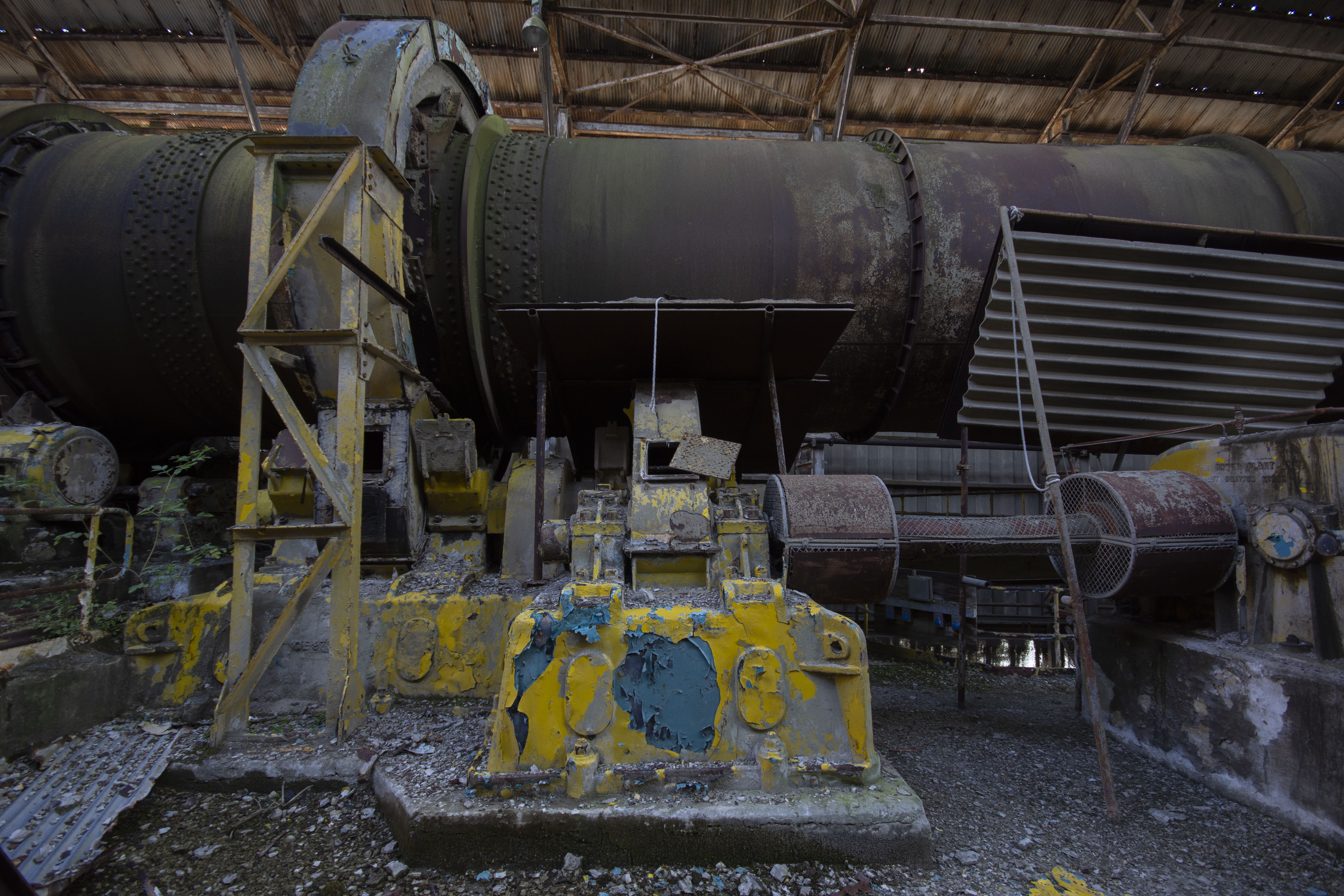
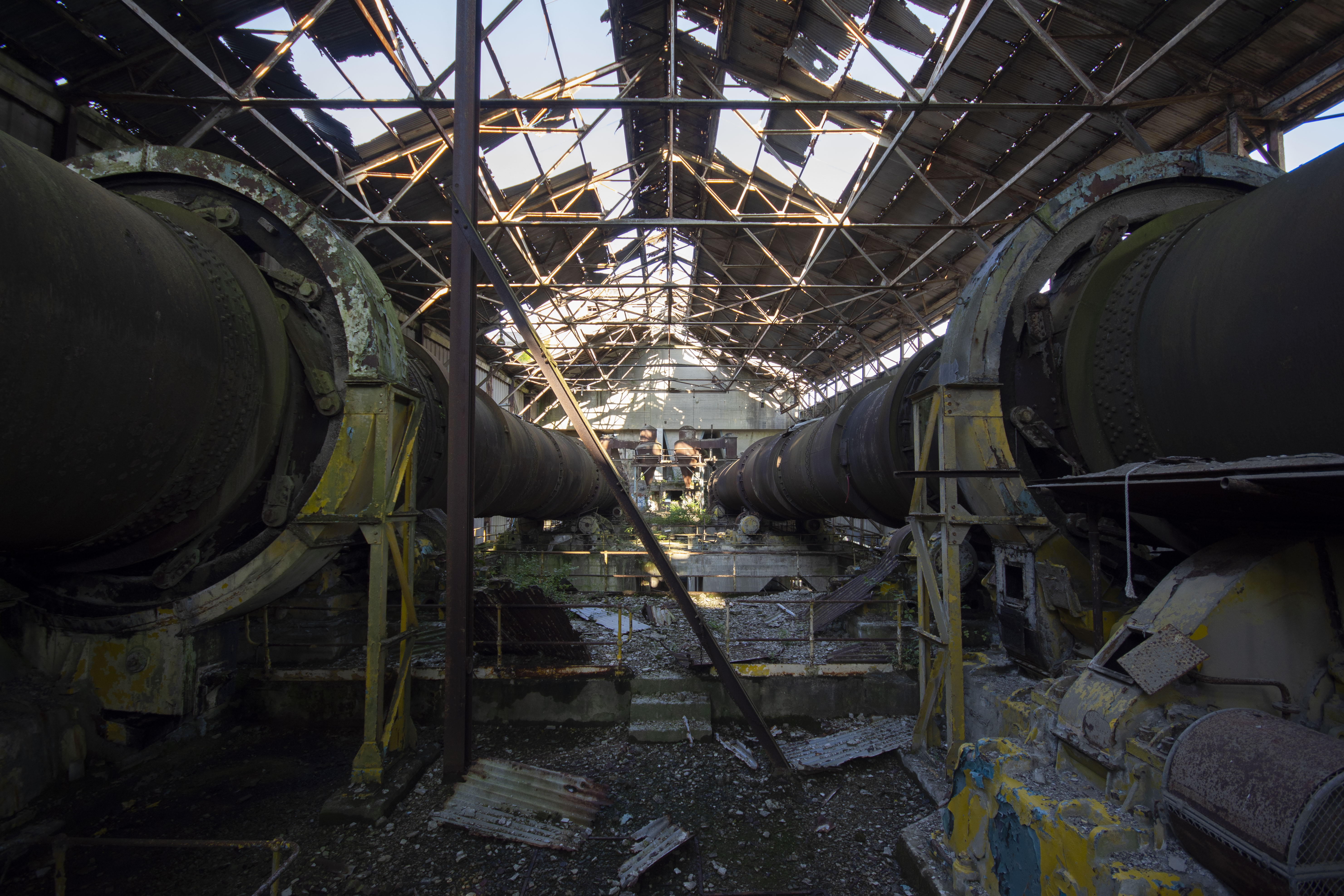
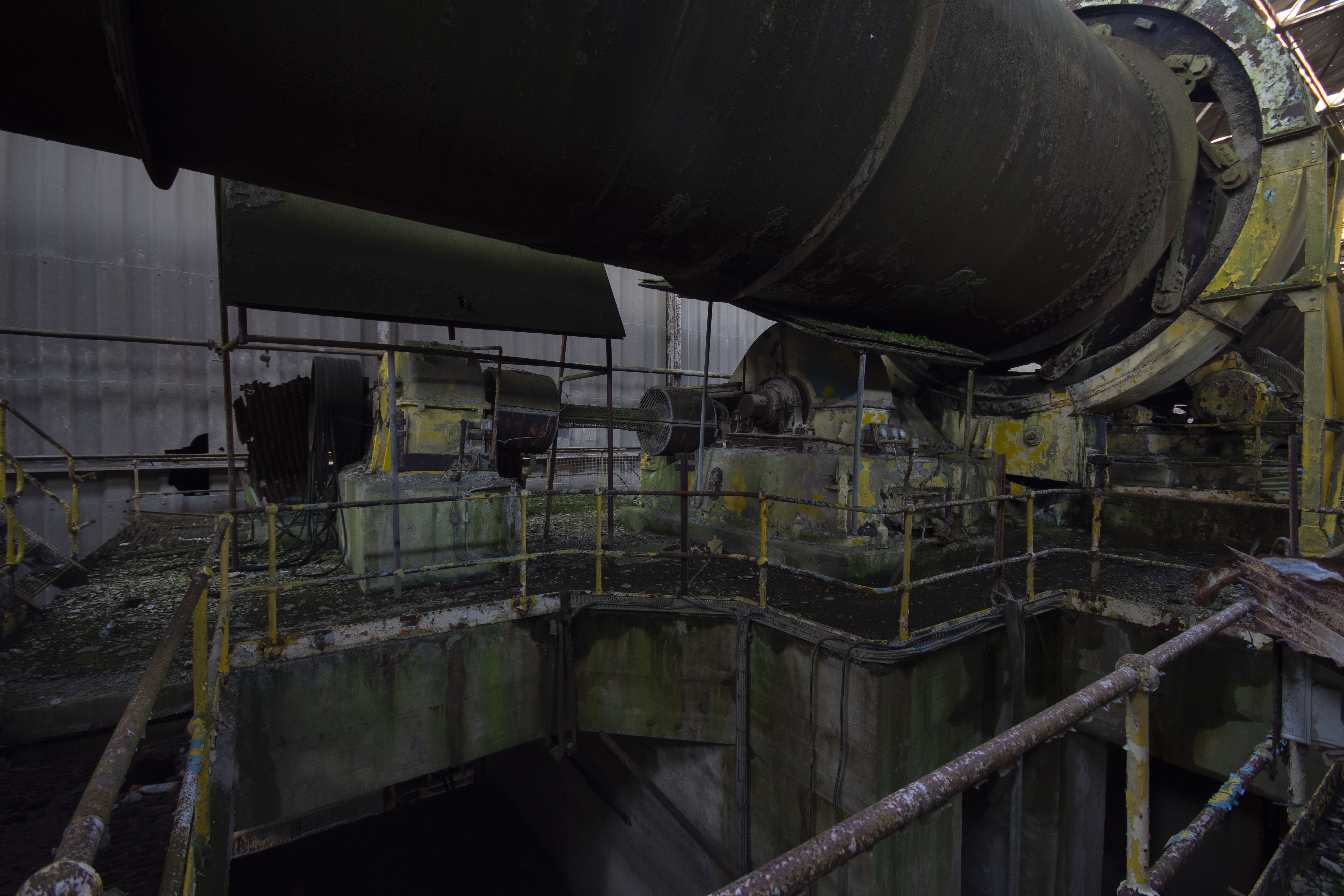
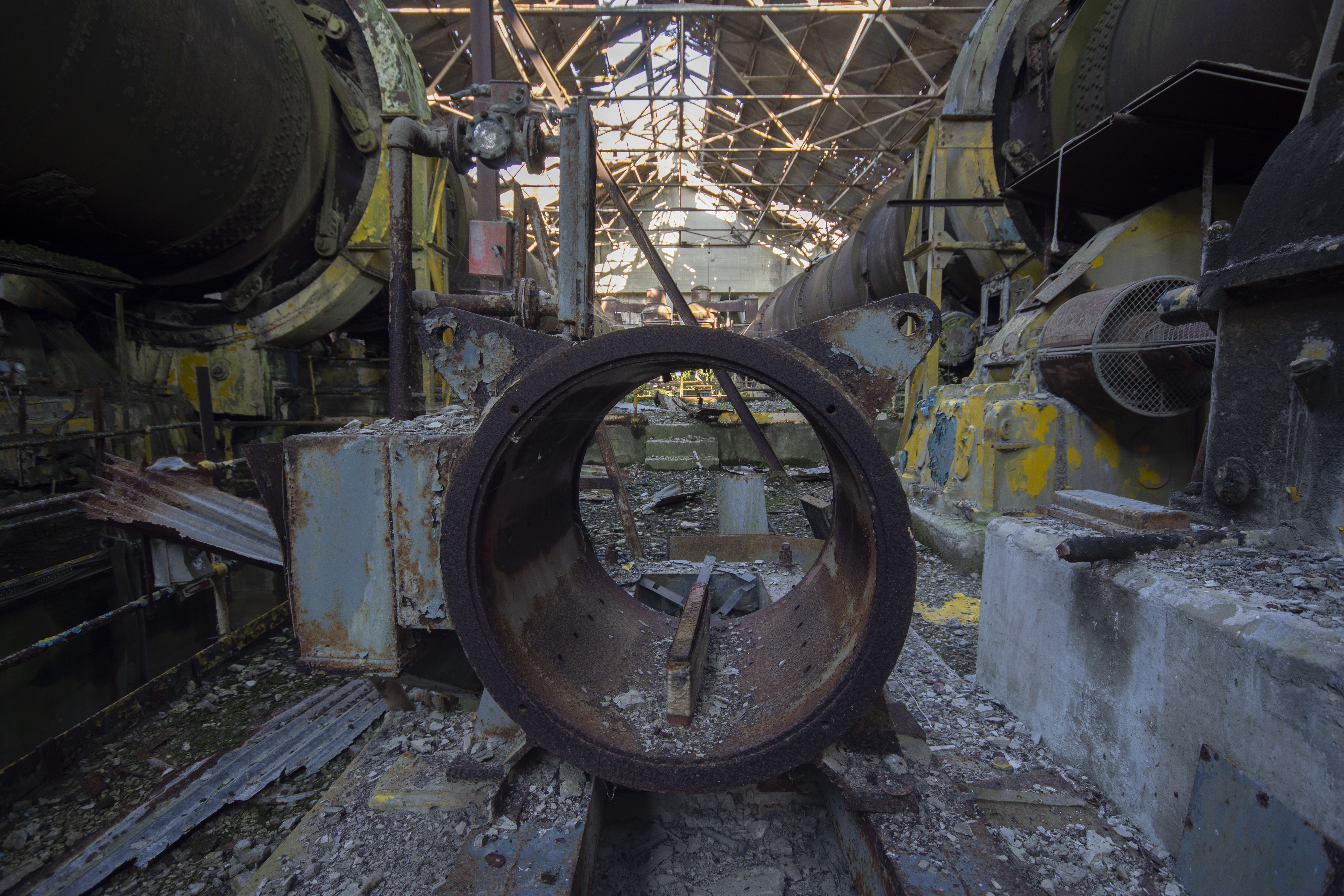
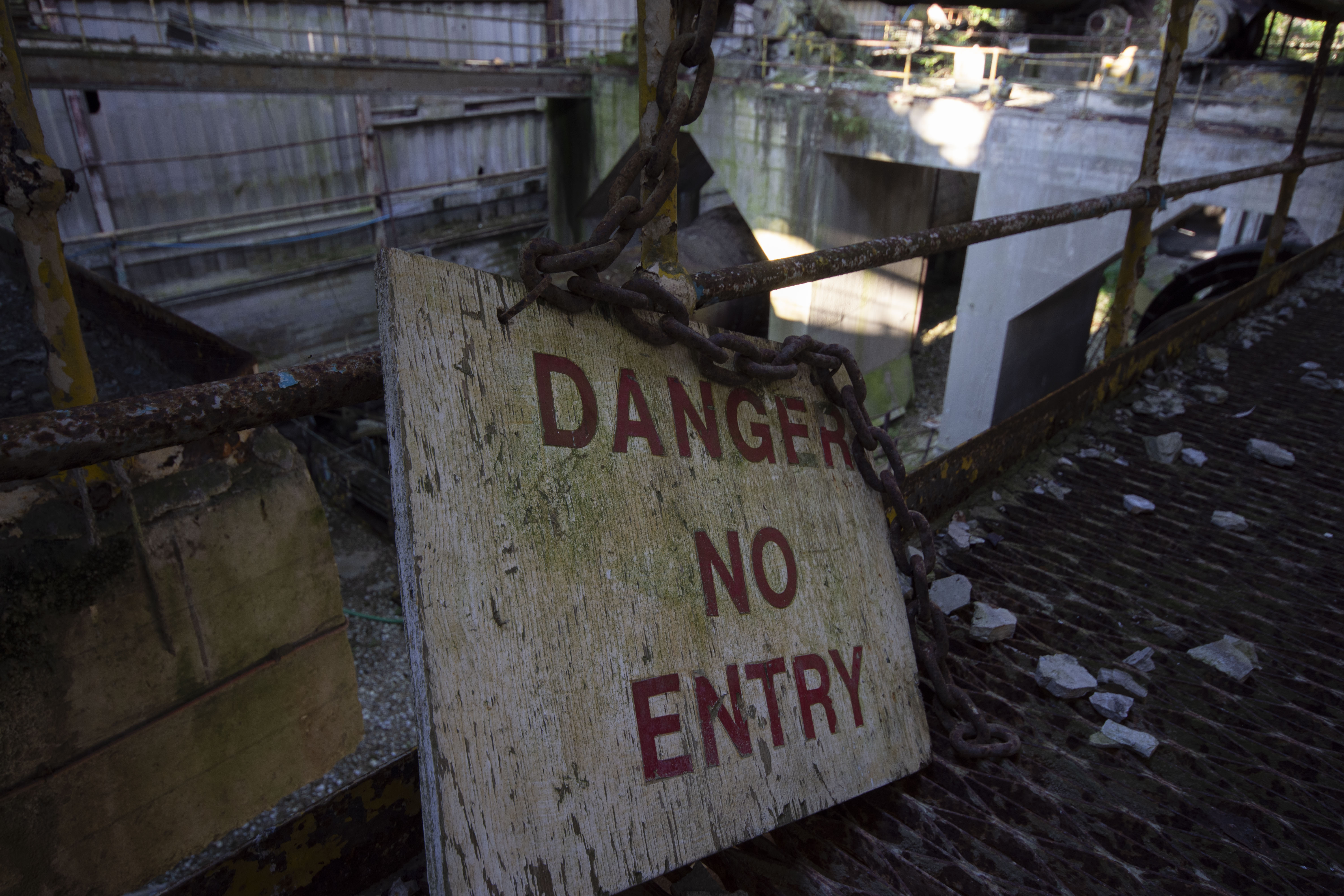
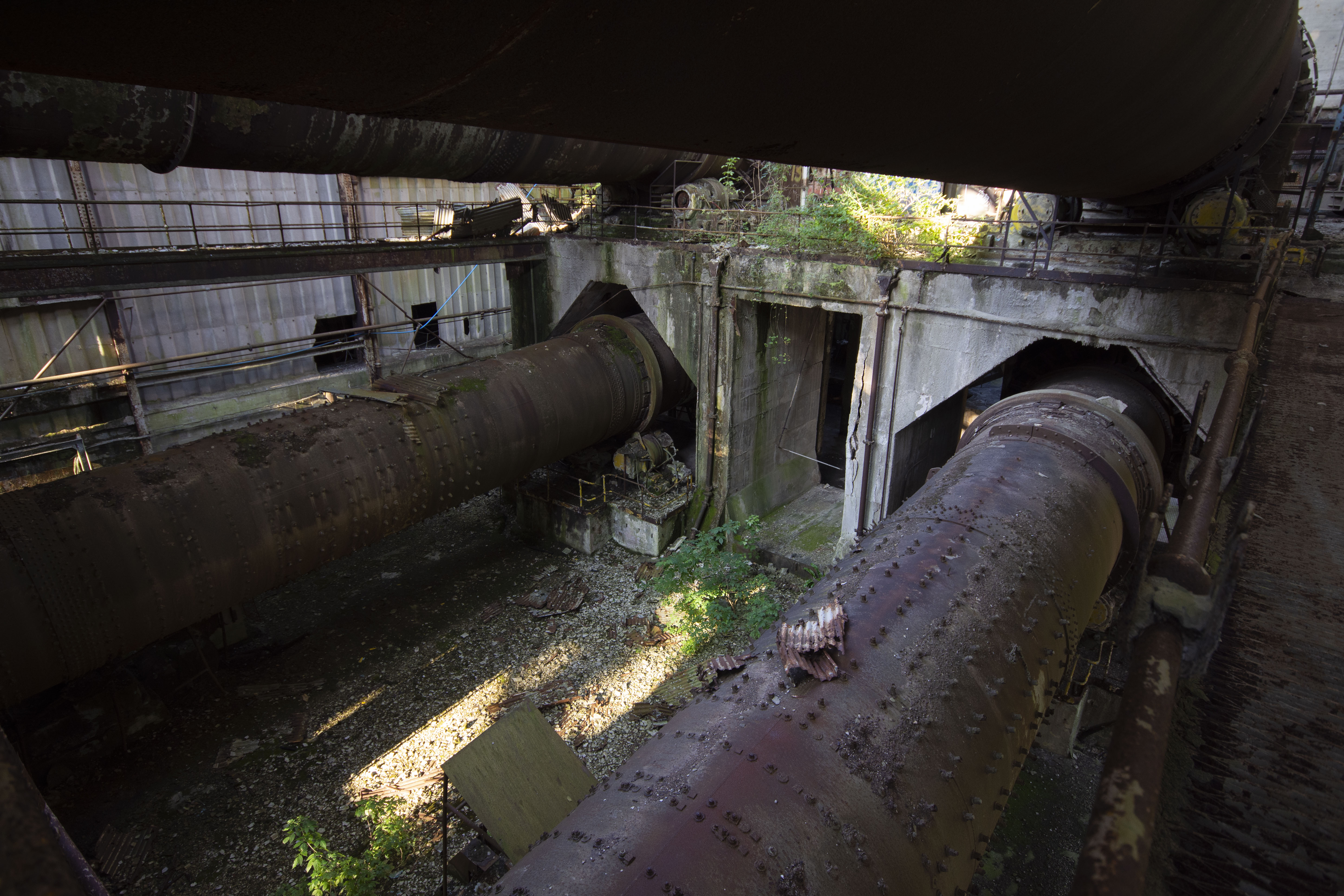
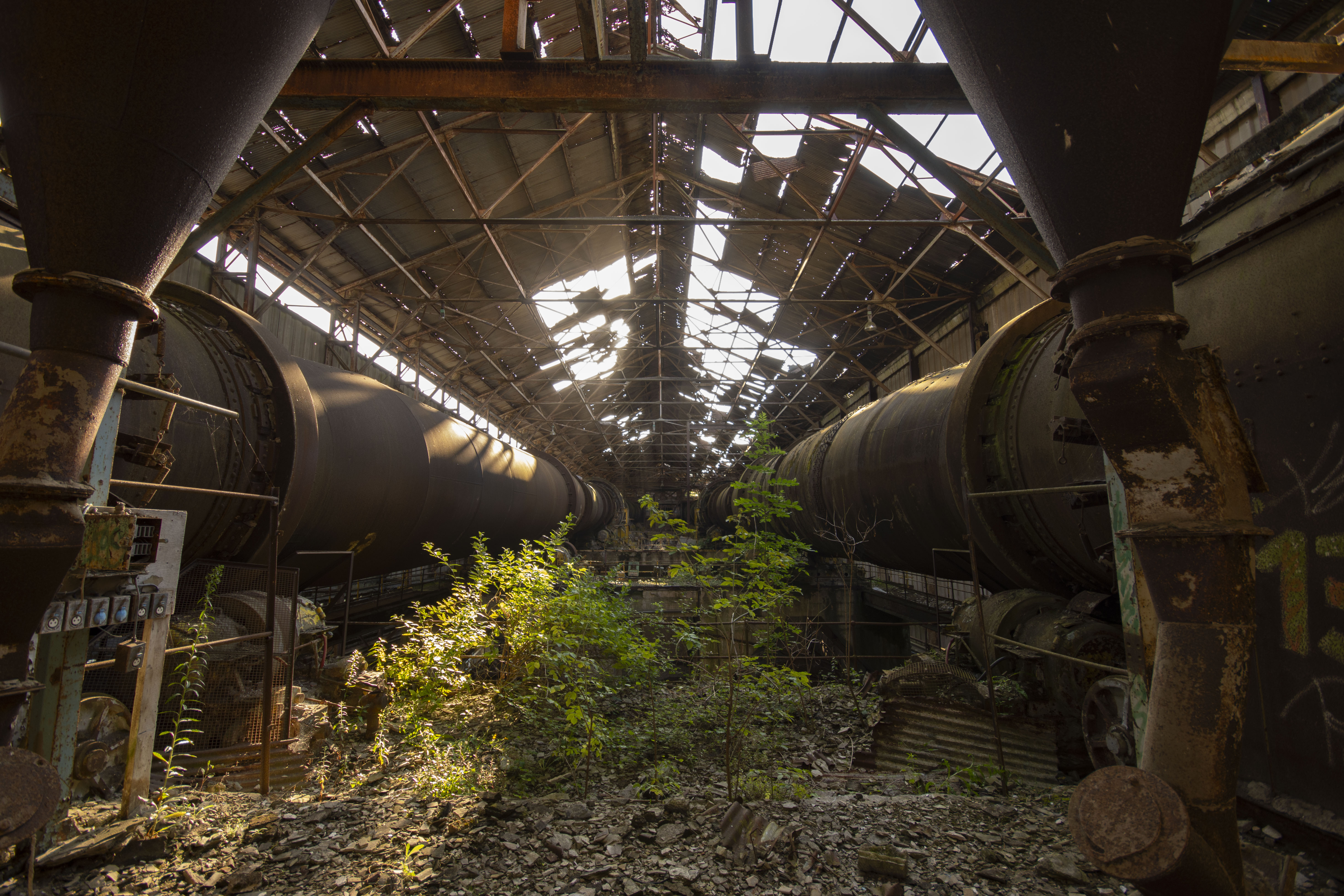
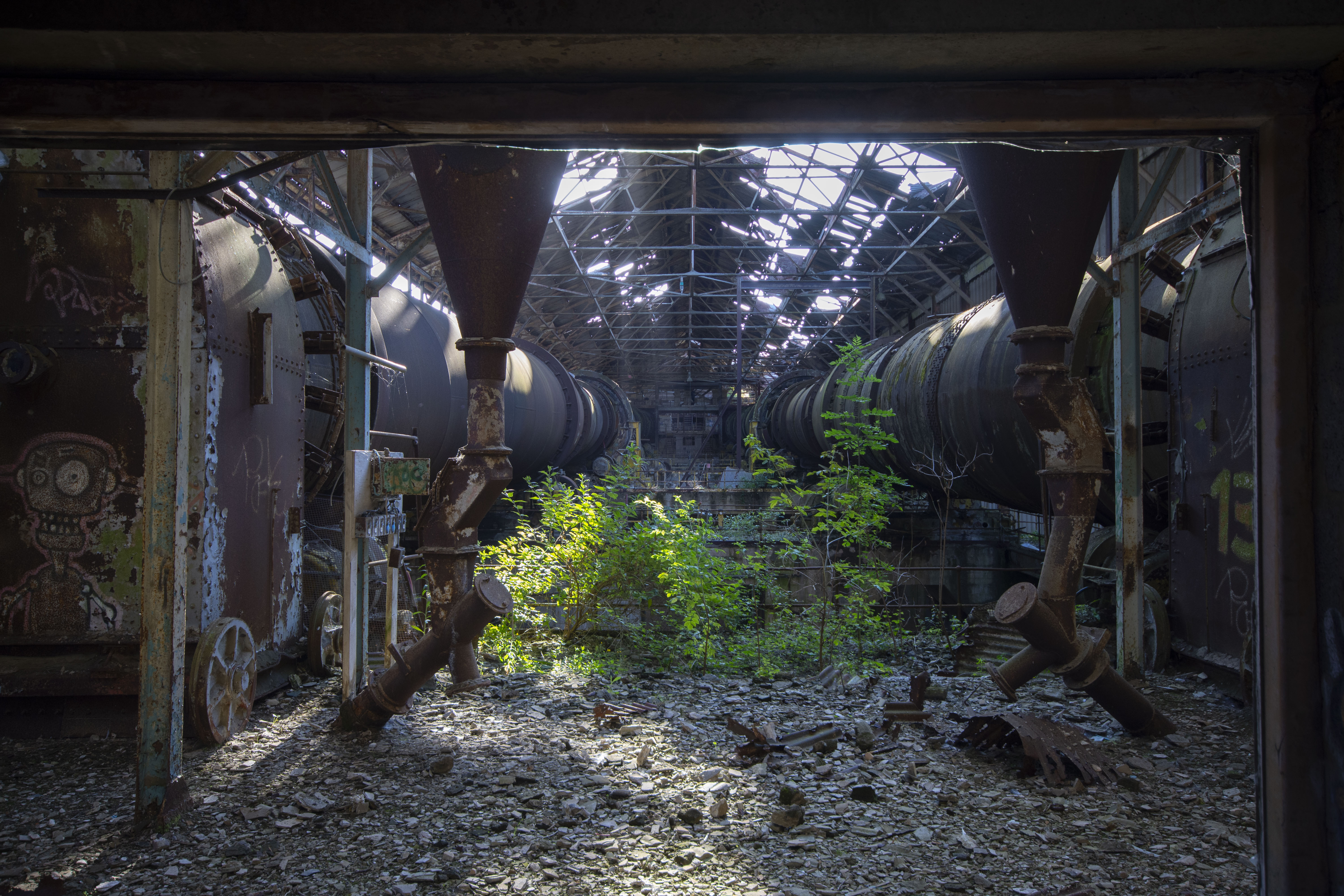
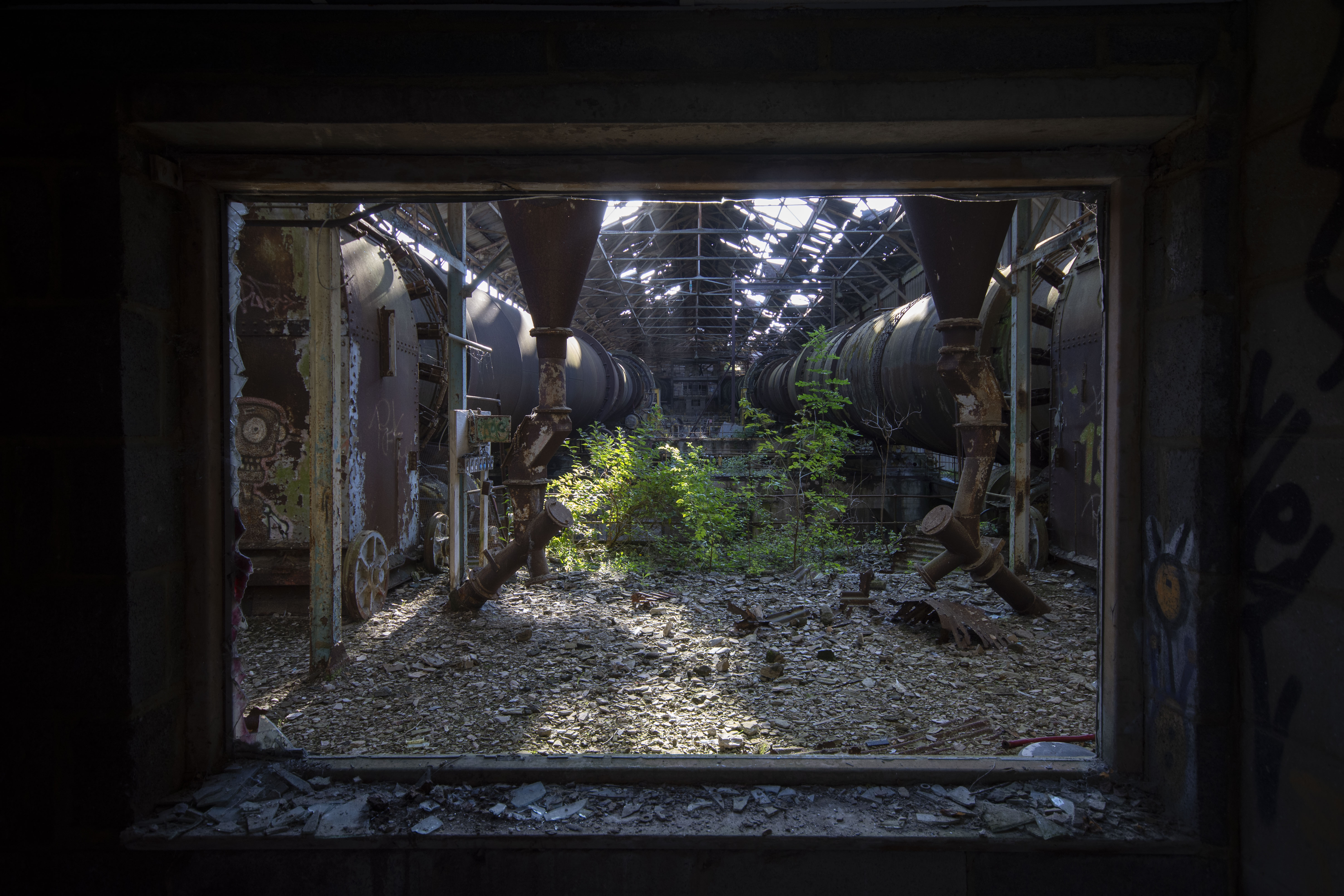
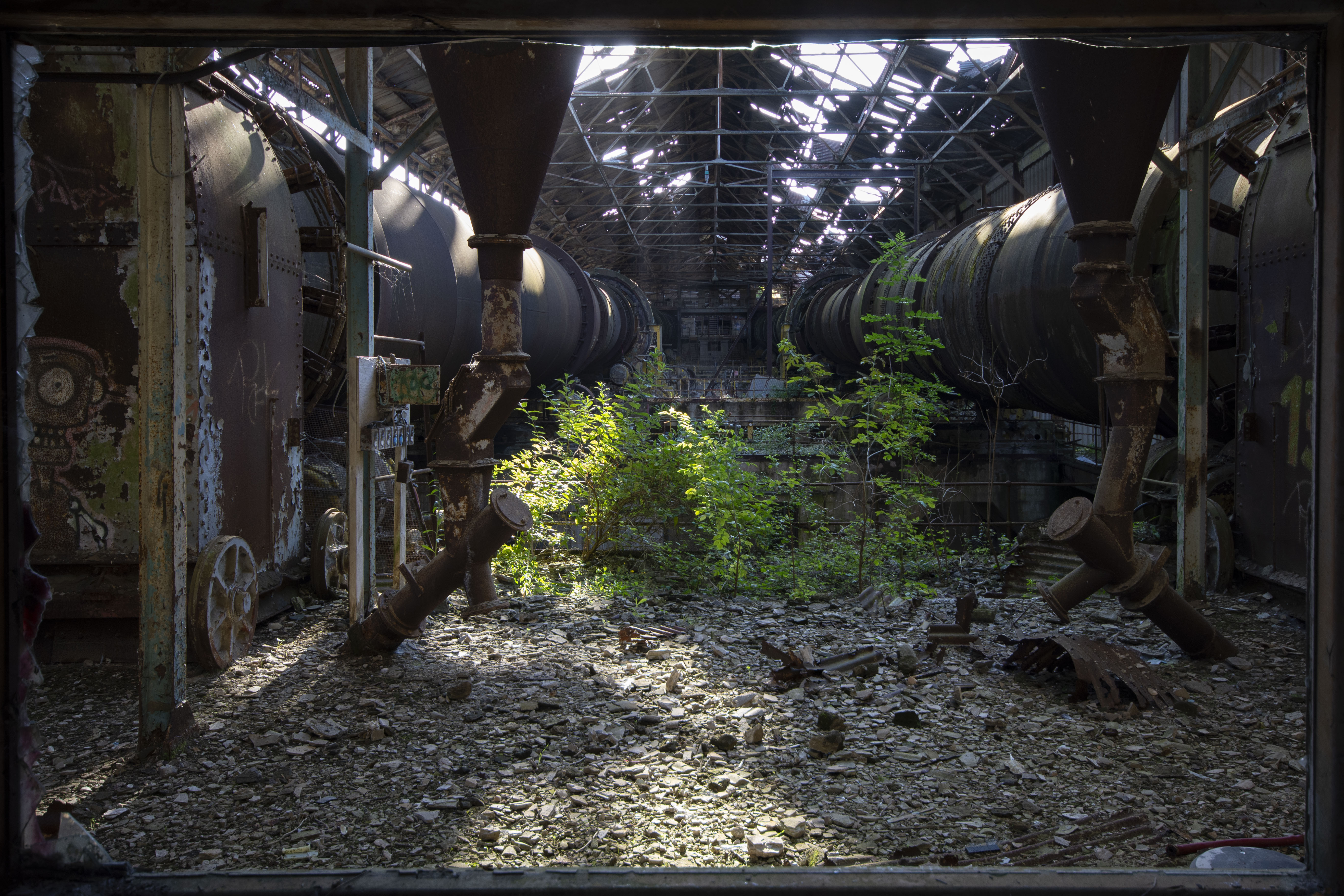
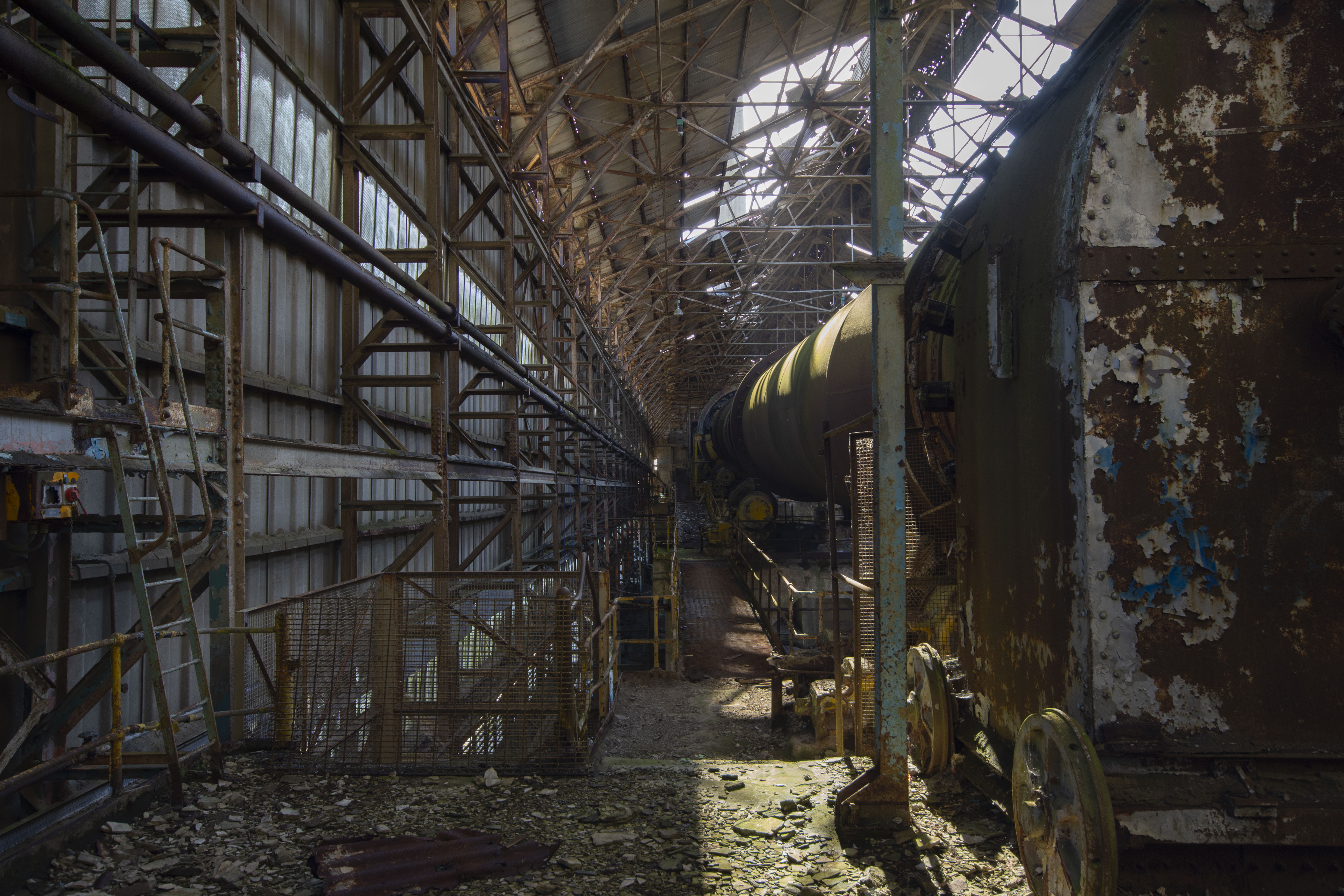
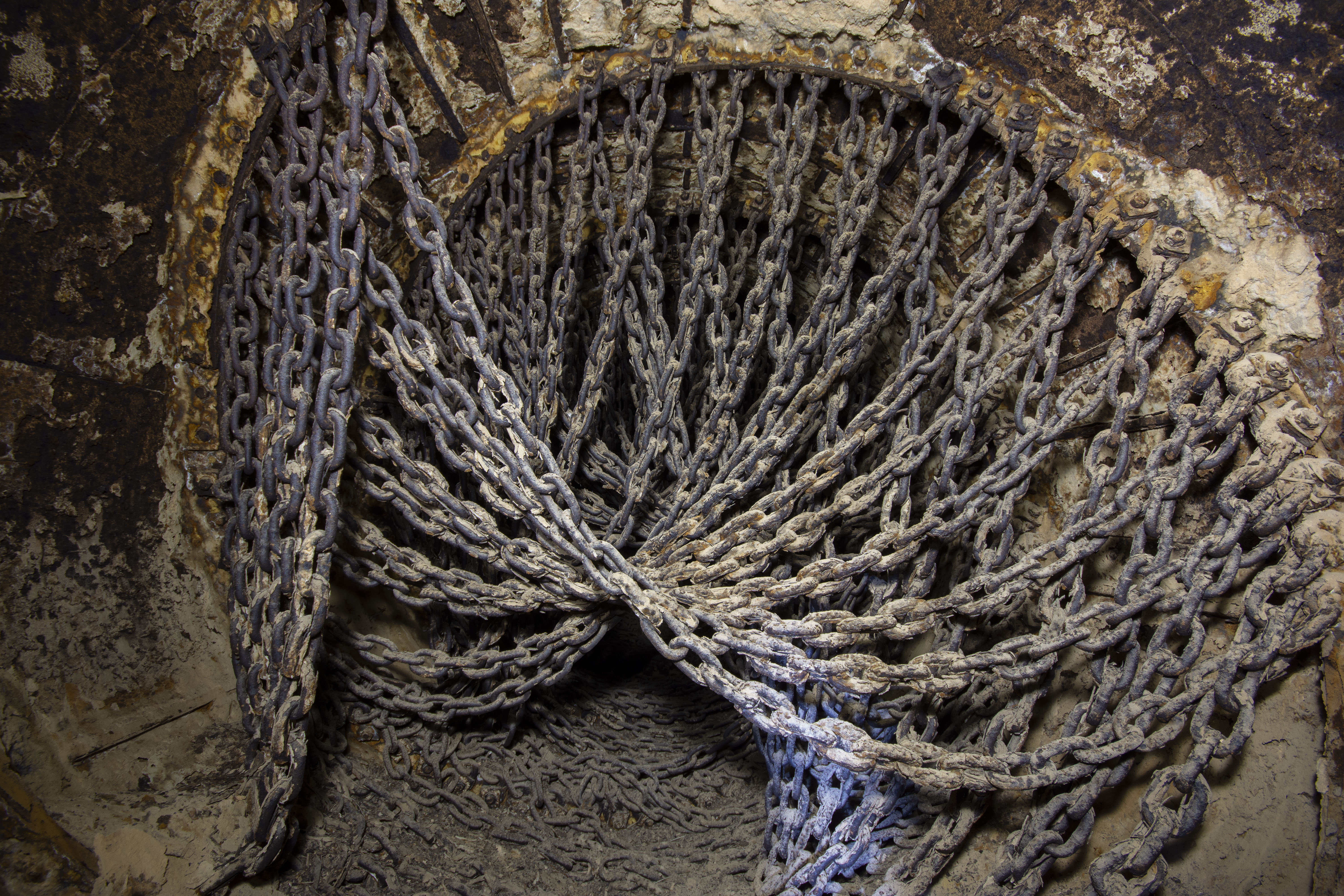
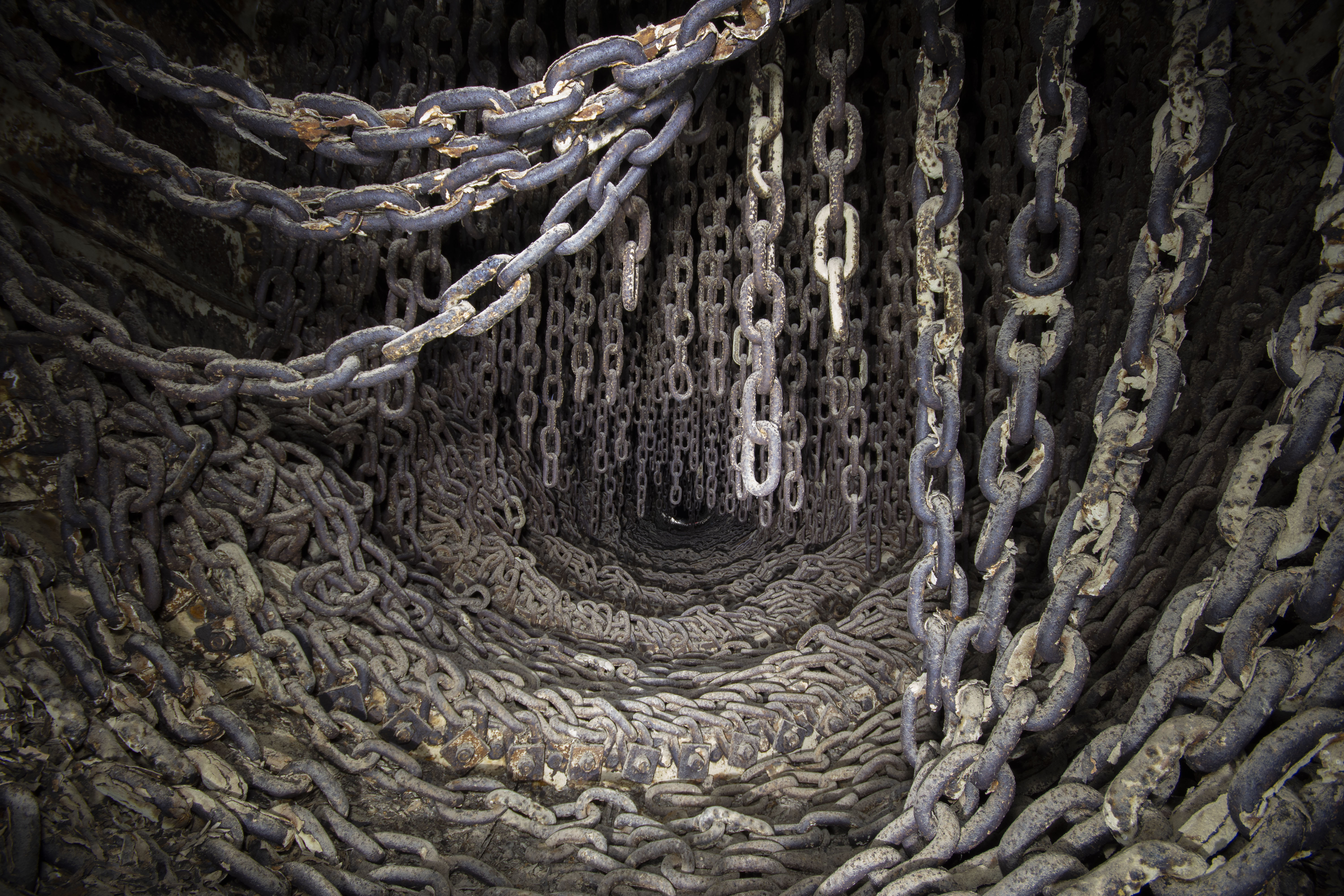
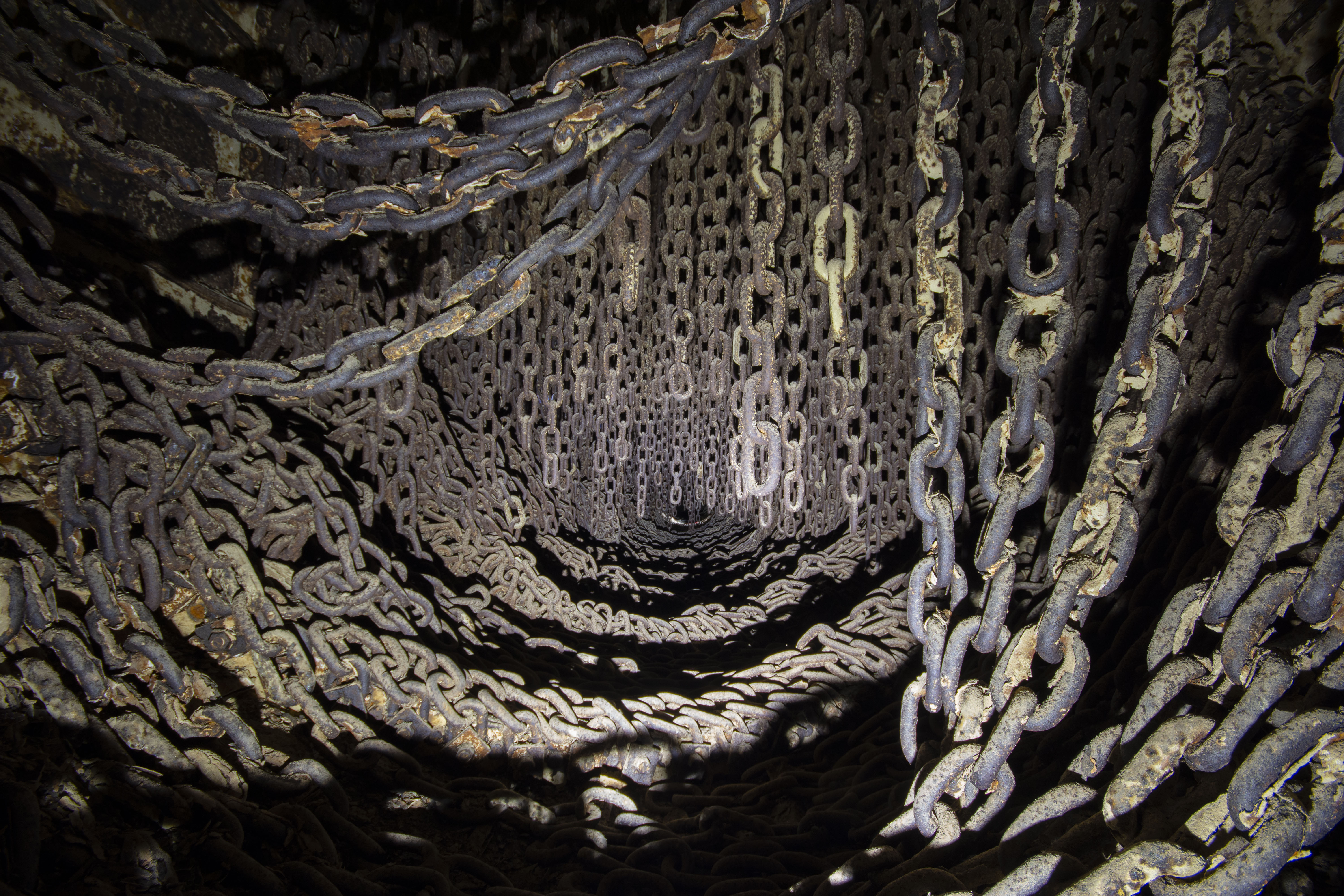
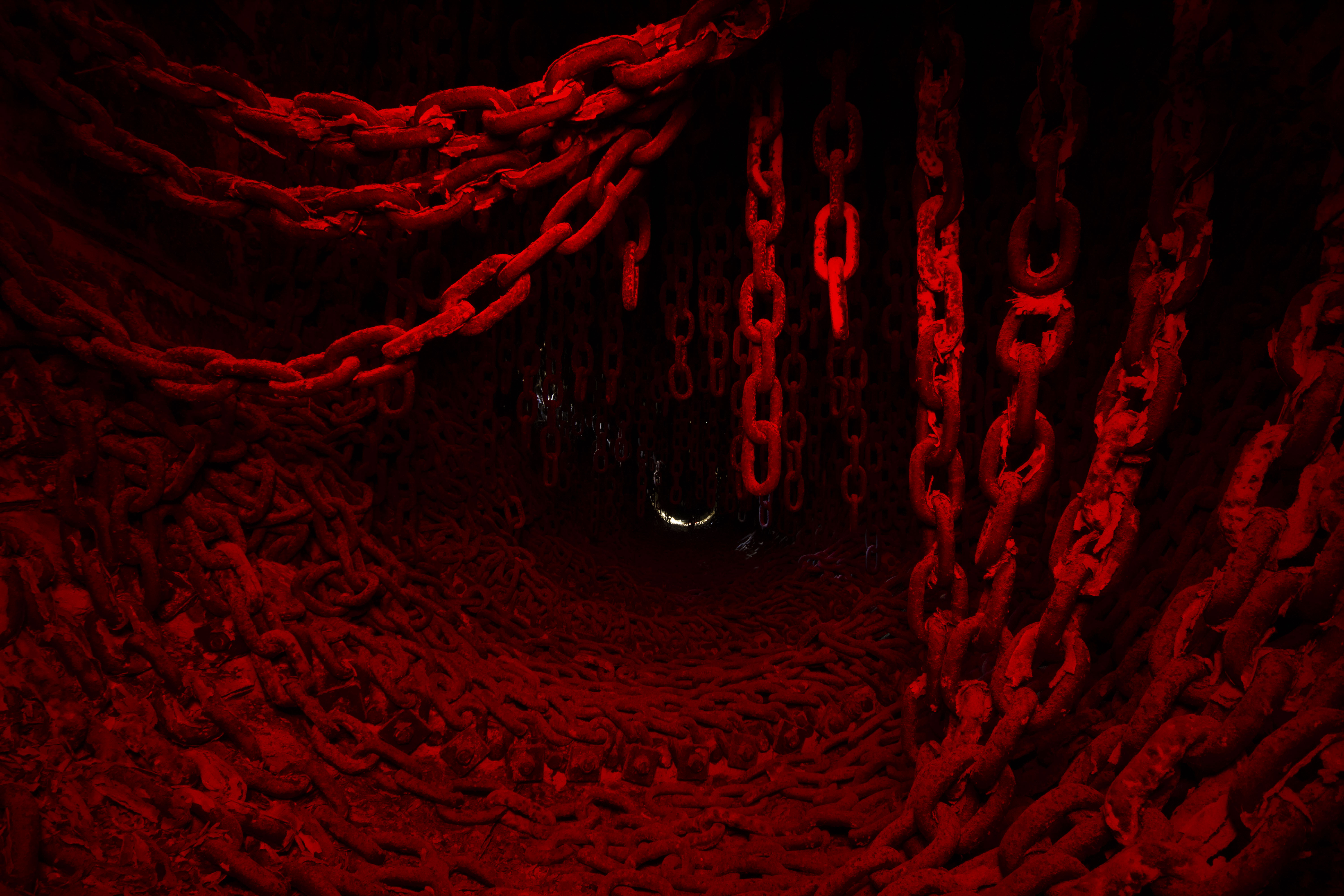
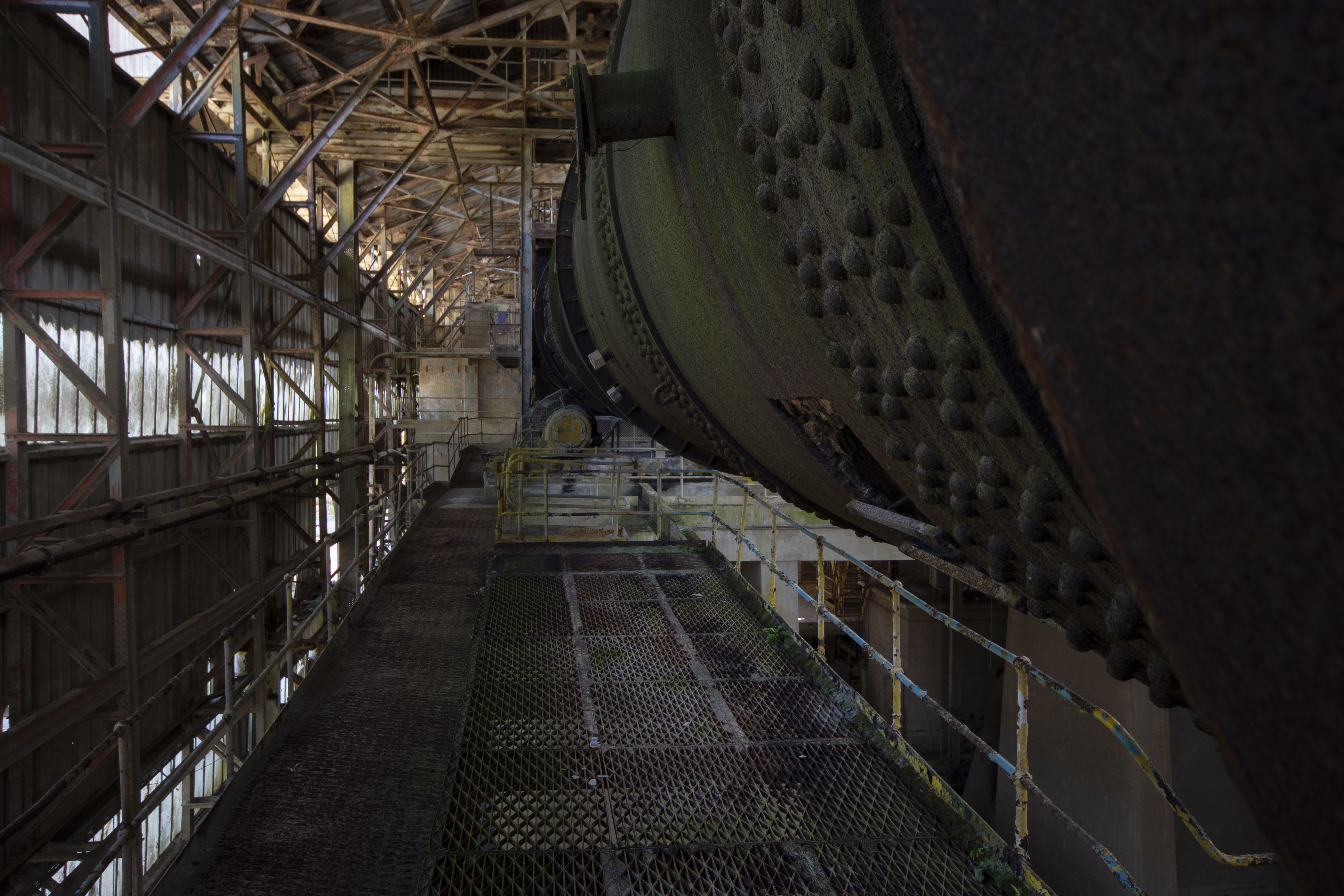
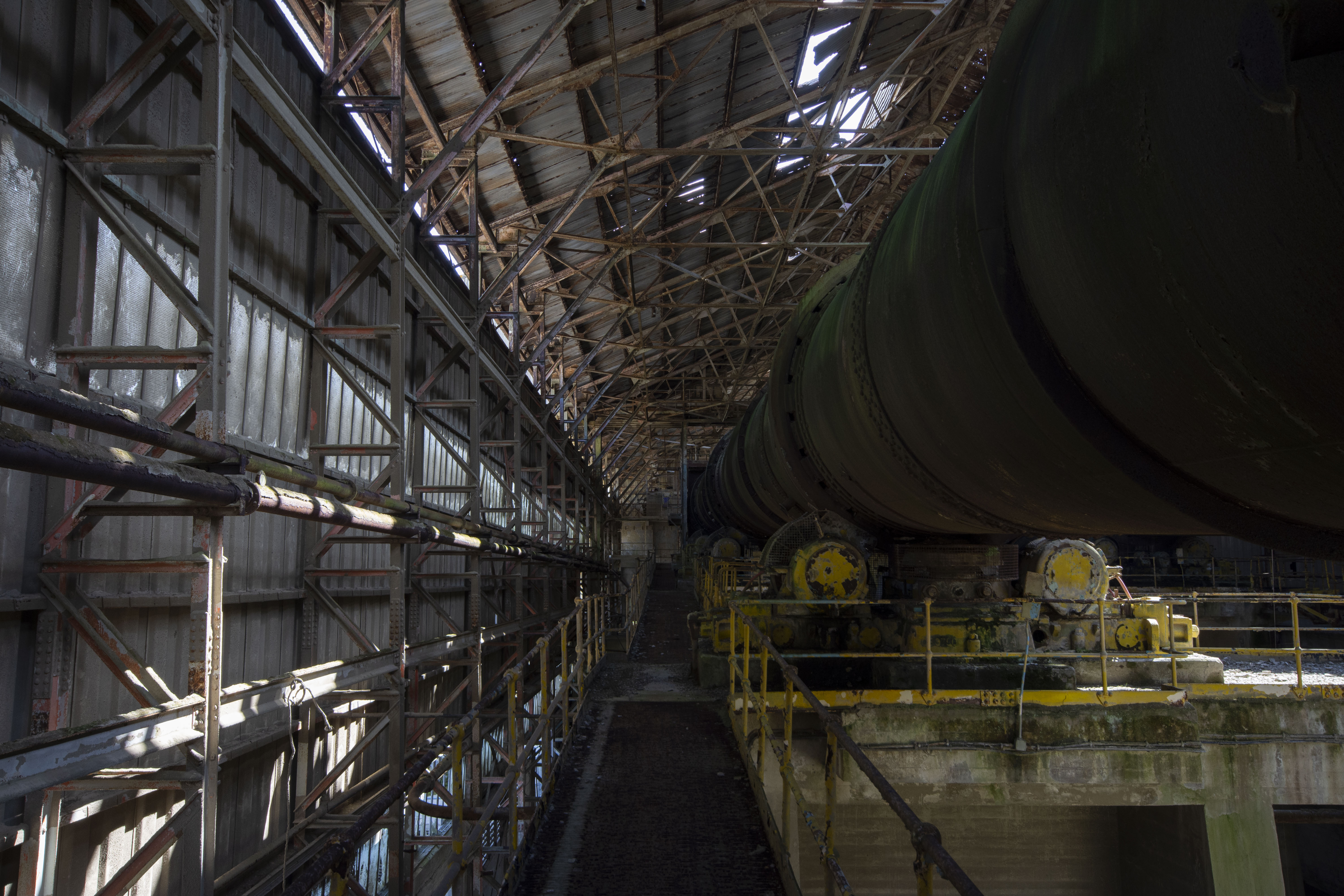
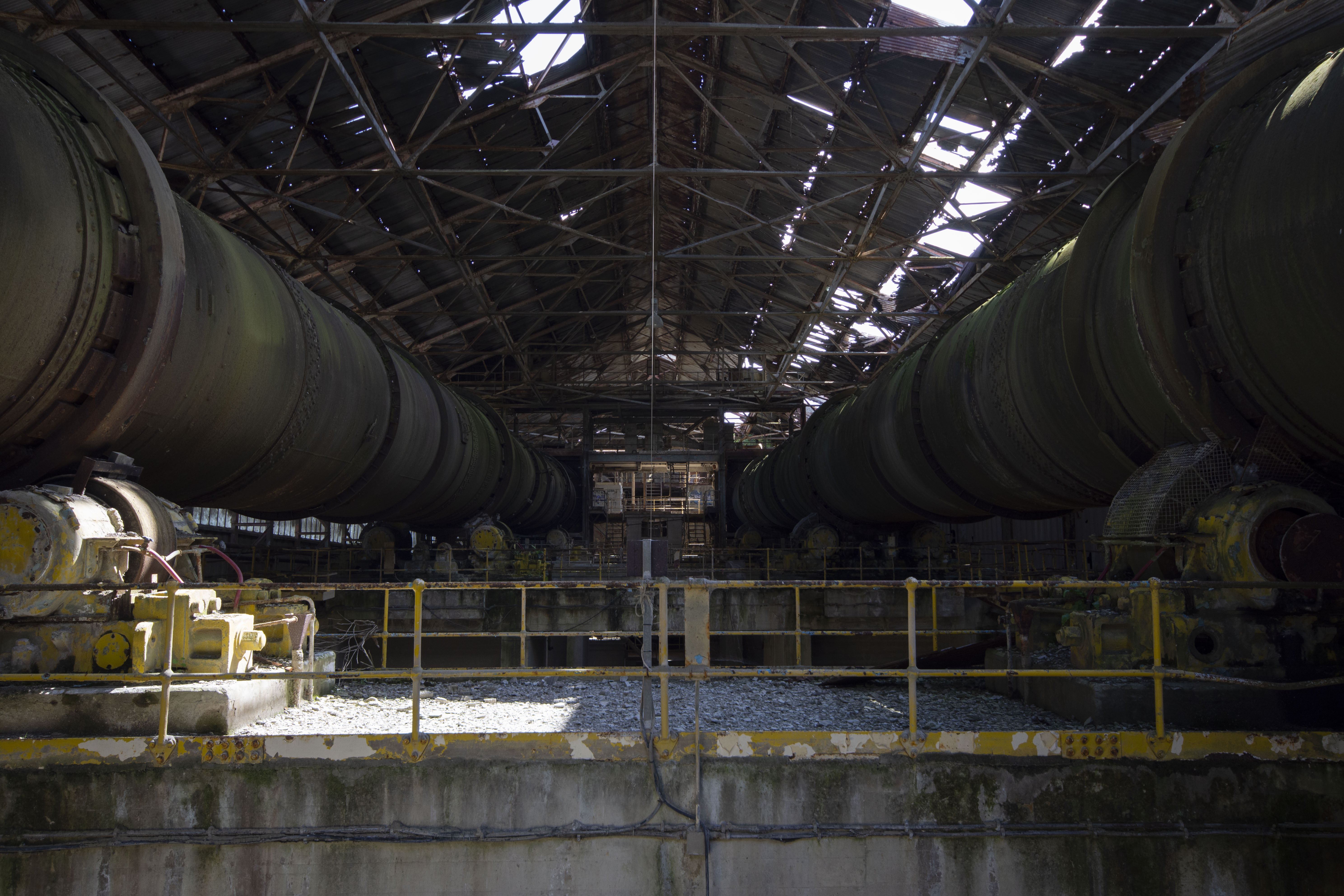
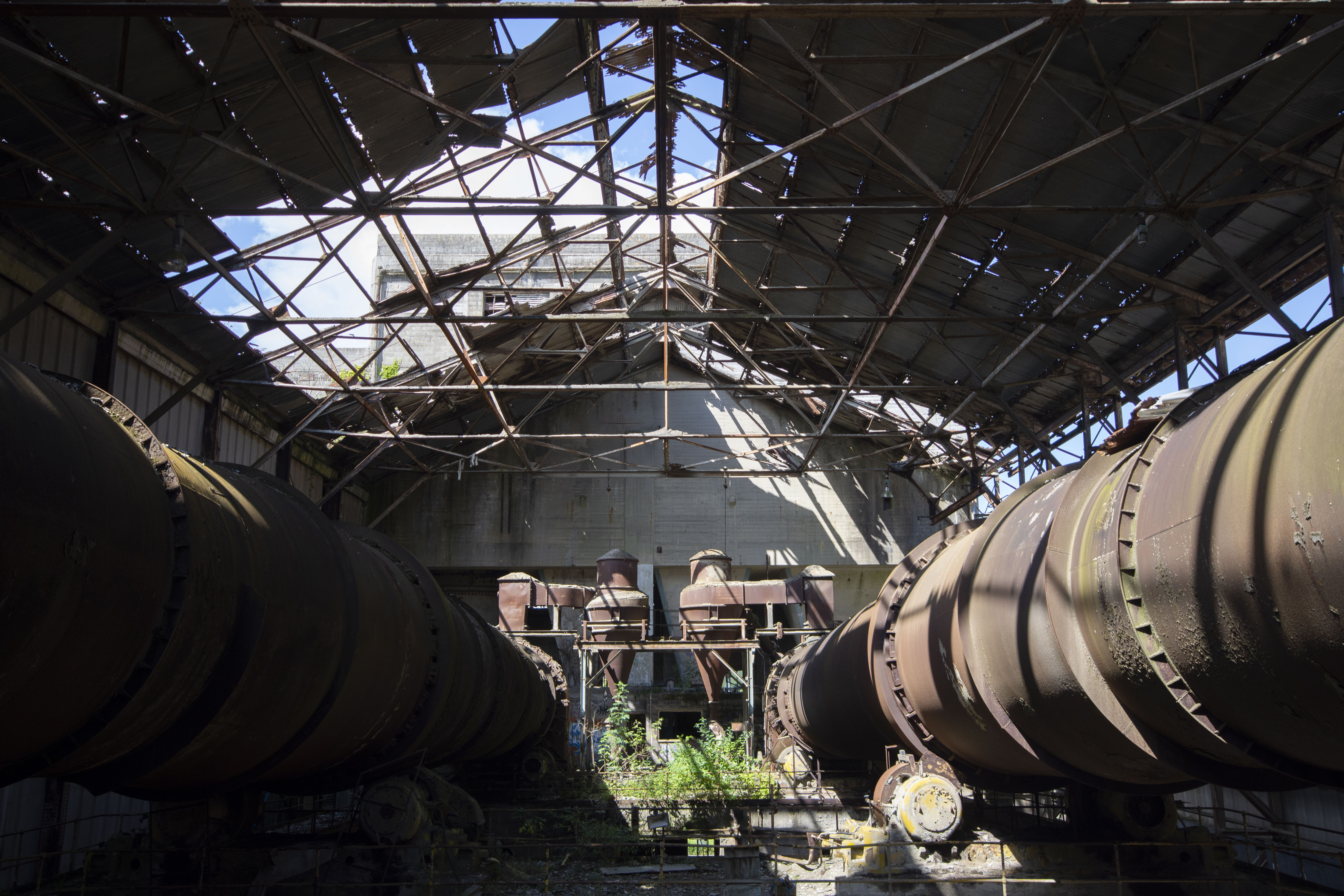
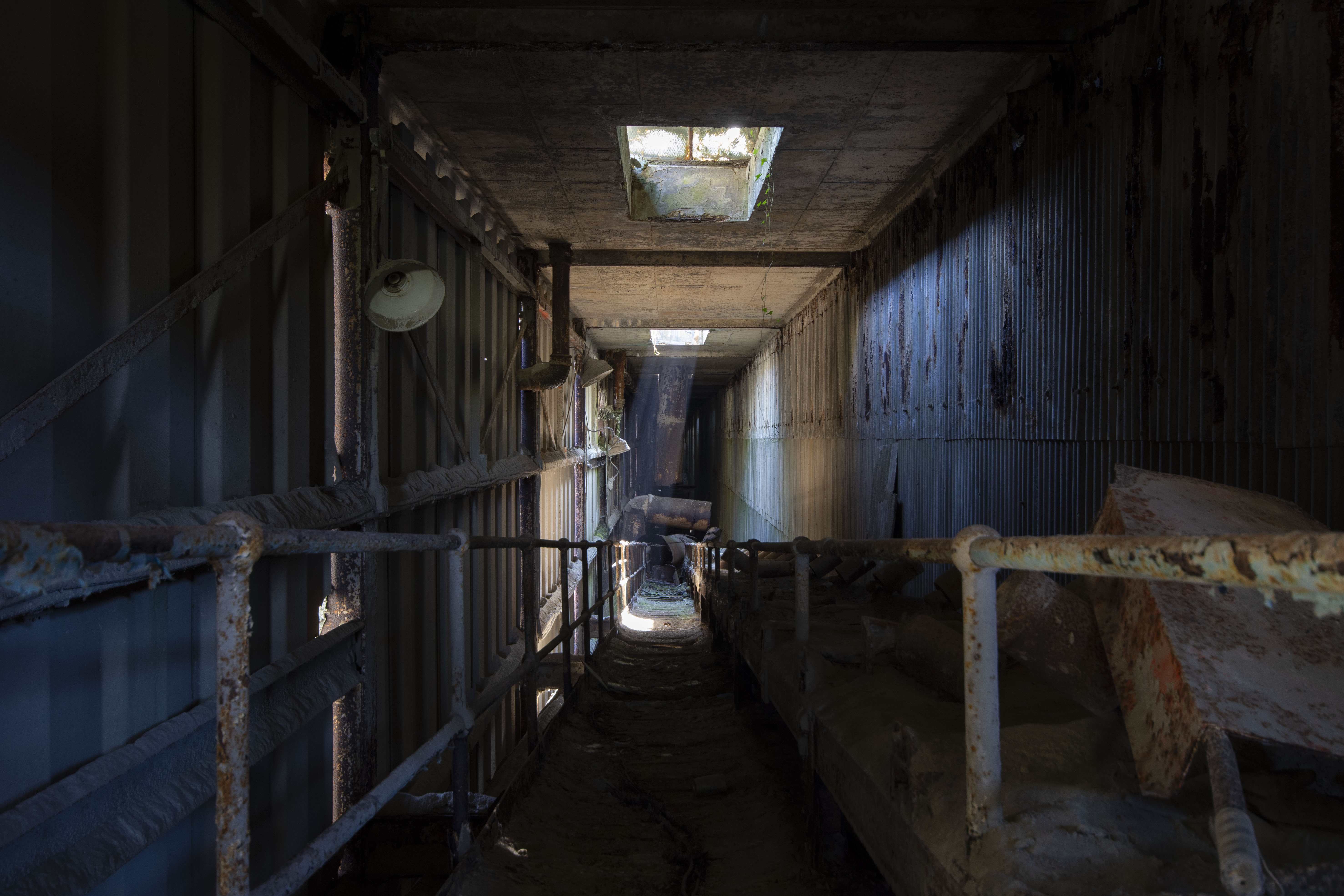
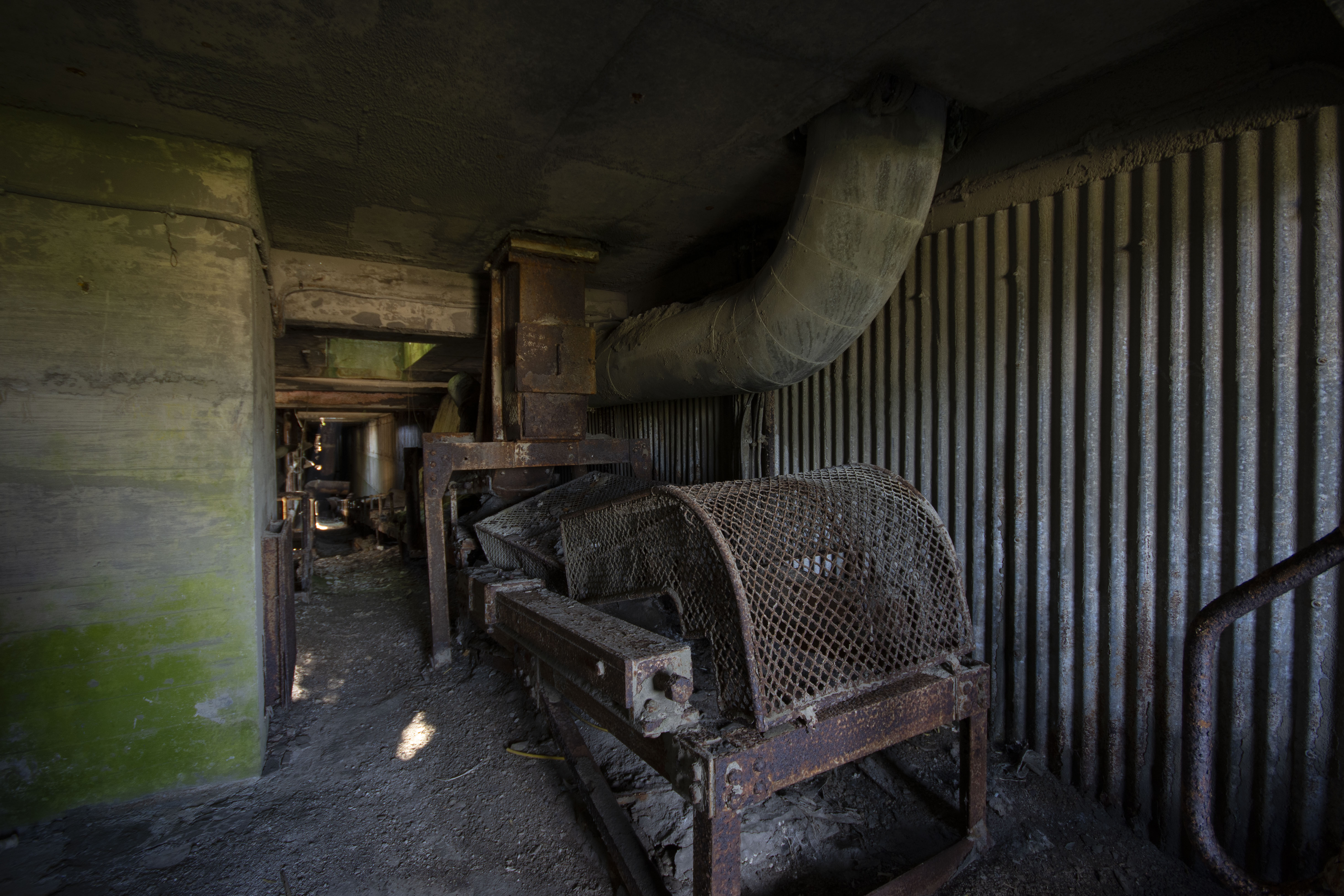
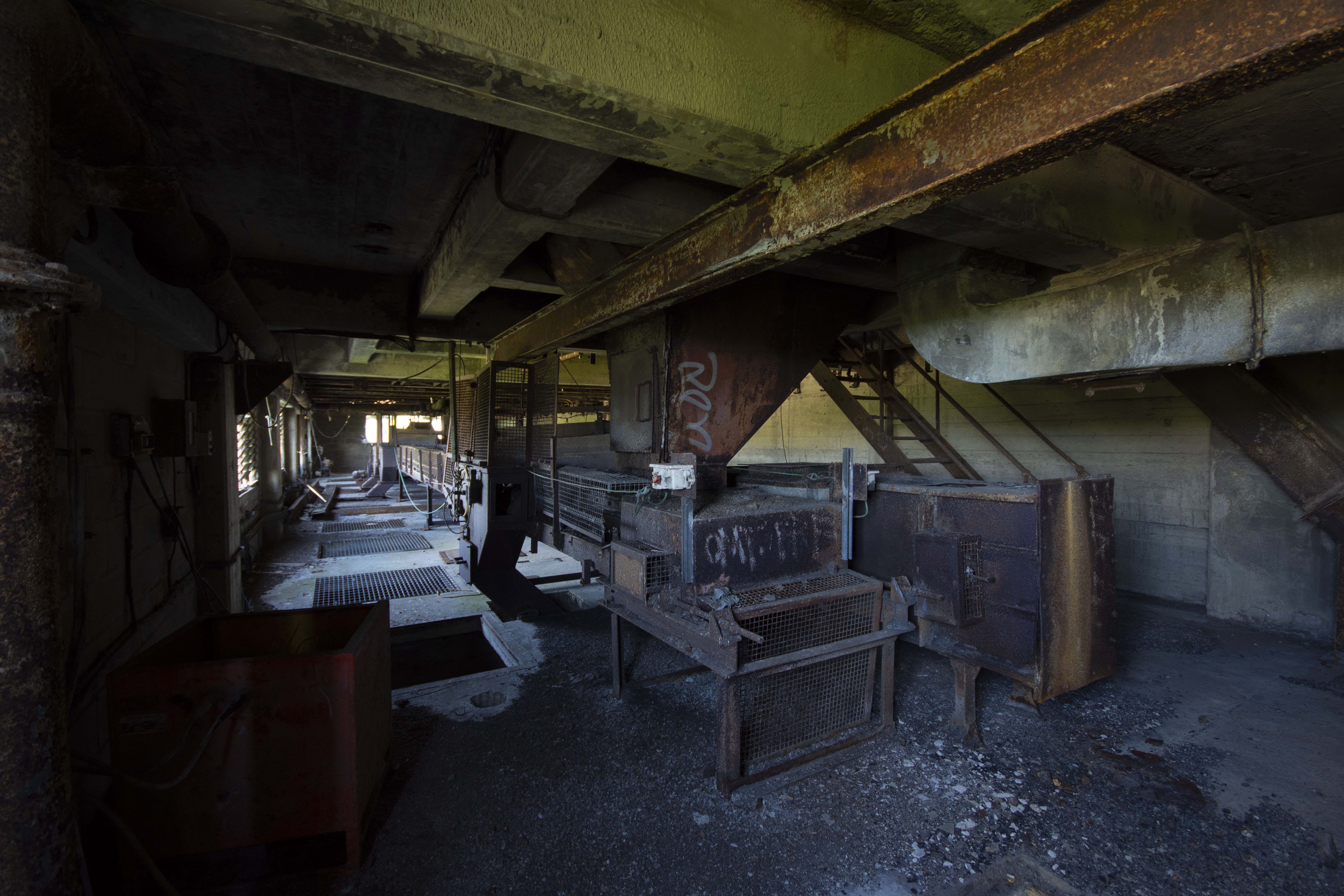
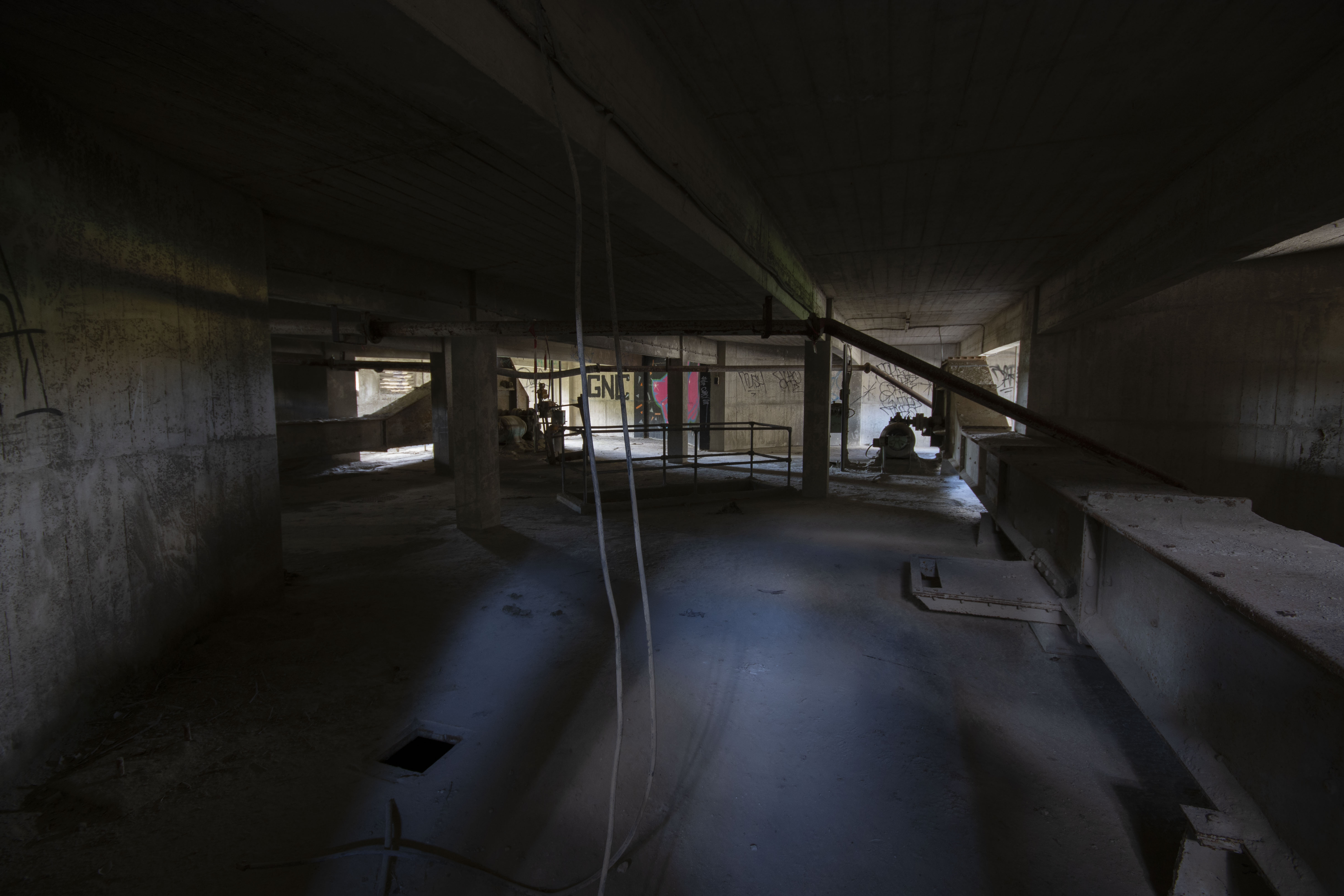
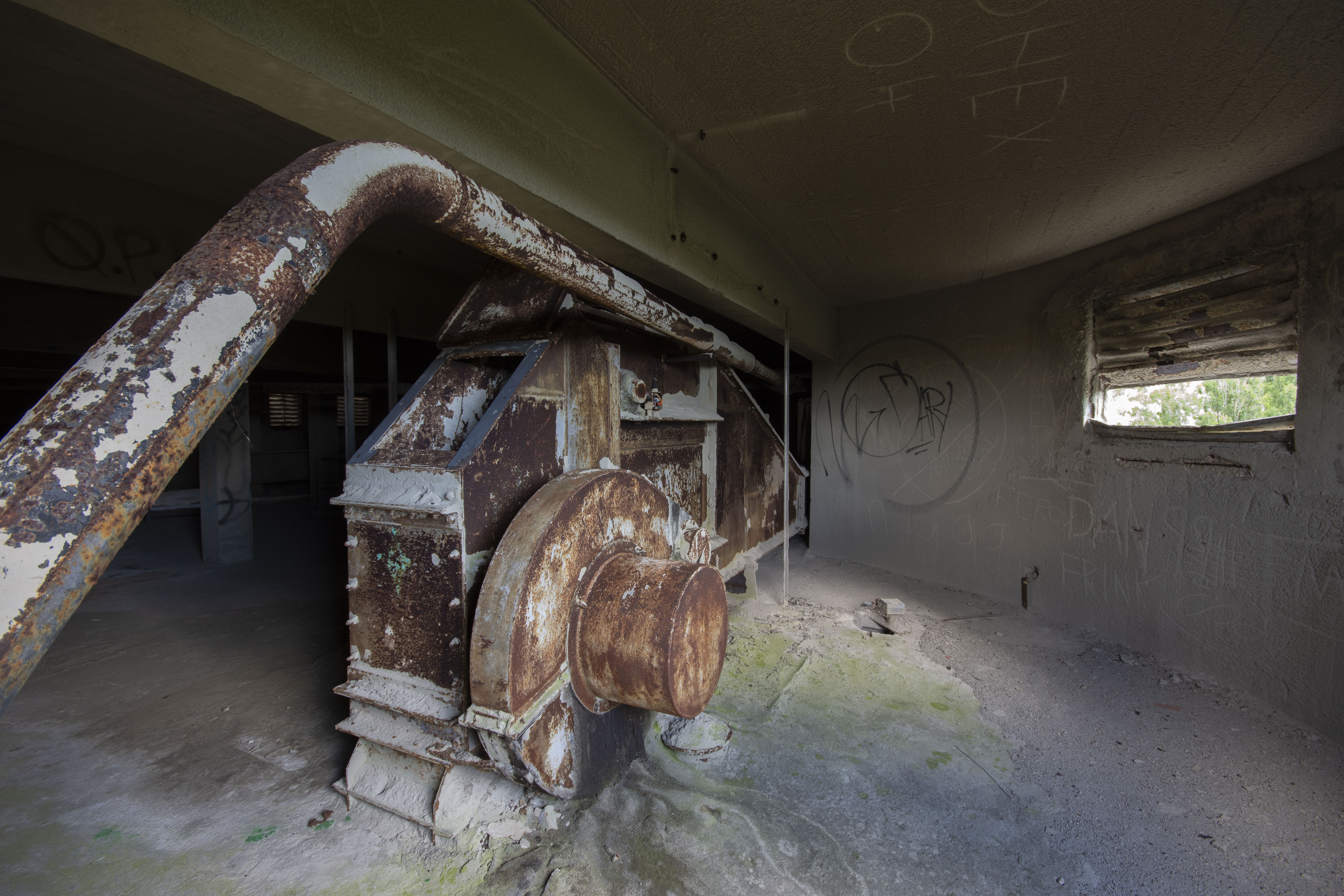
THE EXPLORE: To start off, this is a site that has been on my to-do list for many years, all the way back since 2014 when I saw a news article about the site’s proposed redevelopment ideas. I finally managed to explore it on May Bank Holiday in 2021 with a friend of mine, and then again in 2024 three years later – my photography skills in between the explores has improved massively so the photos you are seeing are the 2024 ones. The difference in three years is enormous, and the site is now seriously dangerous. It won’t be long before this place won’t be exploreable. The metal walkways and staircases are all crumbling and big time falling apart. Access into the main site itself was fairly easy, apart from being scratched to death by loads of brambles – my left eyelid got raked by a particularly sharp thorn which hurt like hell, but frankly as I’m blind in my left eye I didn’t care all that much…! The access was easy, but we had to keep an eye out for security as we didn’t know what time he patrolled. I’ve heard conflicting accounts that he patrols randomly and also on the hour, every hour. What followed is what I can only describe as one of the most incredible sights I have ever seen on an urbex – walking into the kiln hall for the first time was breath taking. The sheer size of the two 107 meter long Vickers-Armstrong cement kilns was absolutely incredible. The site was silent apart from the odd car zooming past on the main road outside. After catching out breath, we trekked down the network of rusting stairs and walkways right up to the kilns and just took everything in, snapping our cameras away like mad. After the kilns, we started to head towards the mill building, where clinker (the product from the cement kilns) would have been ground up.
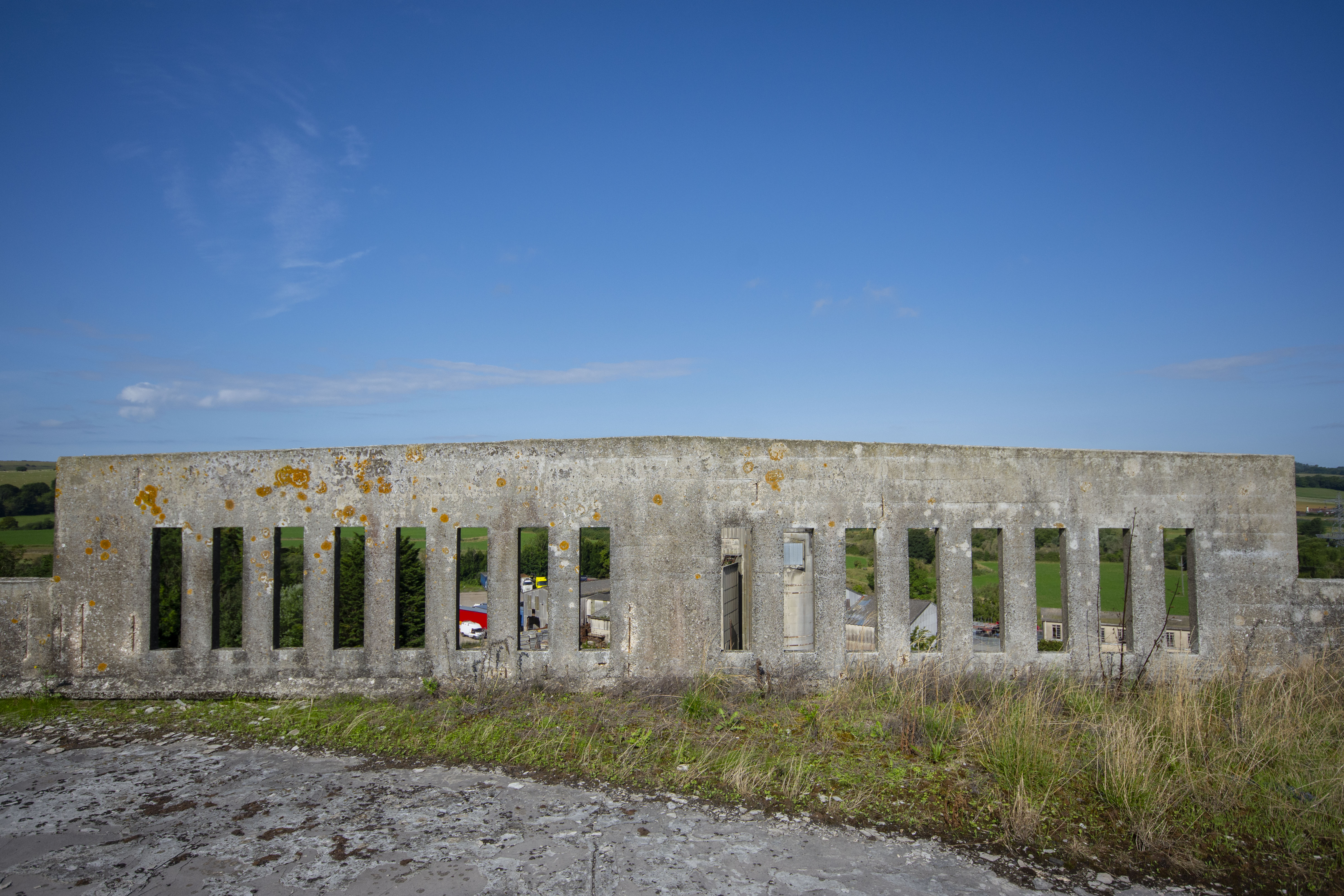
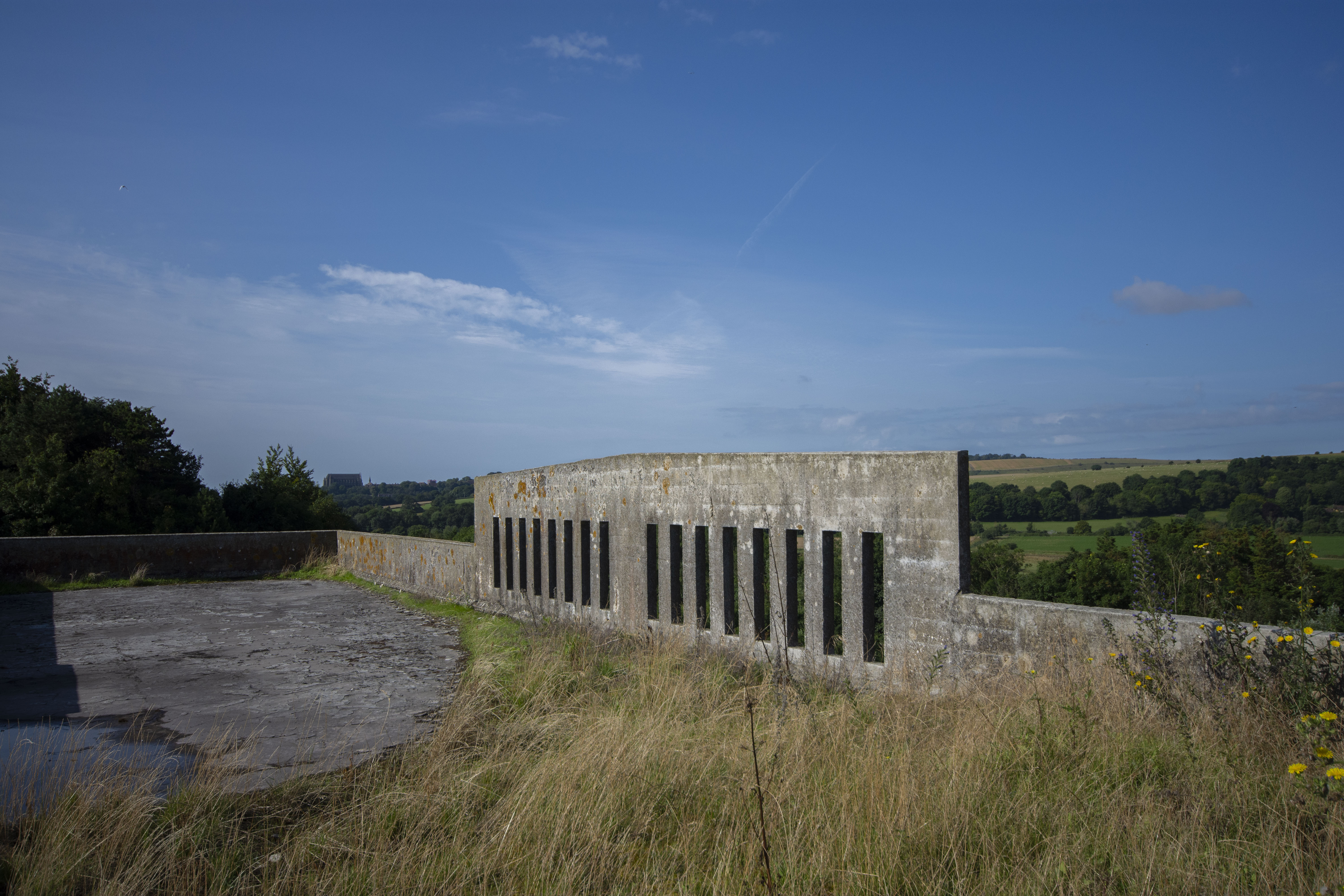
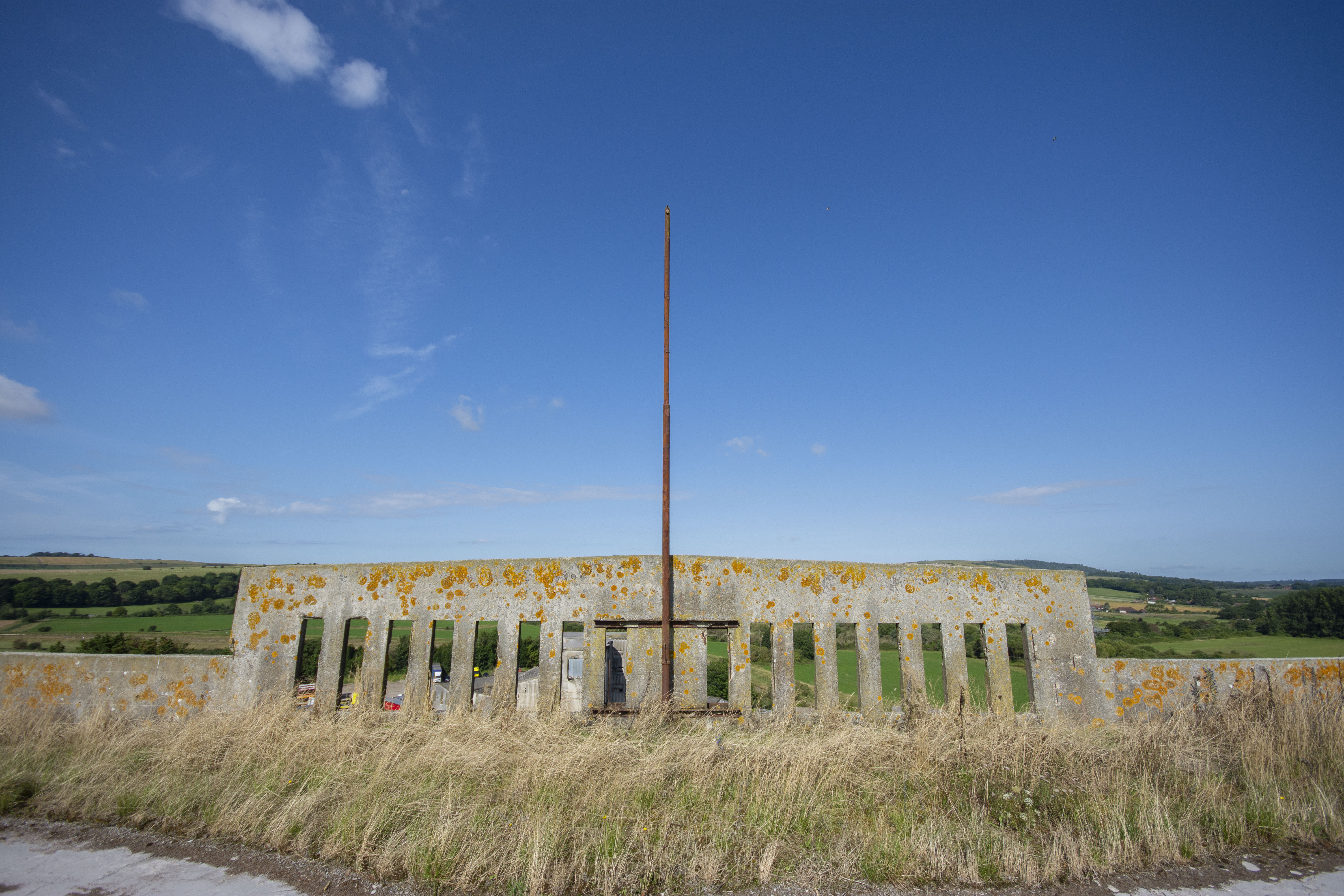
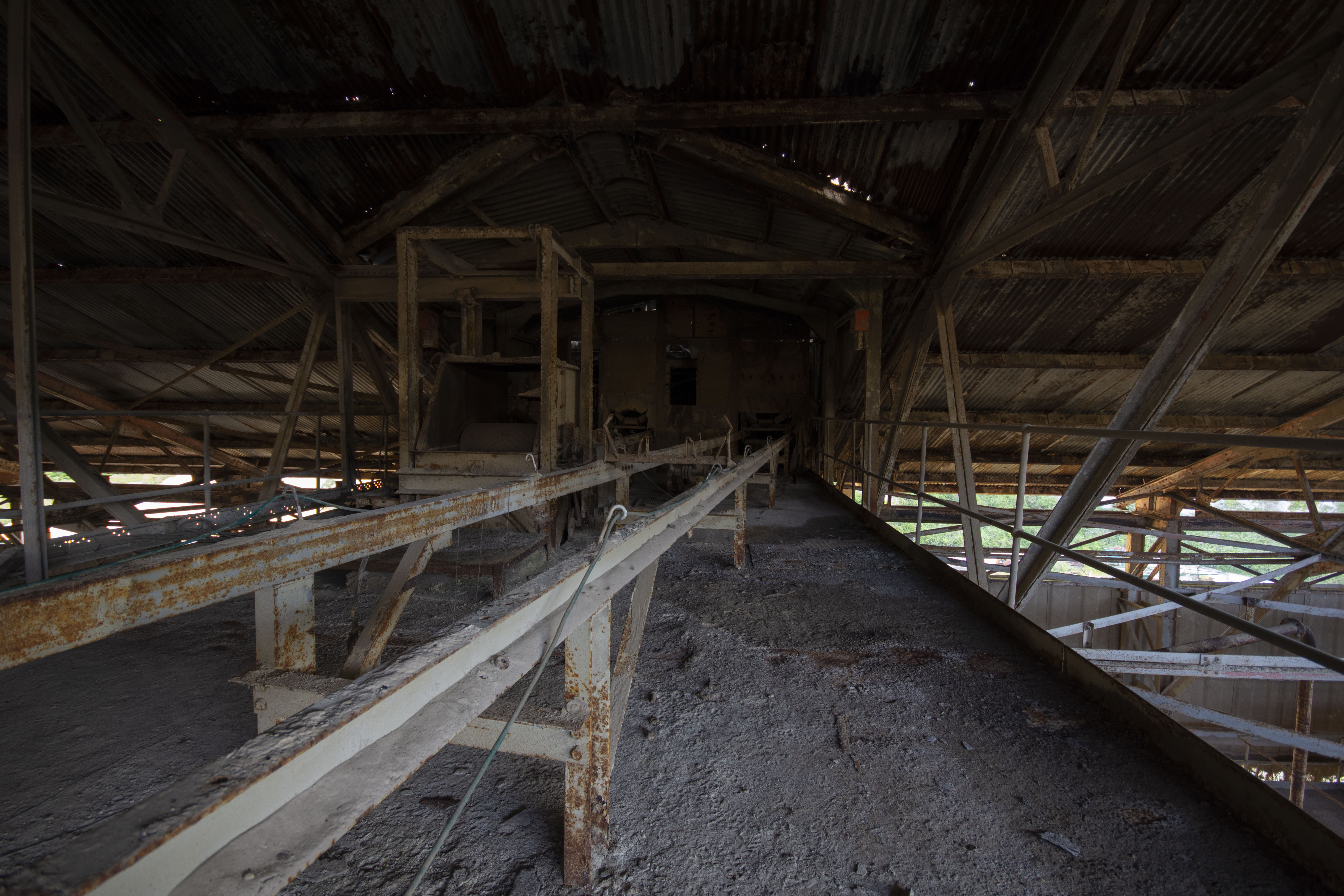
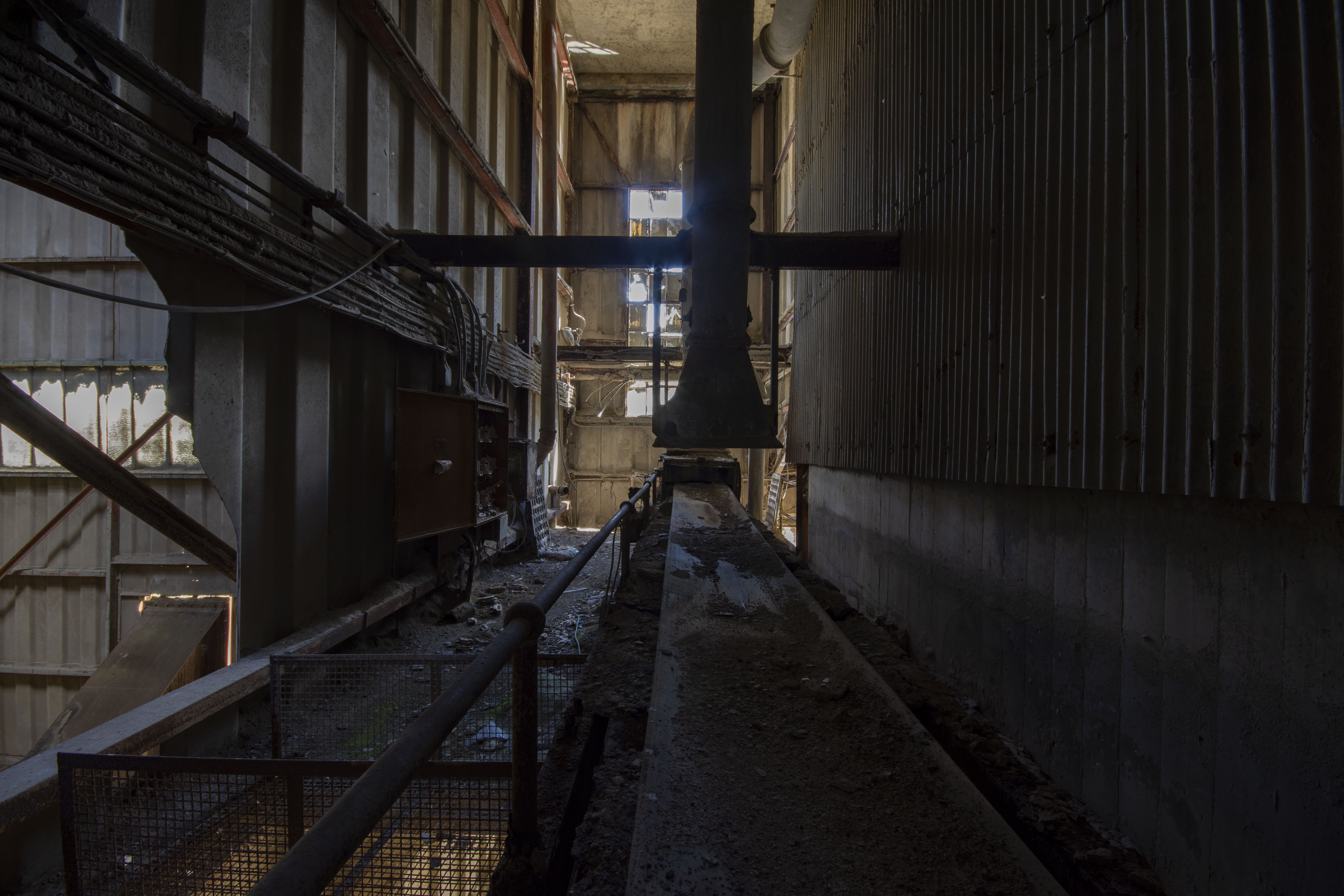
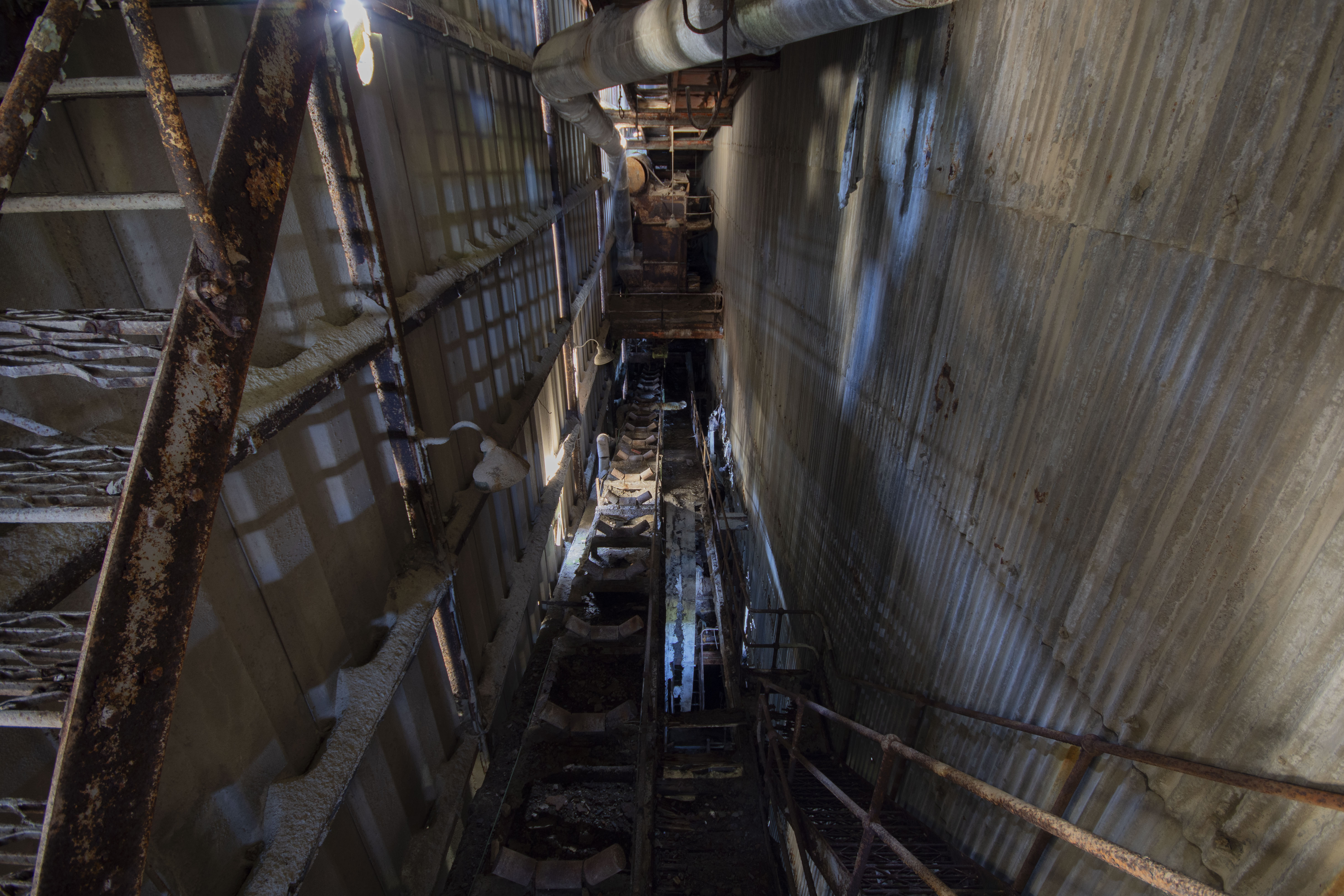
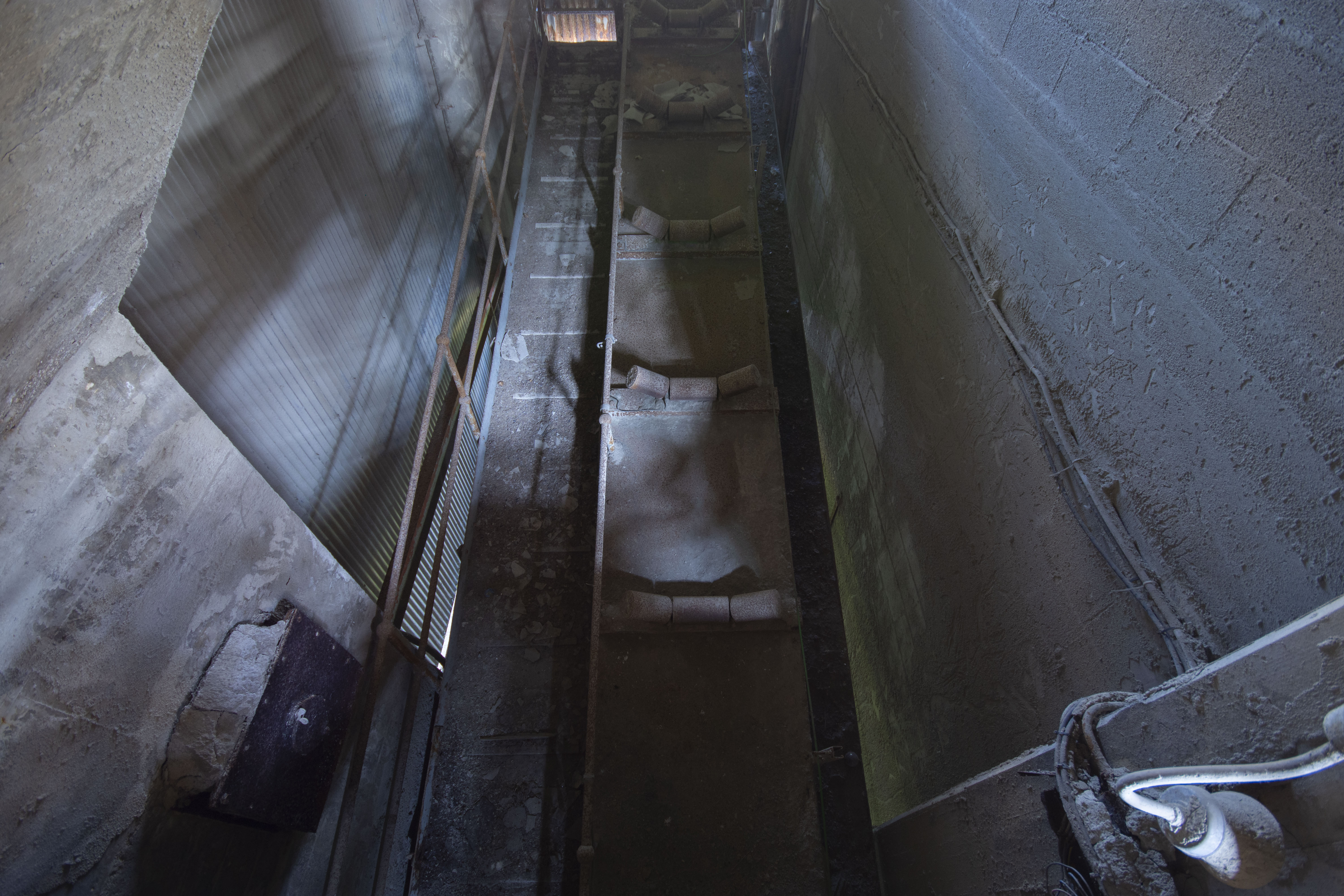
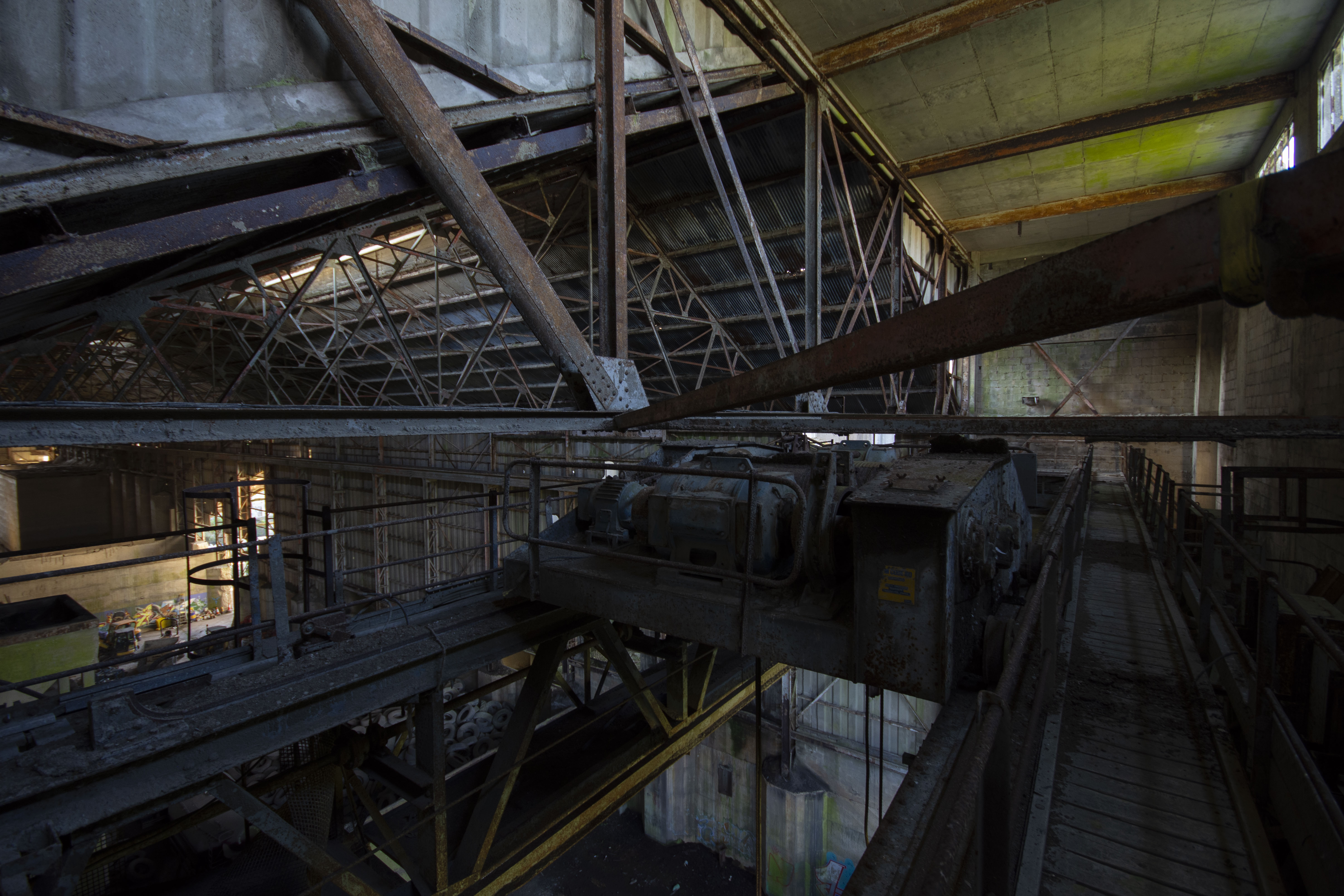
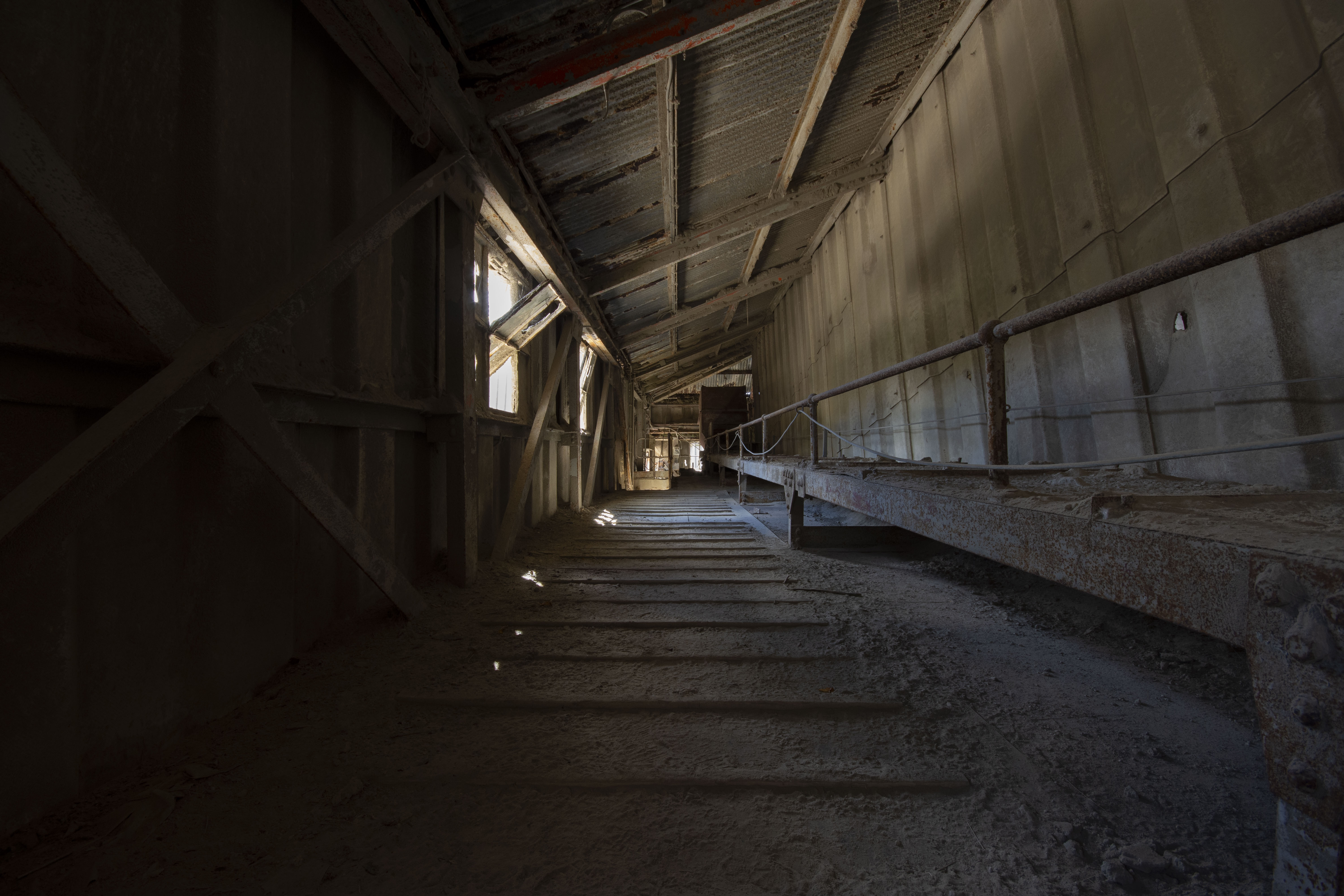
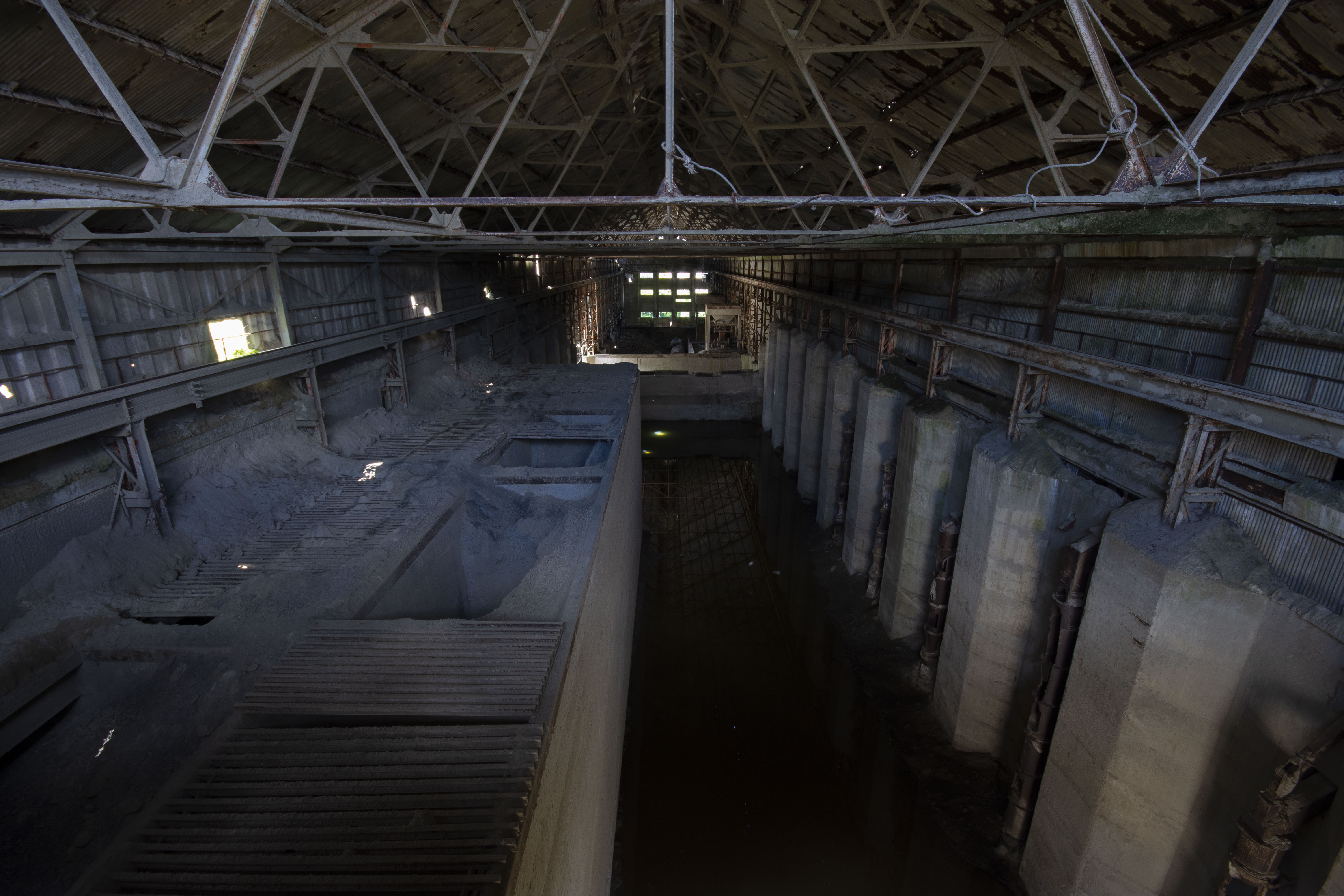
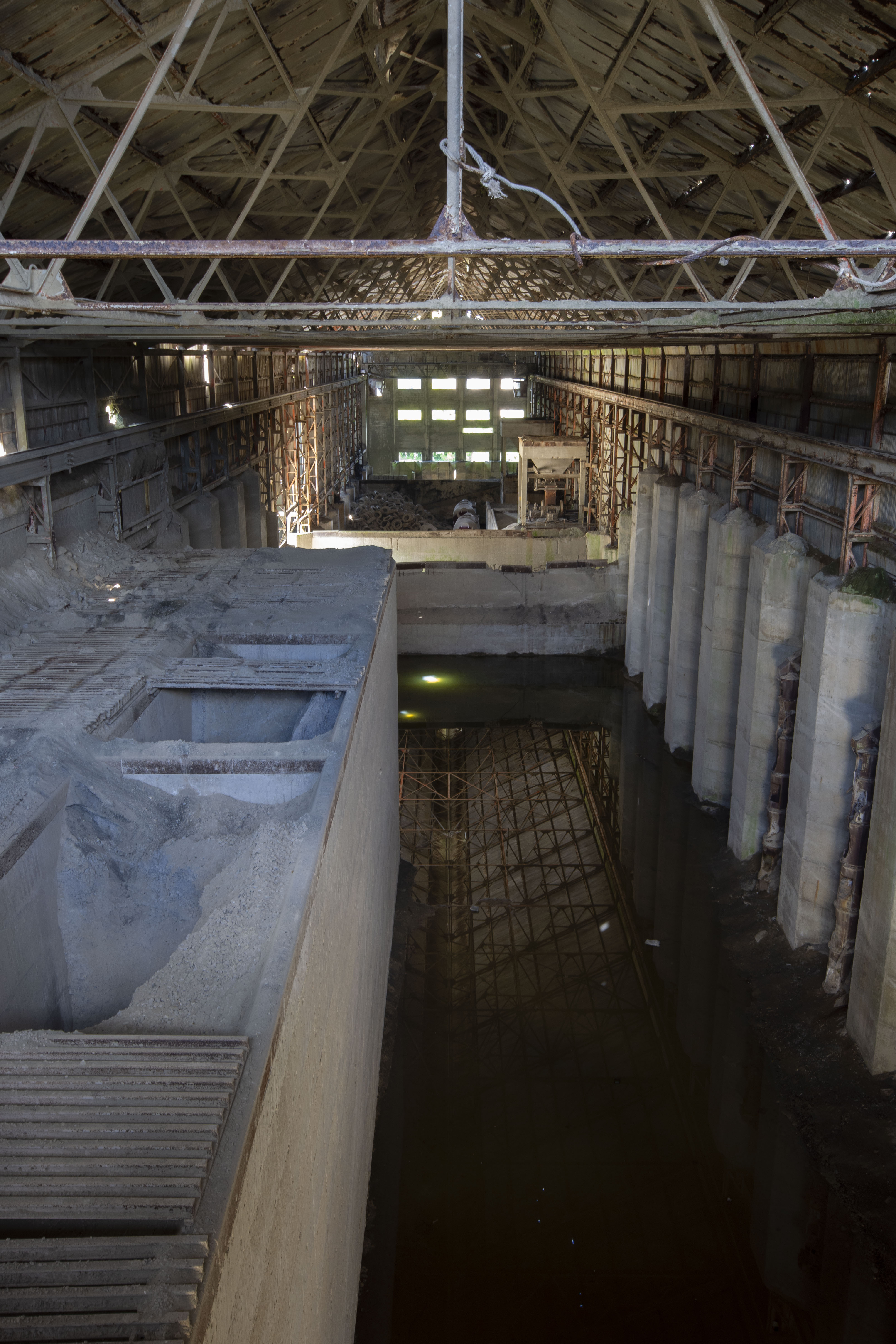
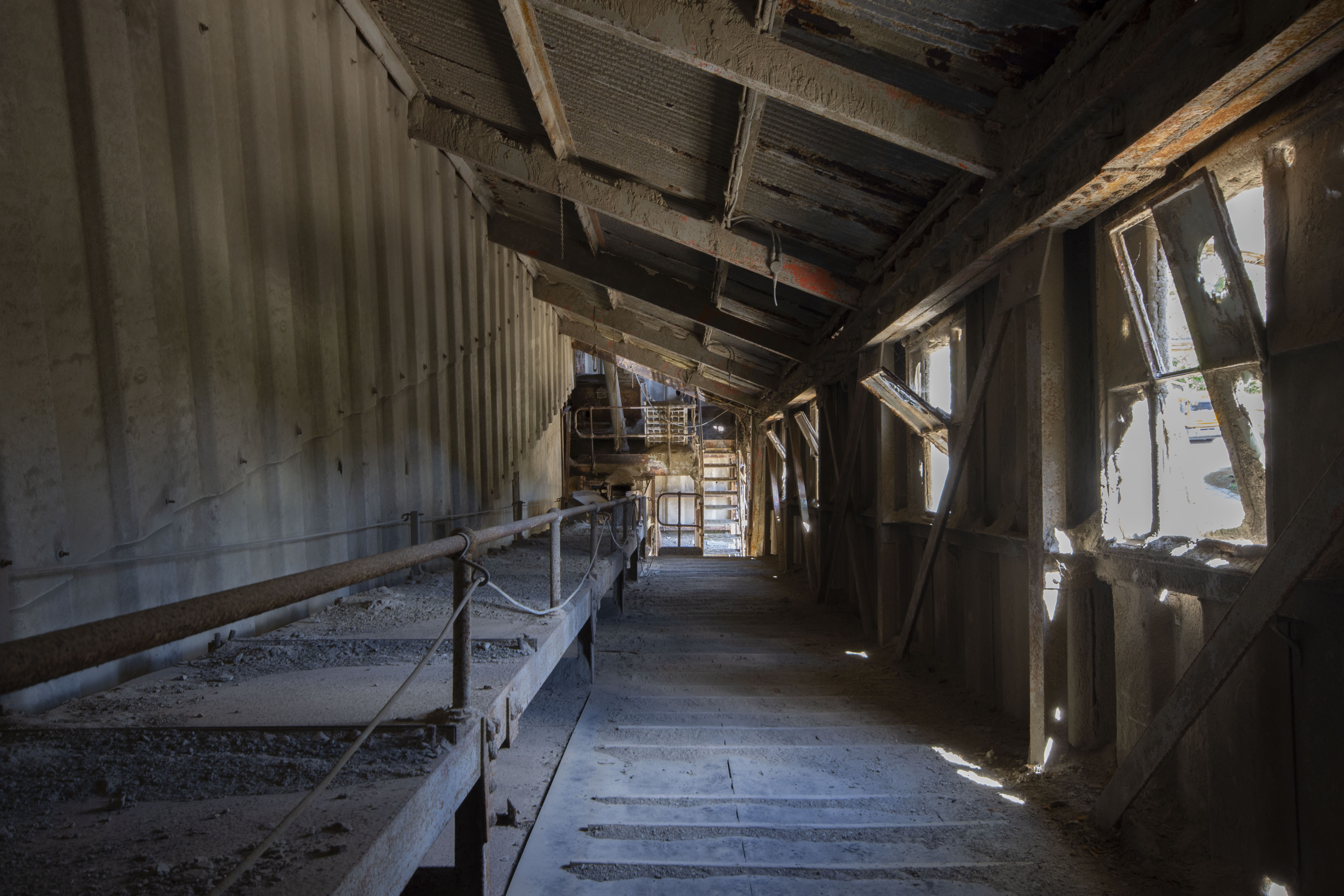
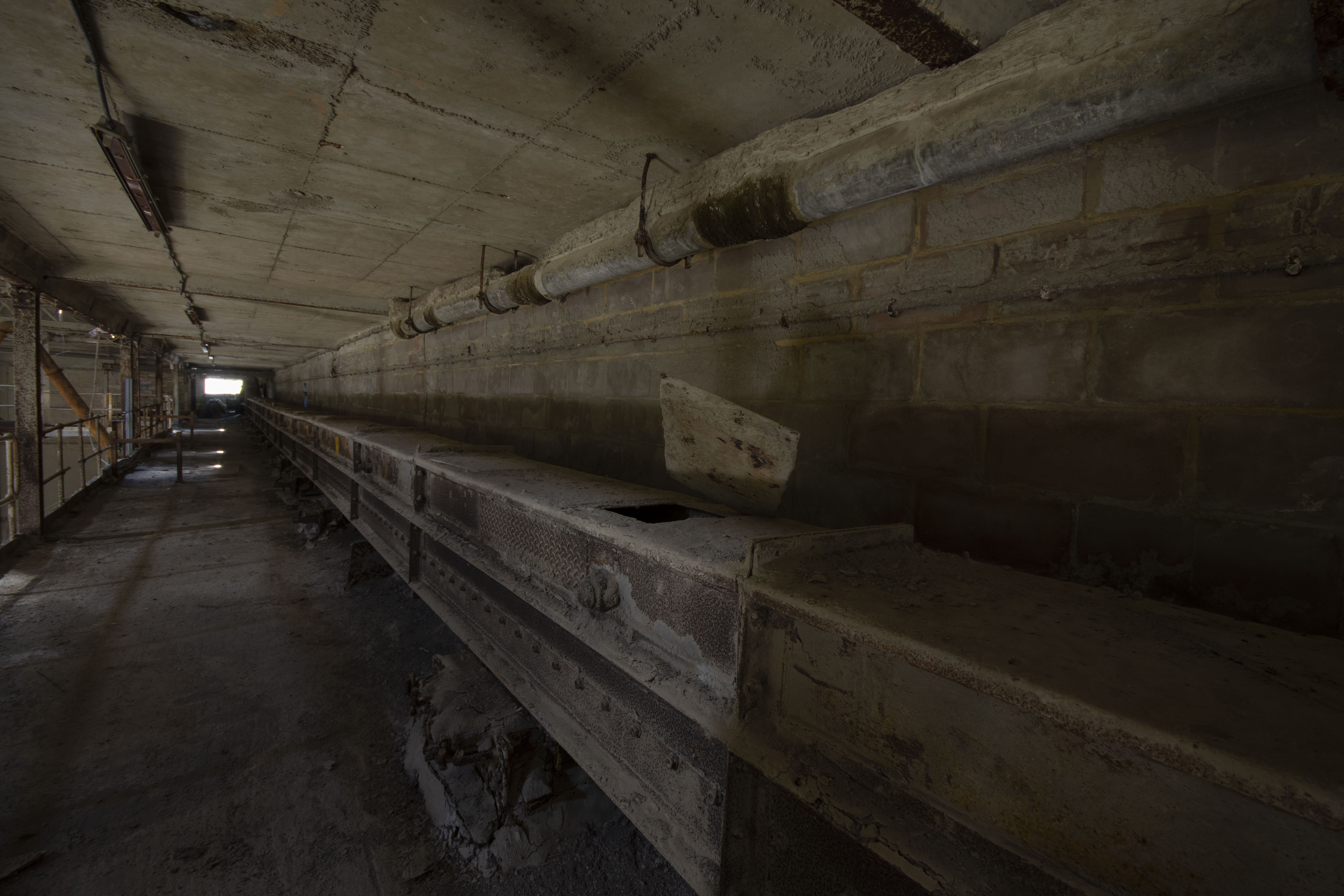
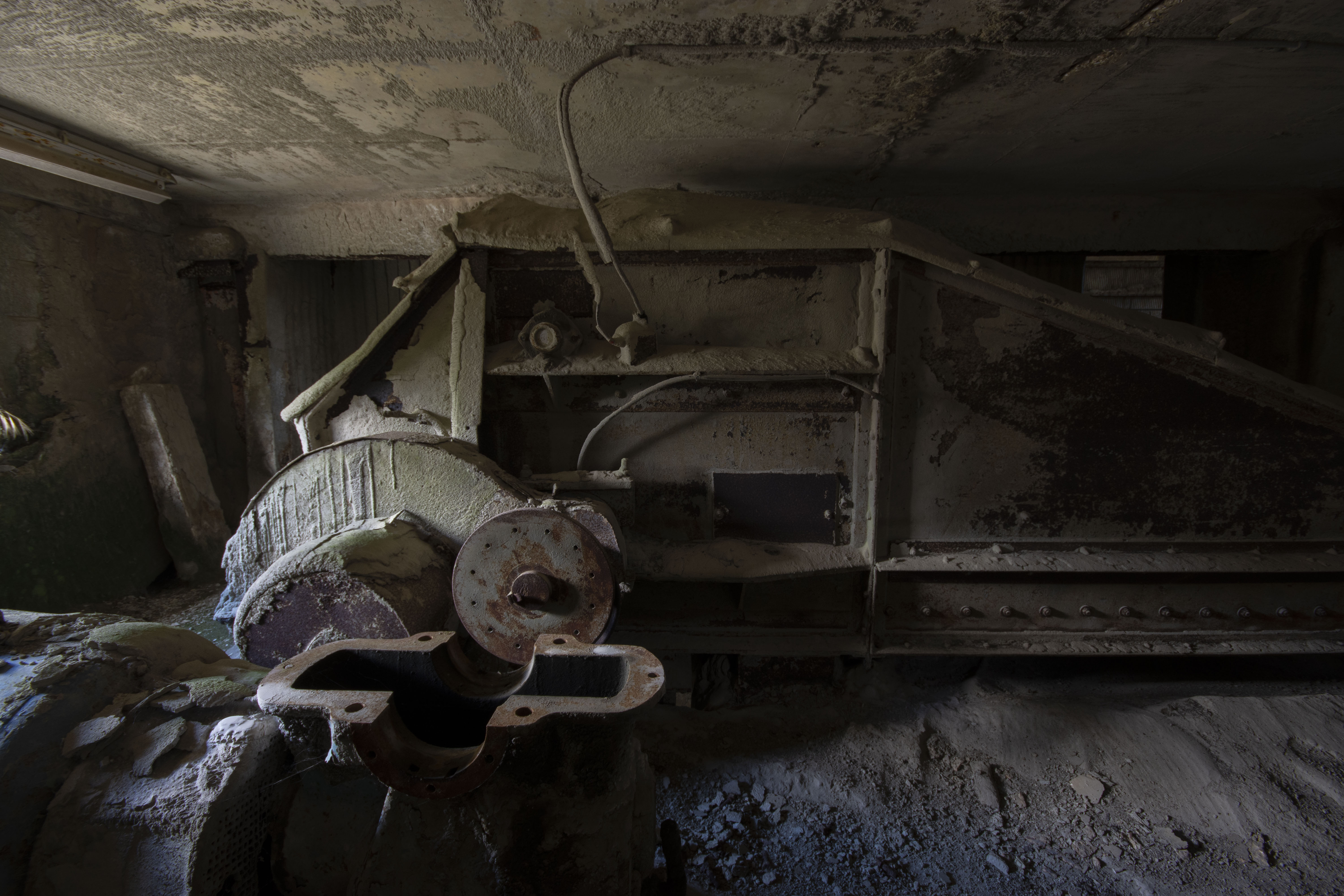
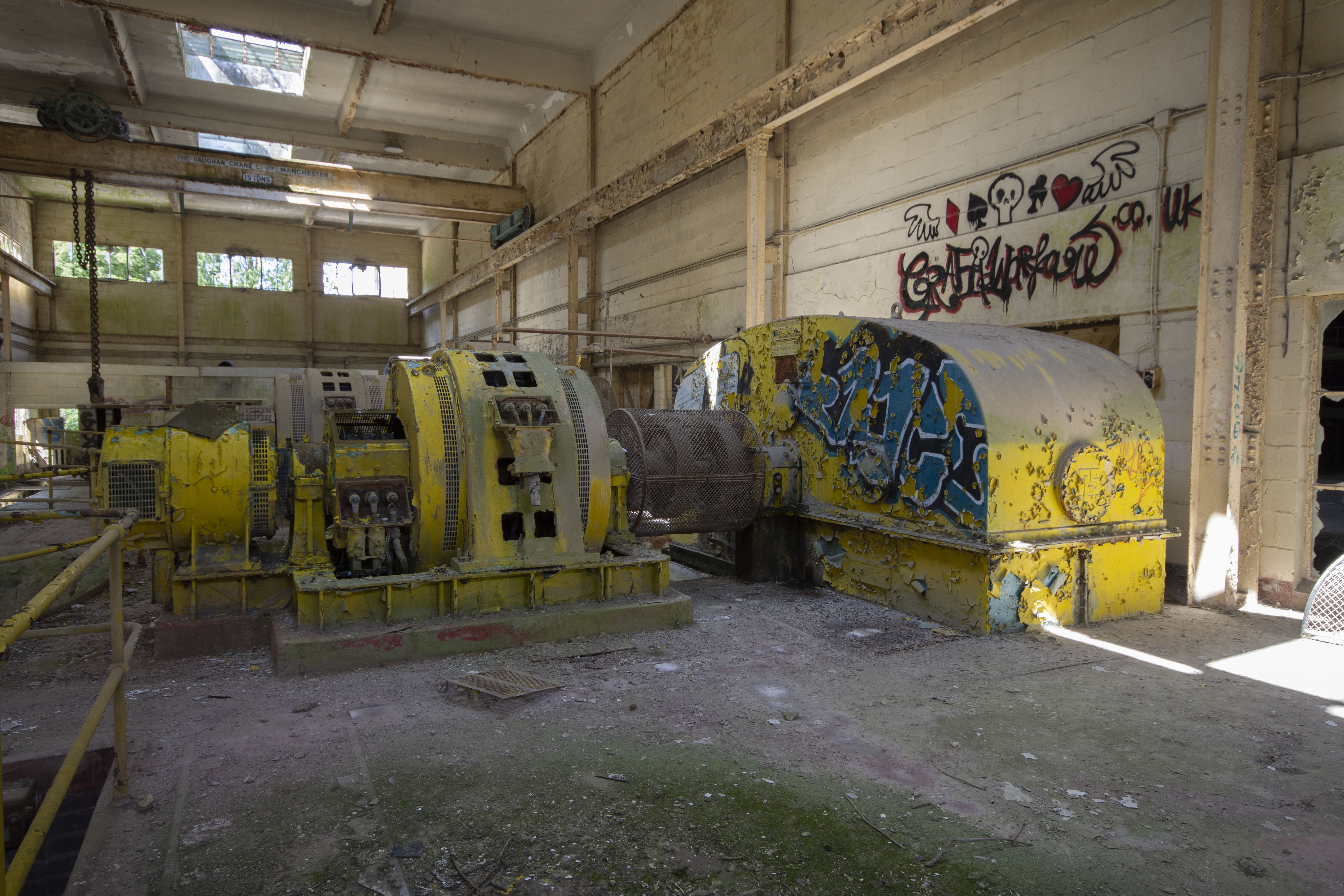
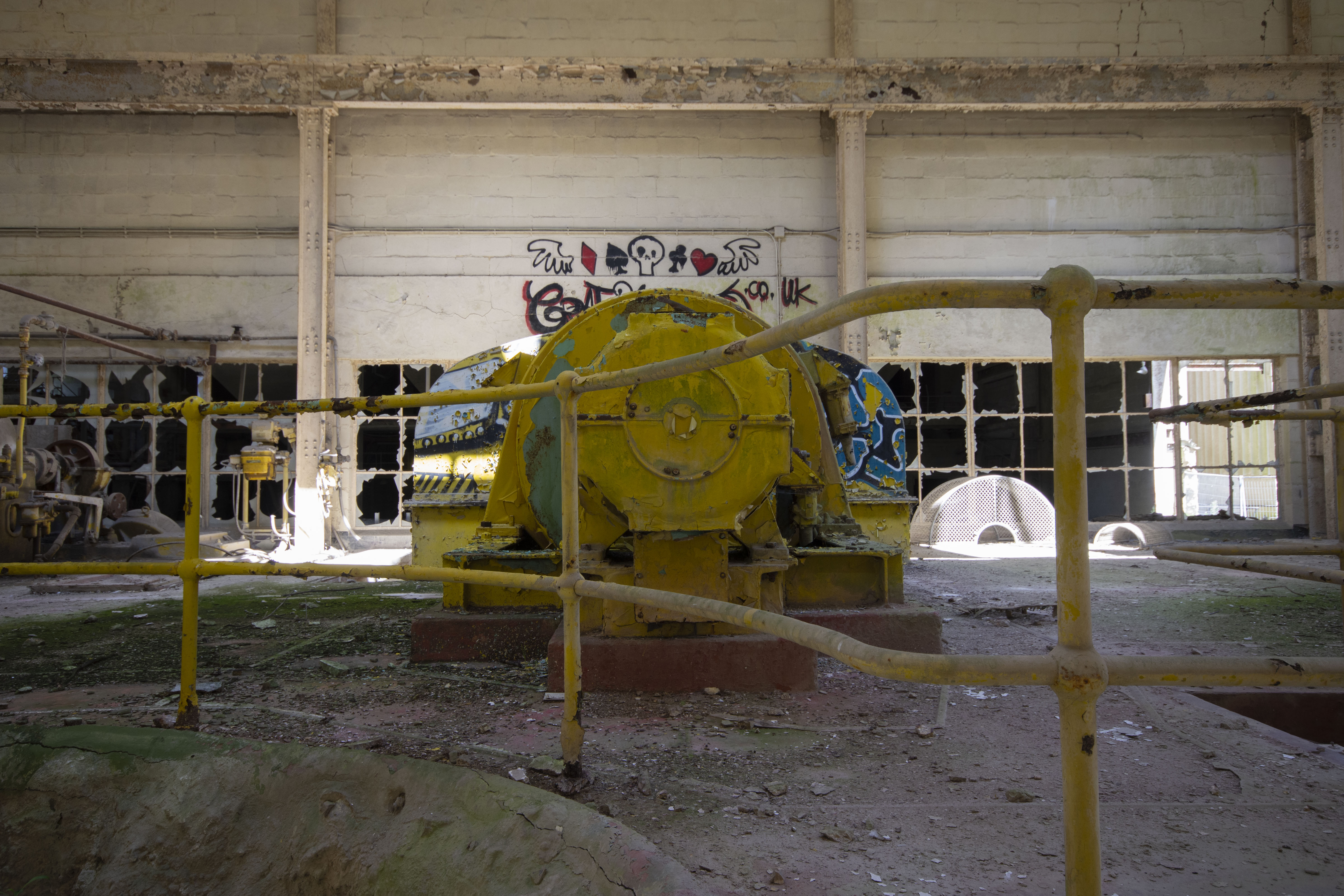
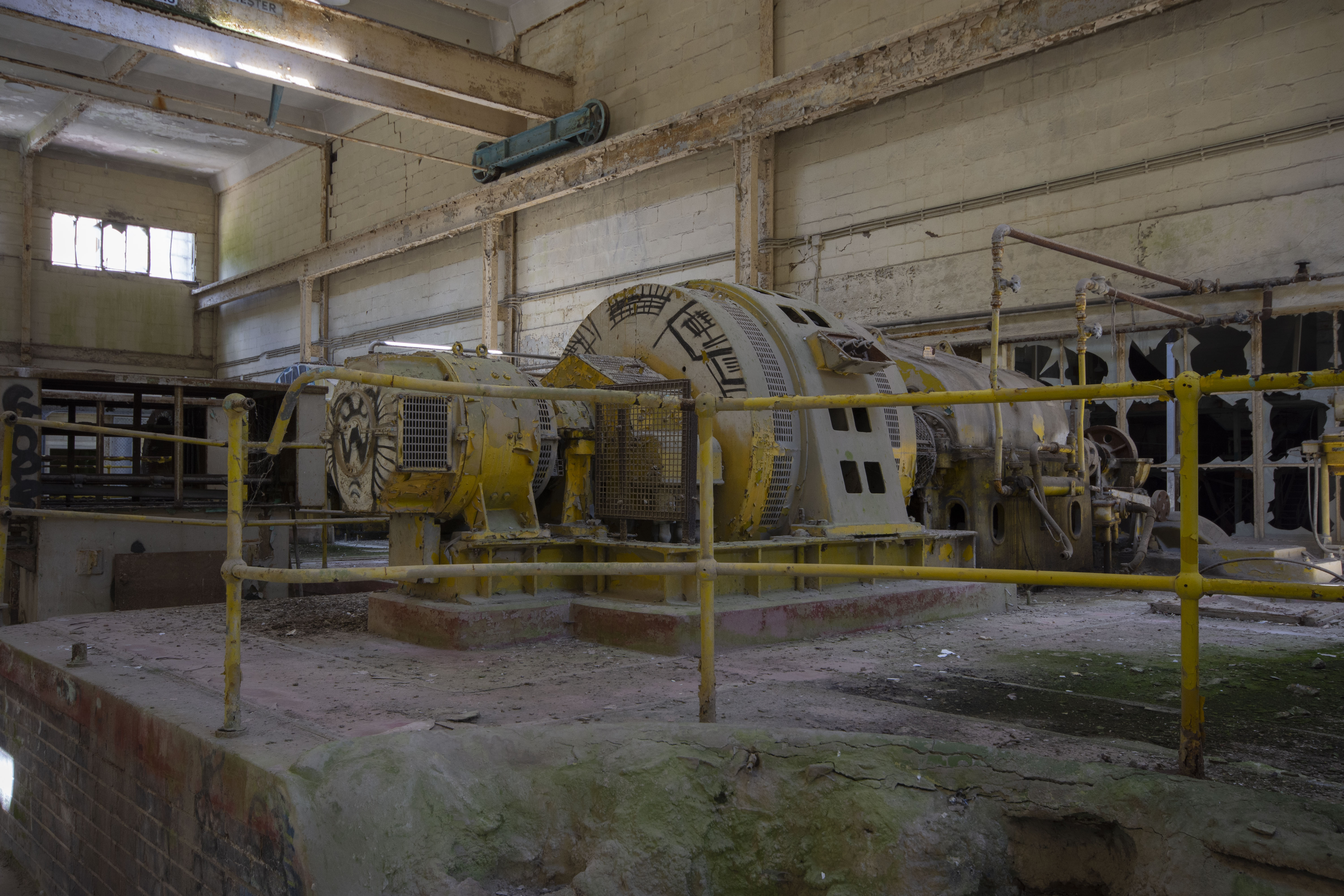
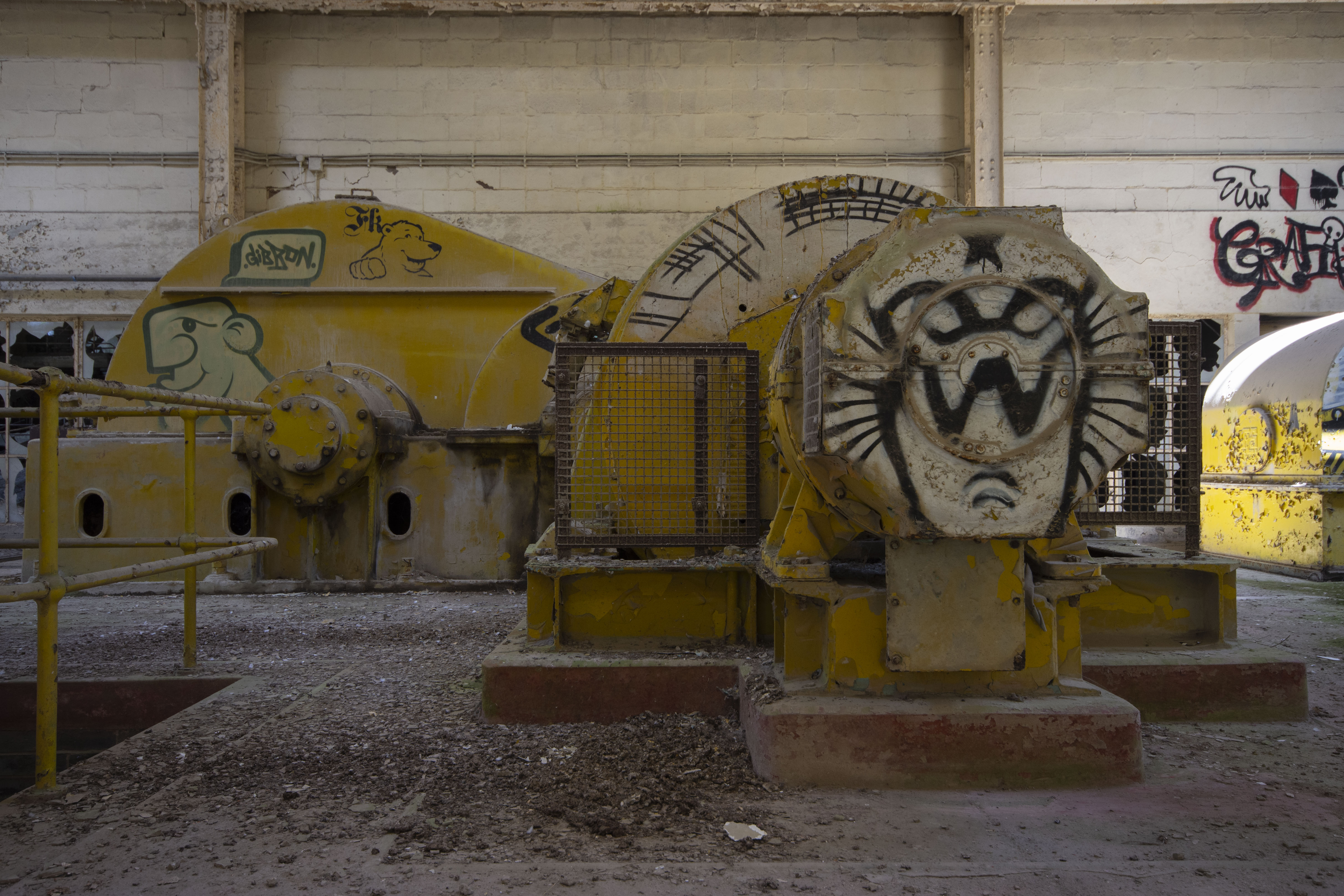
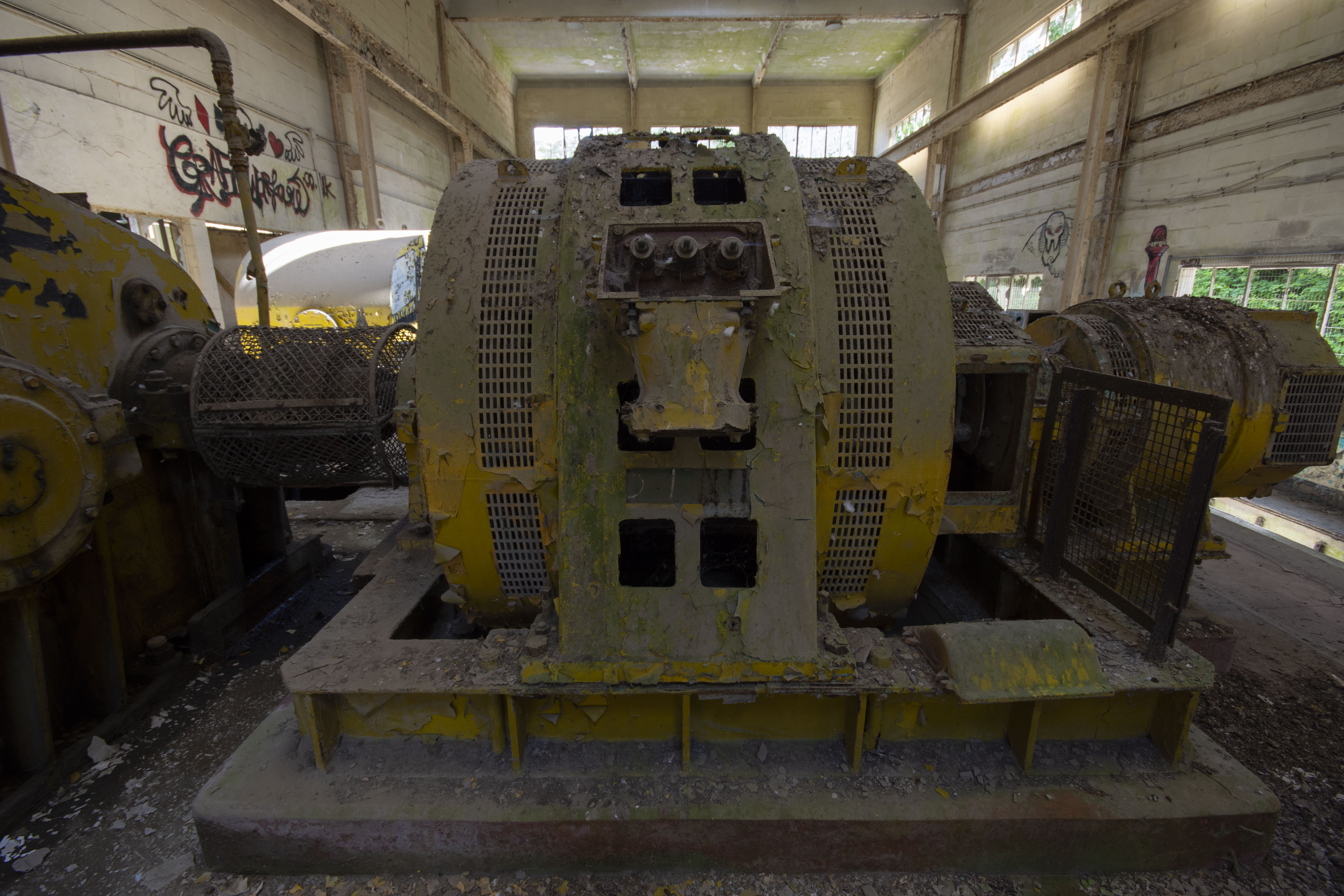
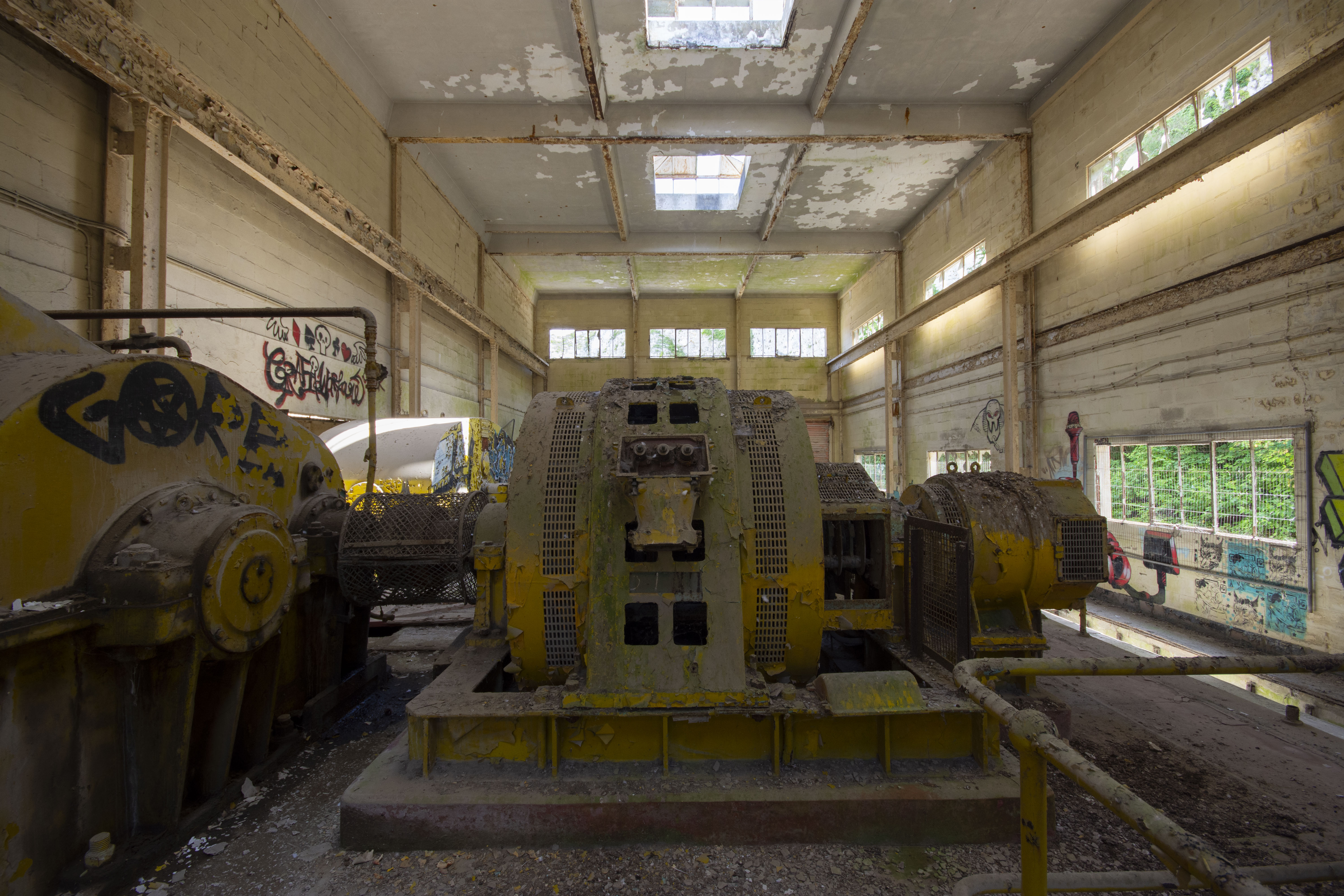
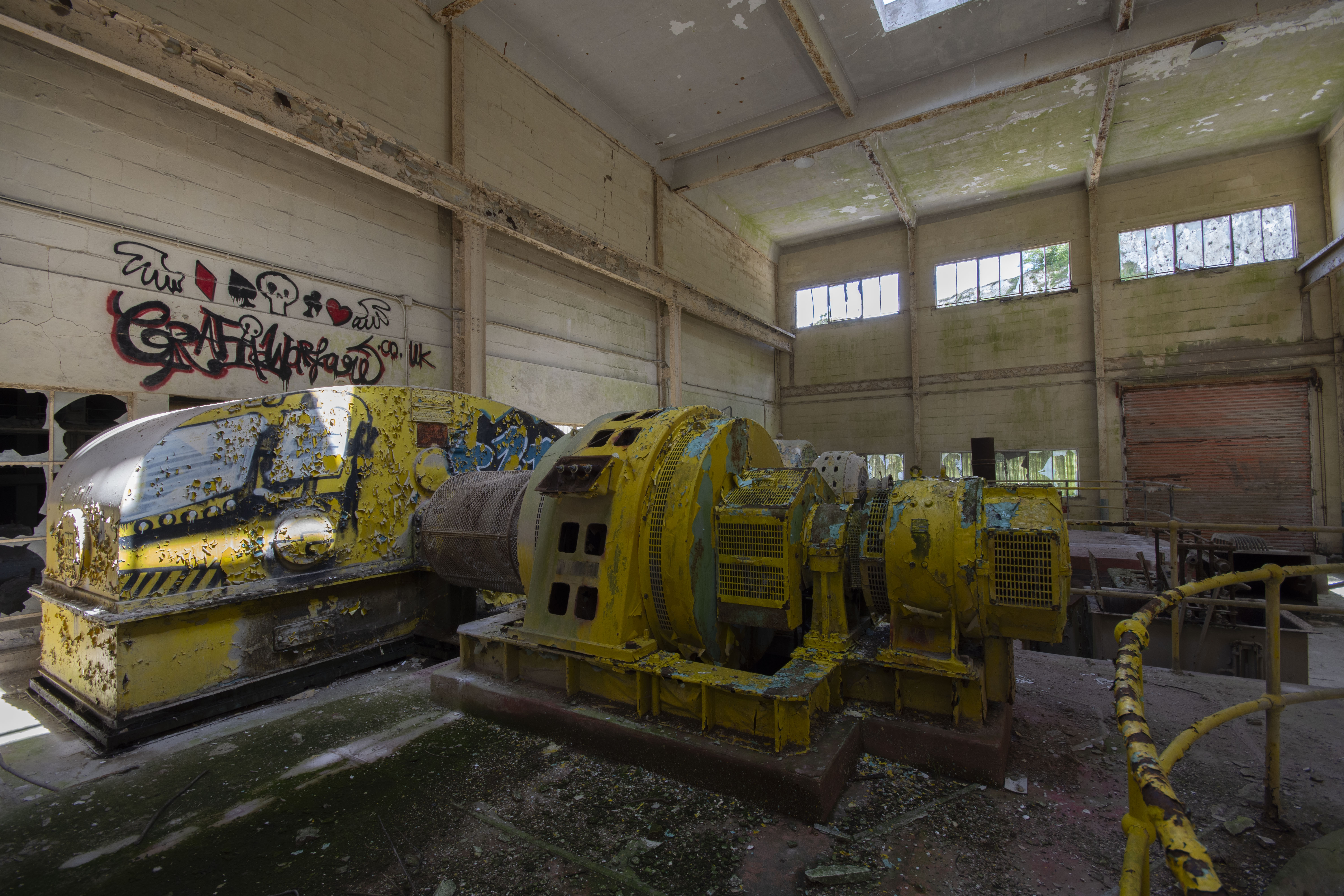
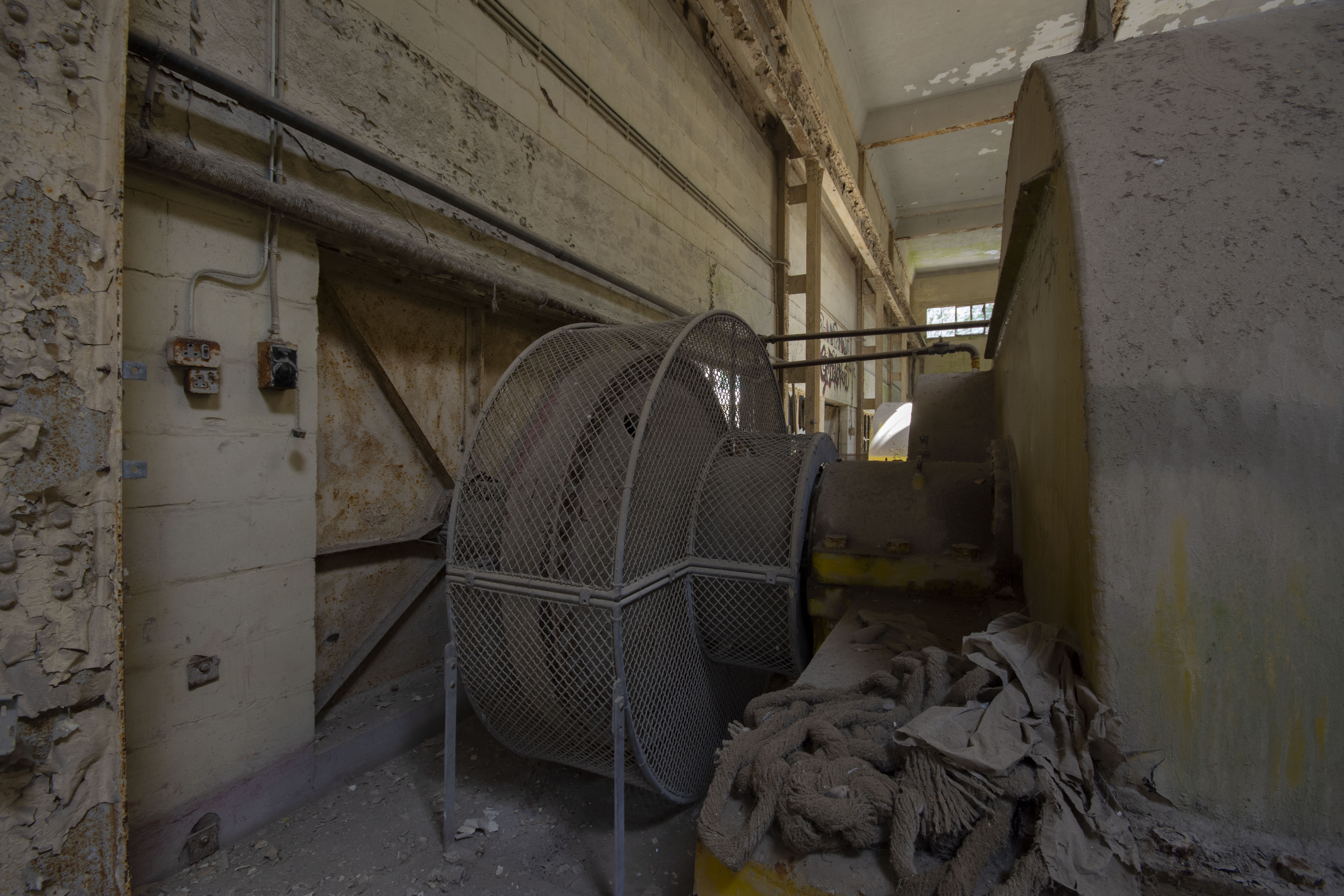
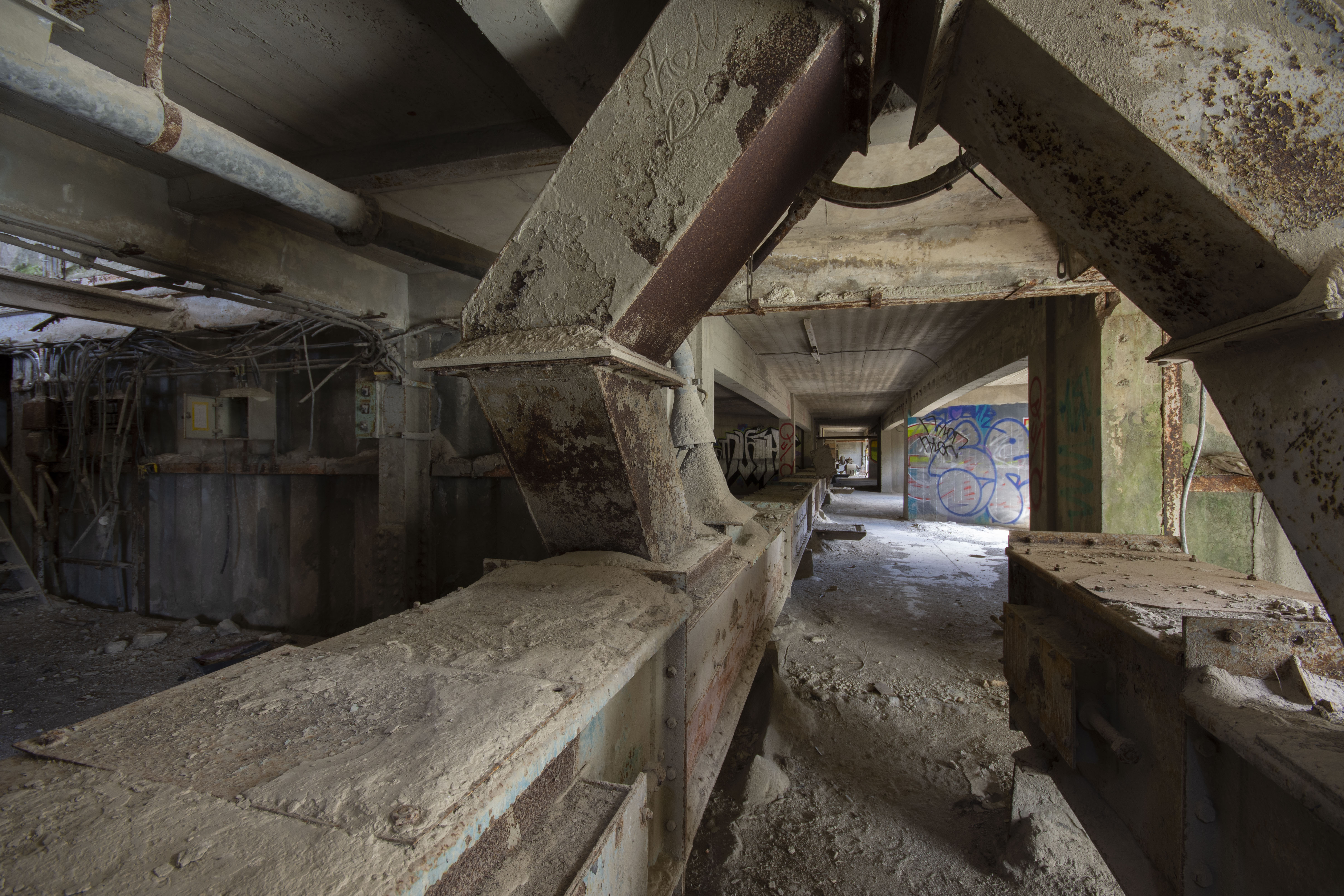
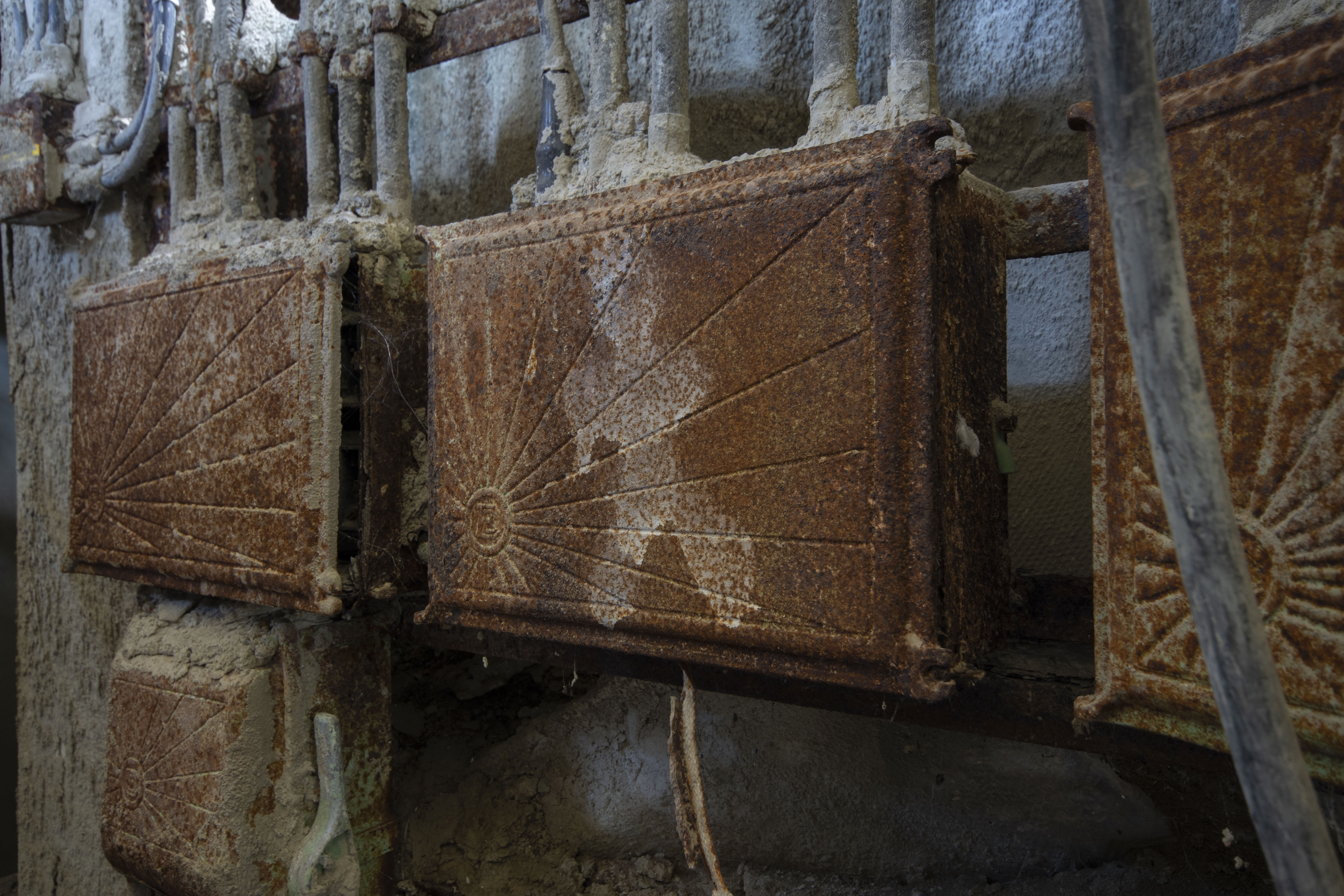
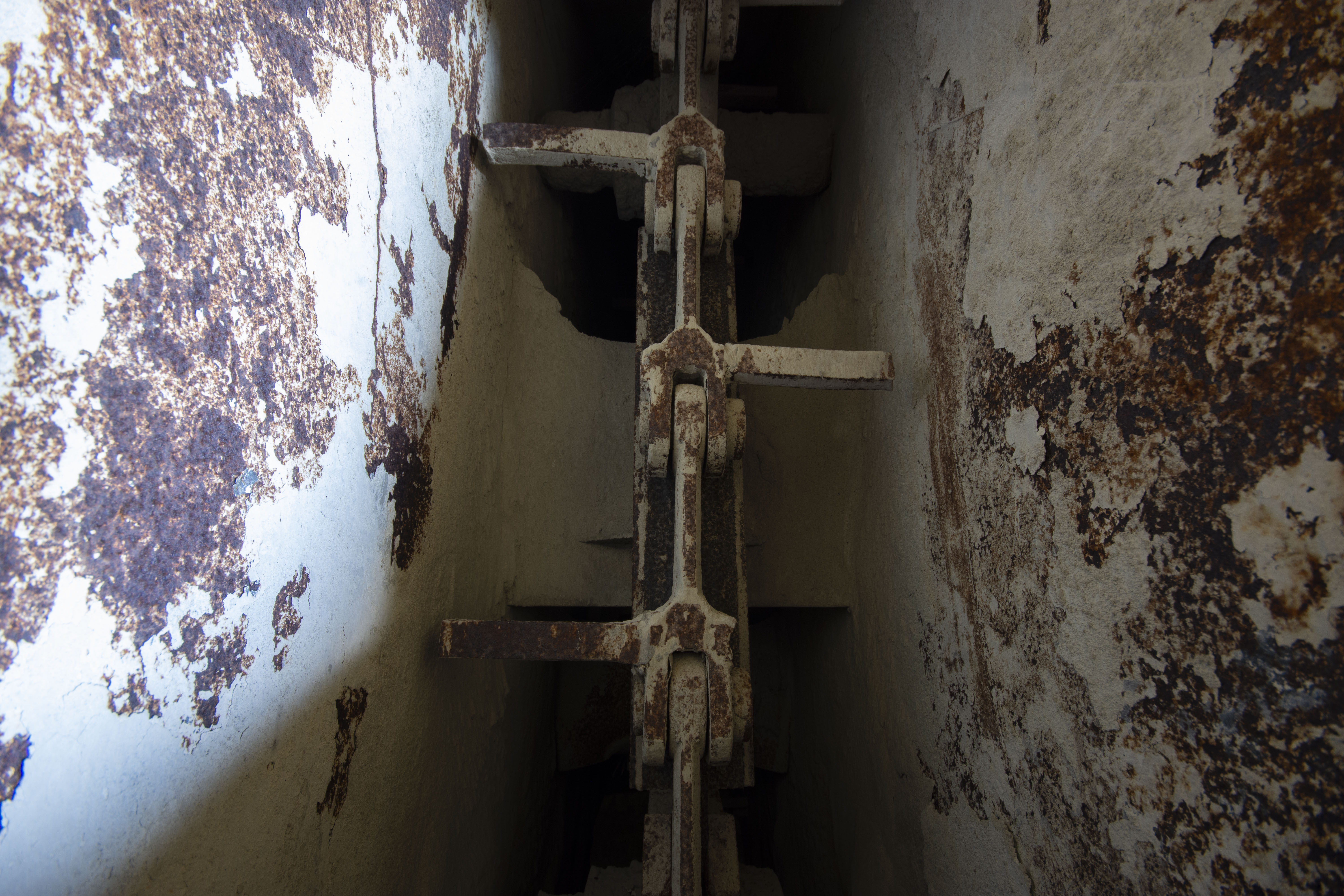
On the exposed conveyor (some of the fibro-cement boards have fallen off, exposing the inside), whilst I was putting my coat in my bag, I looked out the window for a brief moment and saw a security guard slowly walking around with a German Shepherd. And the bloody thing was looking everywhere. I reckon it could smell and hear us…! So, we sat tight for a good ten minutes, whispering and being quiet. Then we made our way up, accidently going to the gantry crane above the clinker storage shed which enabled us to get some smashing shots of the cavernous interior. Afterwards, we made our way to the clinker mills. Unfortunately, all four mills have been taken out (presumably for resale elsewhere after closure) leaving the mill shed as an empty husk, but the synchronous motor house next door was still intact. So in we went, keeping an eye out as the floor of the motor shed was right next to the security patrol road. About five minutes after that, I saw in the corner of my eye that security’s dog was trotting towards the building, so we both squashed ourselves against the wall of the building and stayed put for about ten minutes as security walked past. Considering I could hear him whistling, he must have been within four feet of us then!! The rest of the explore was chilled. We got our last shots of the motor house, then buggered off back up high where that dog wouldn’t be able to follow us should it have come into the building. We got some shots from the top of the silo building – a trek and a half right up a really steep conveyor – and then went back to the kiln hall to get more shots. After that, we called it a day after almost six hours of exploring the site to the fullest. On the way out, we stopped off at the cliff above the site to get some externals. Security rounded the corner at the bottom by the building and saw us then shouted “You’re not allowed up there!” so I shouted back “It’s okay, we’re leaving!” and then he replies “Okay, that’s fine!”, so I shout back “Cheers, have a good Sunday Bank Holiday!” and then he waves at me. Had he not been about 150 meters away at the bottom of a 200 foot cliff, it would have been a totally different story…!! Anyway, enjoy the photos!
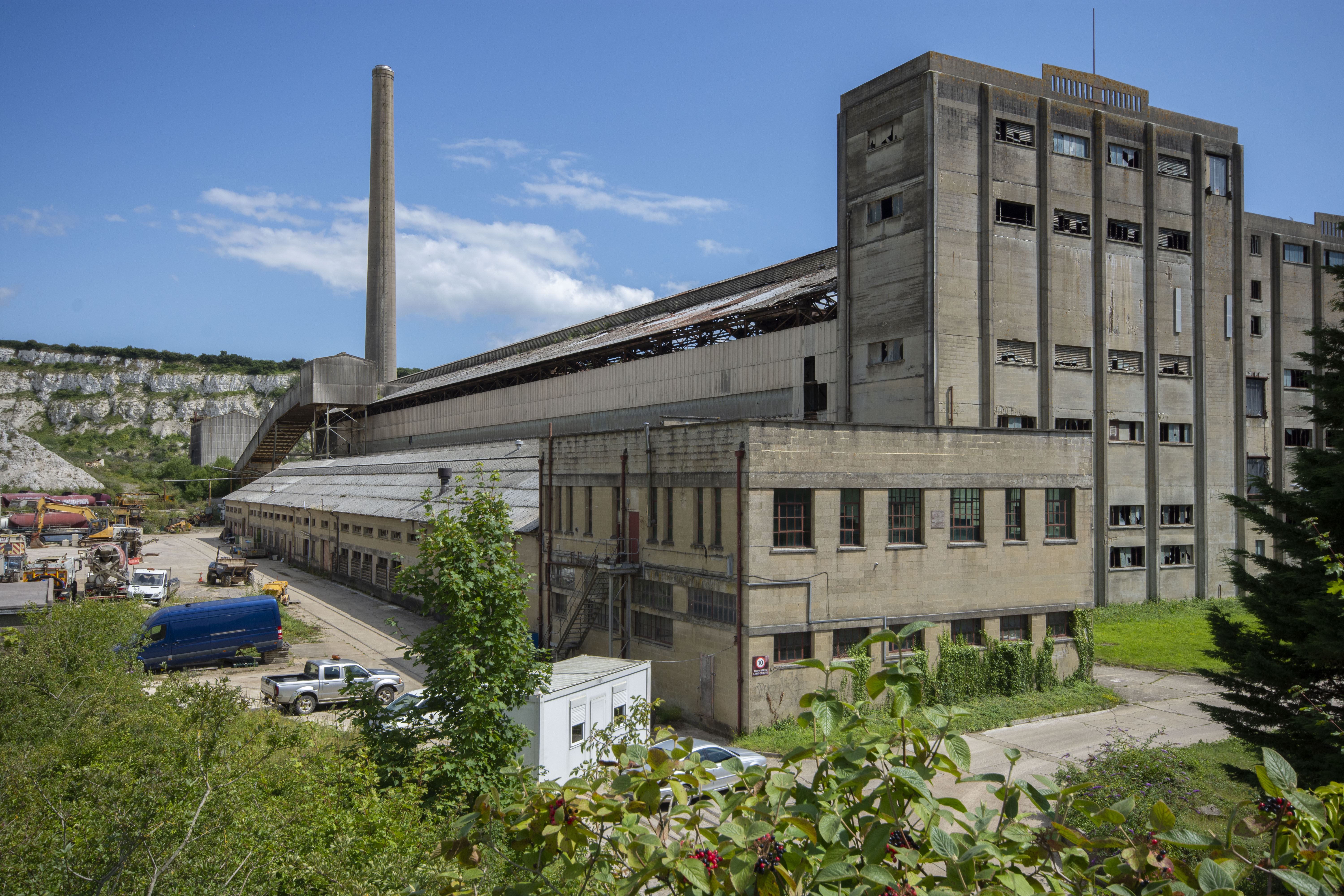
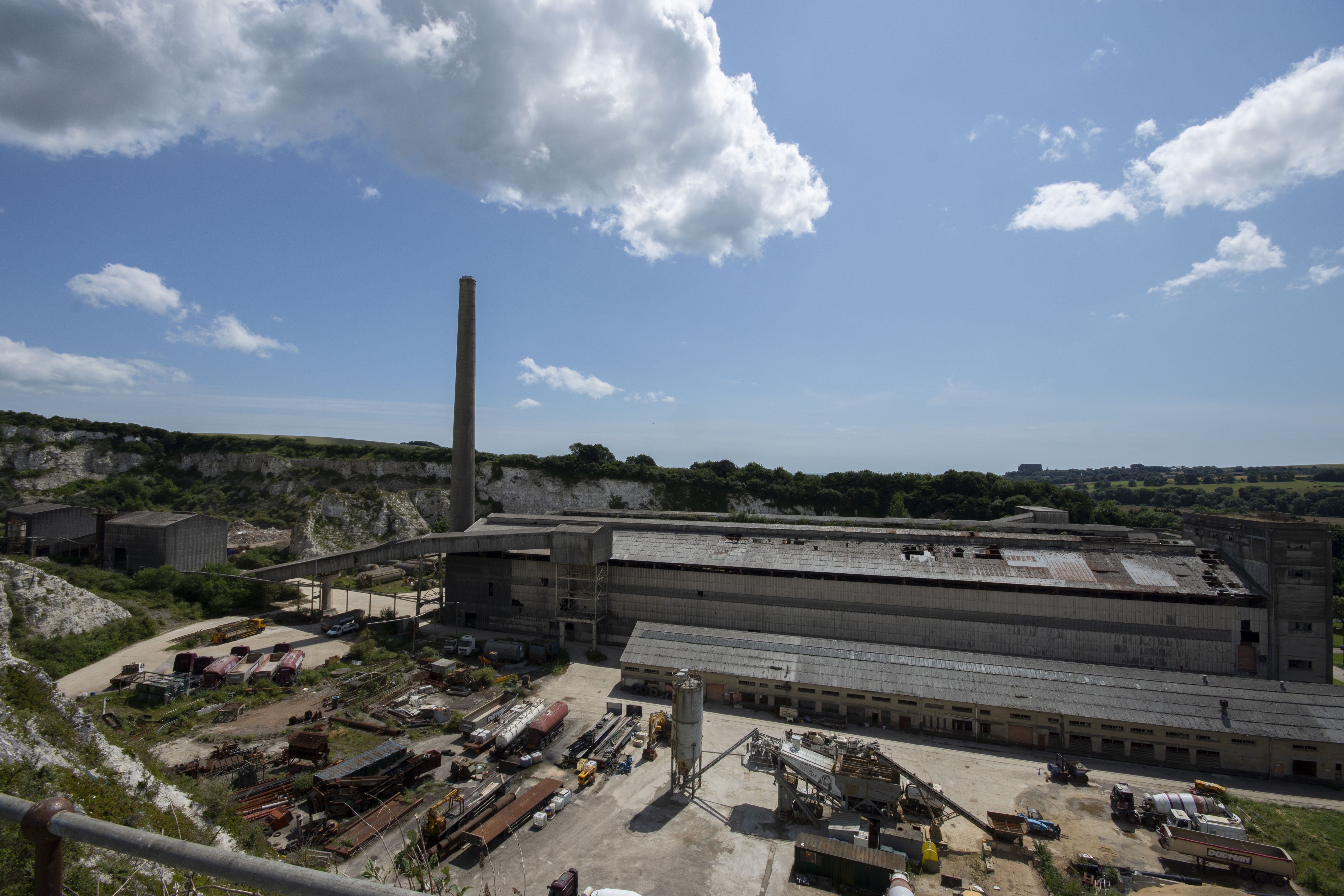
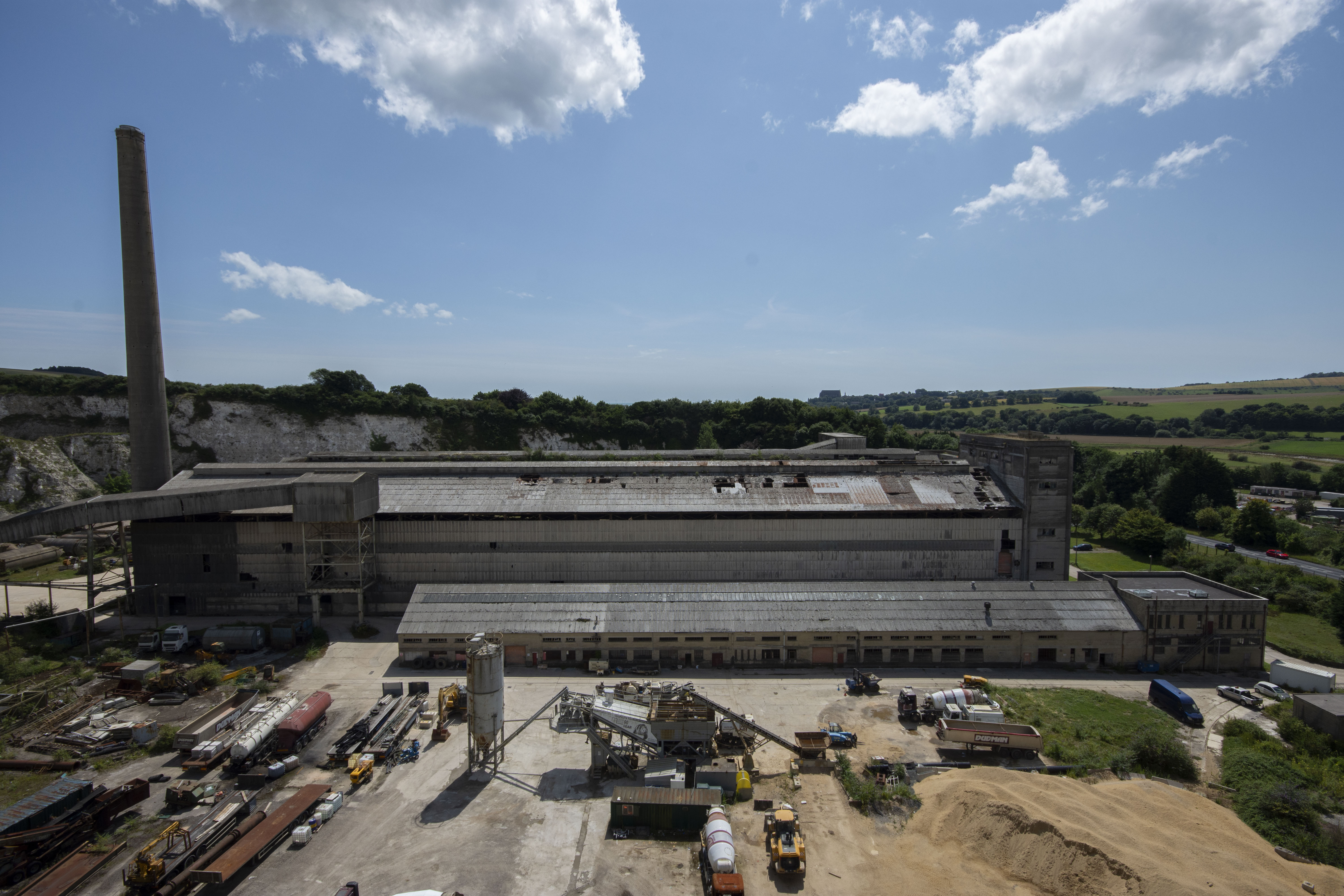
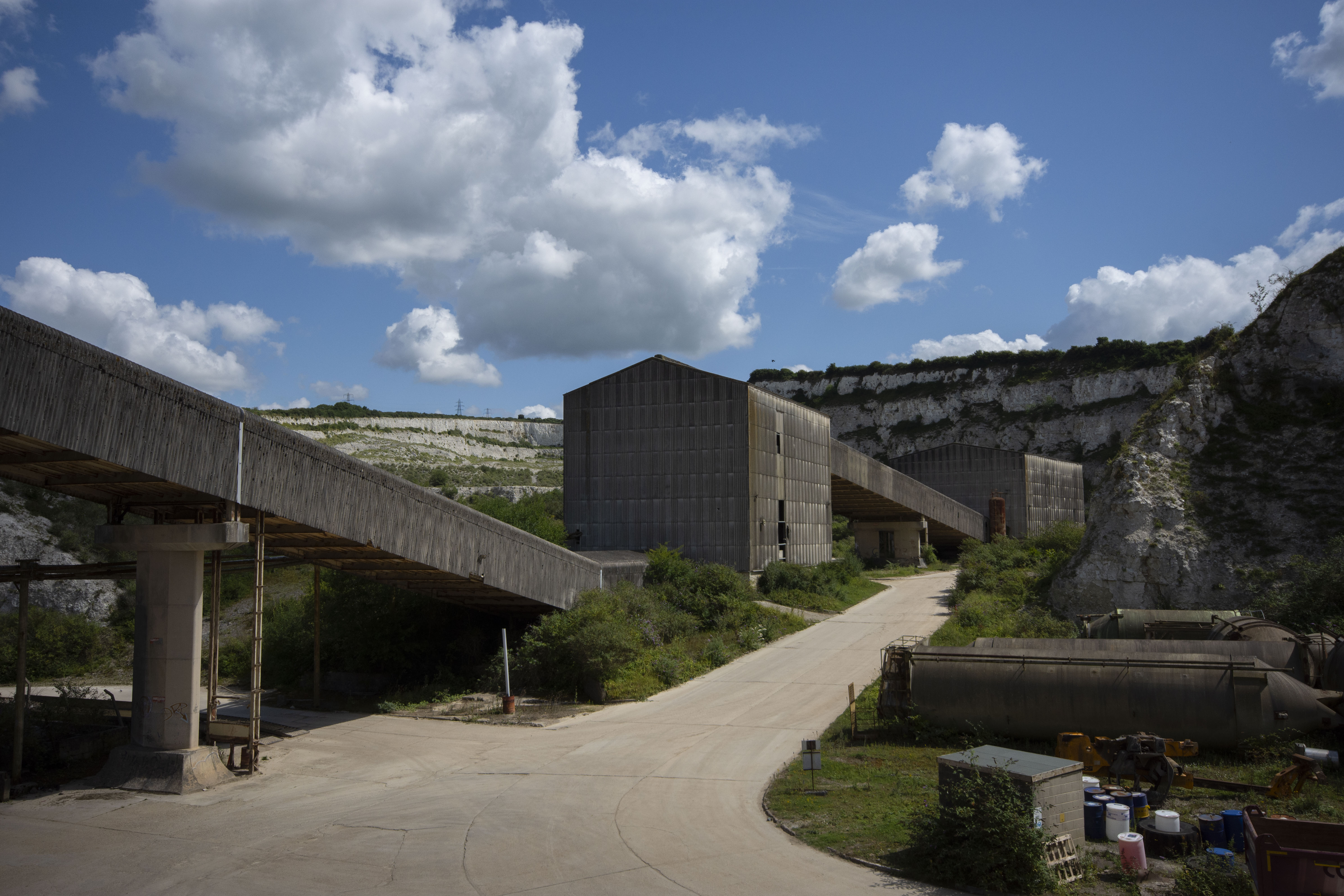
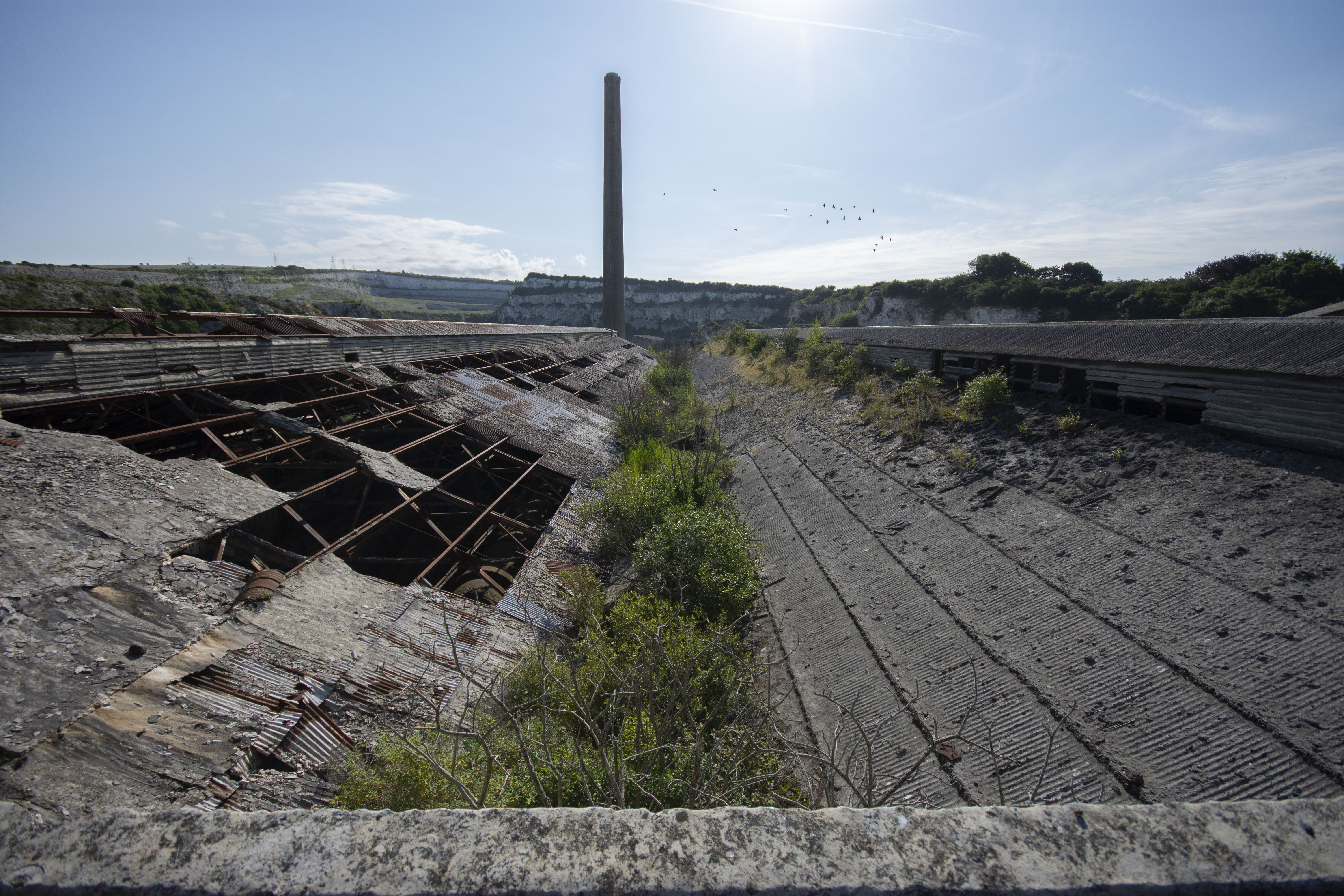
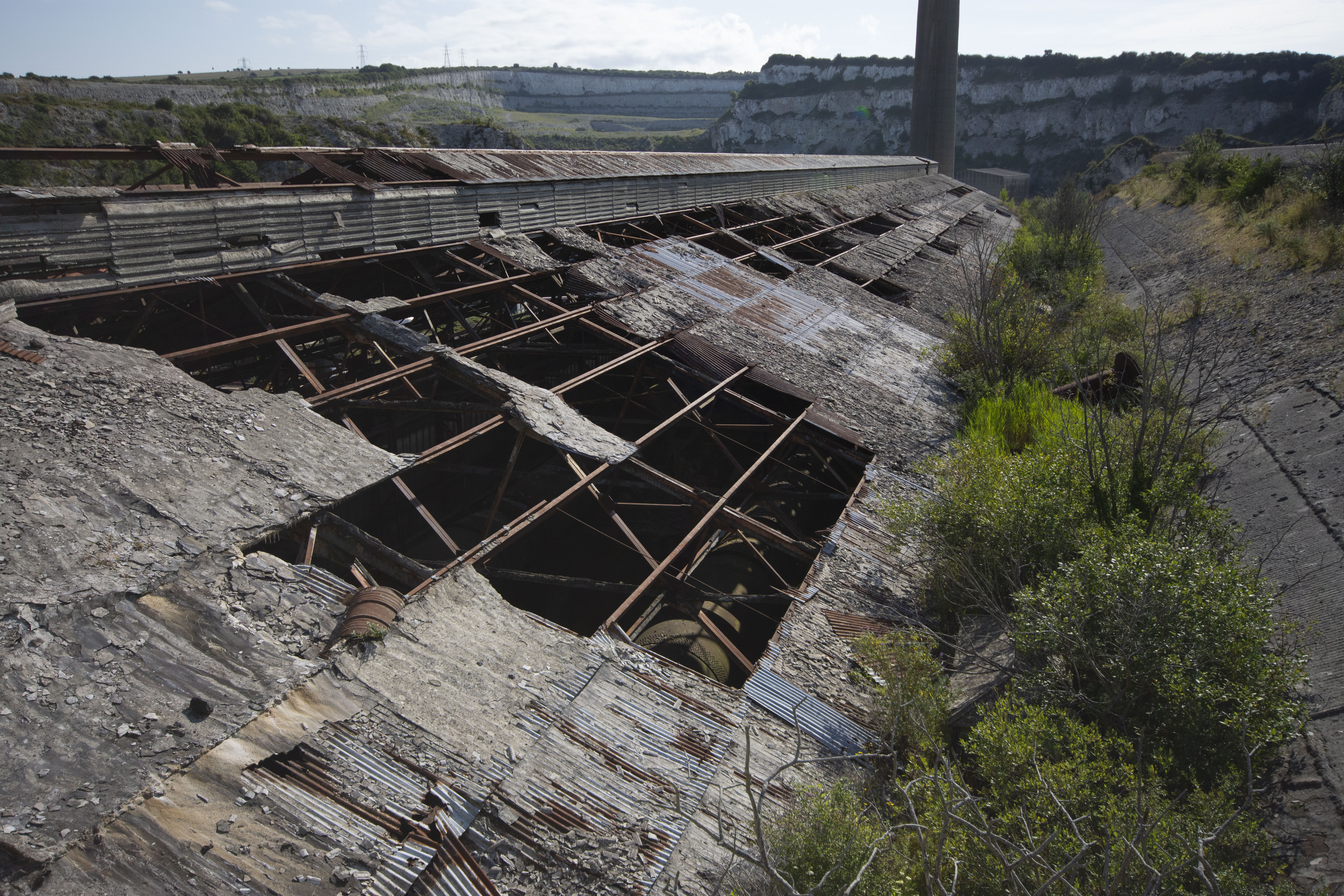
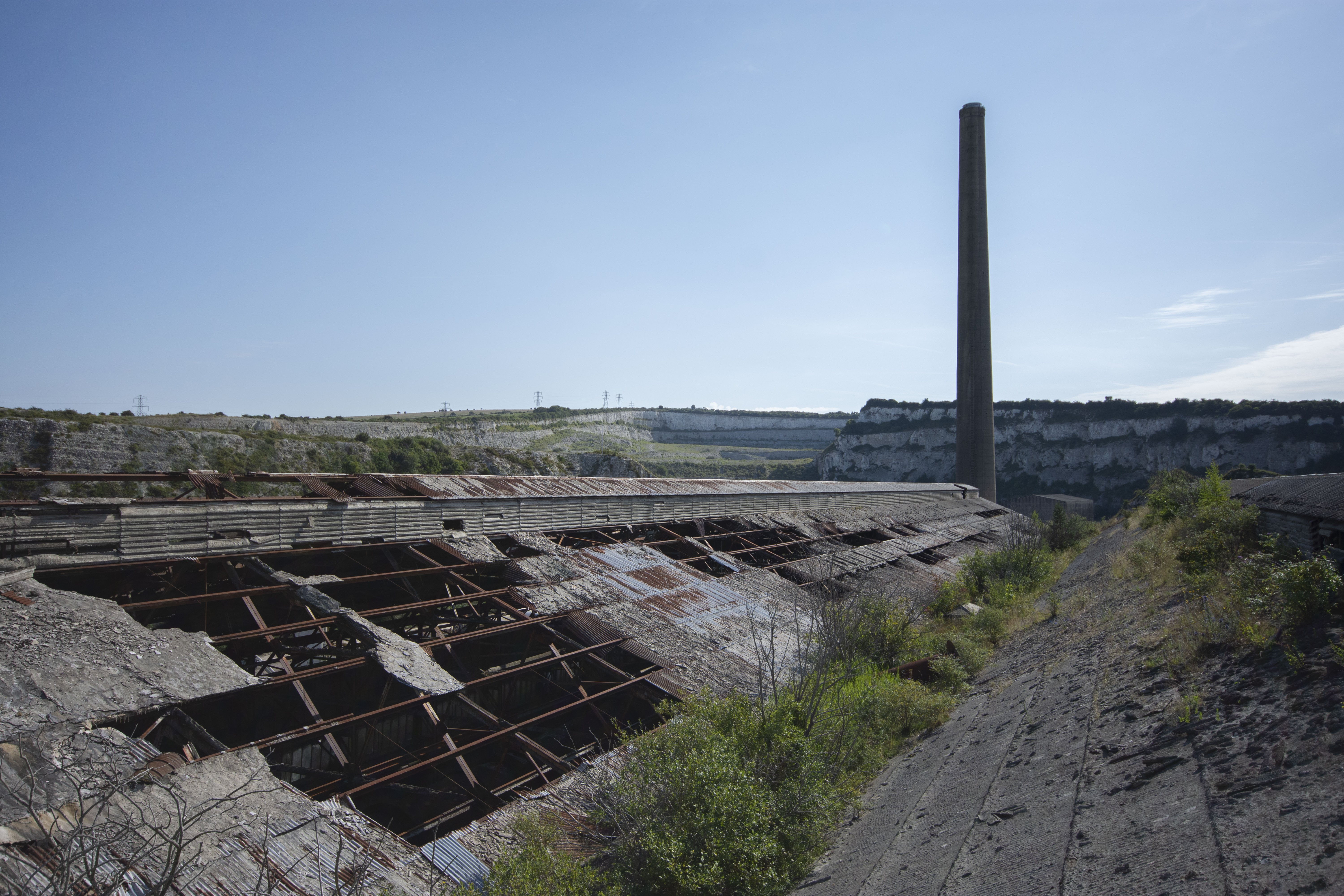
EXTERIOR
Showing the works’ enormous form, clad entirely in asbestos!
KILN HALL
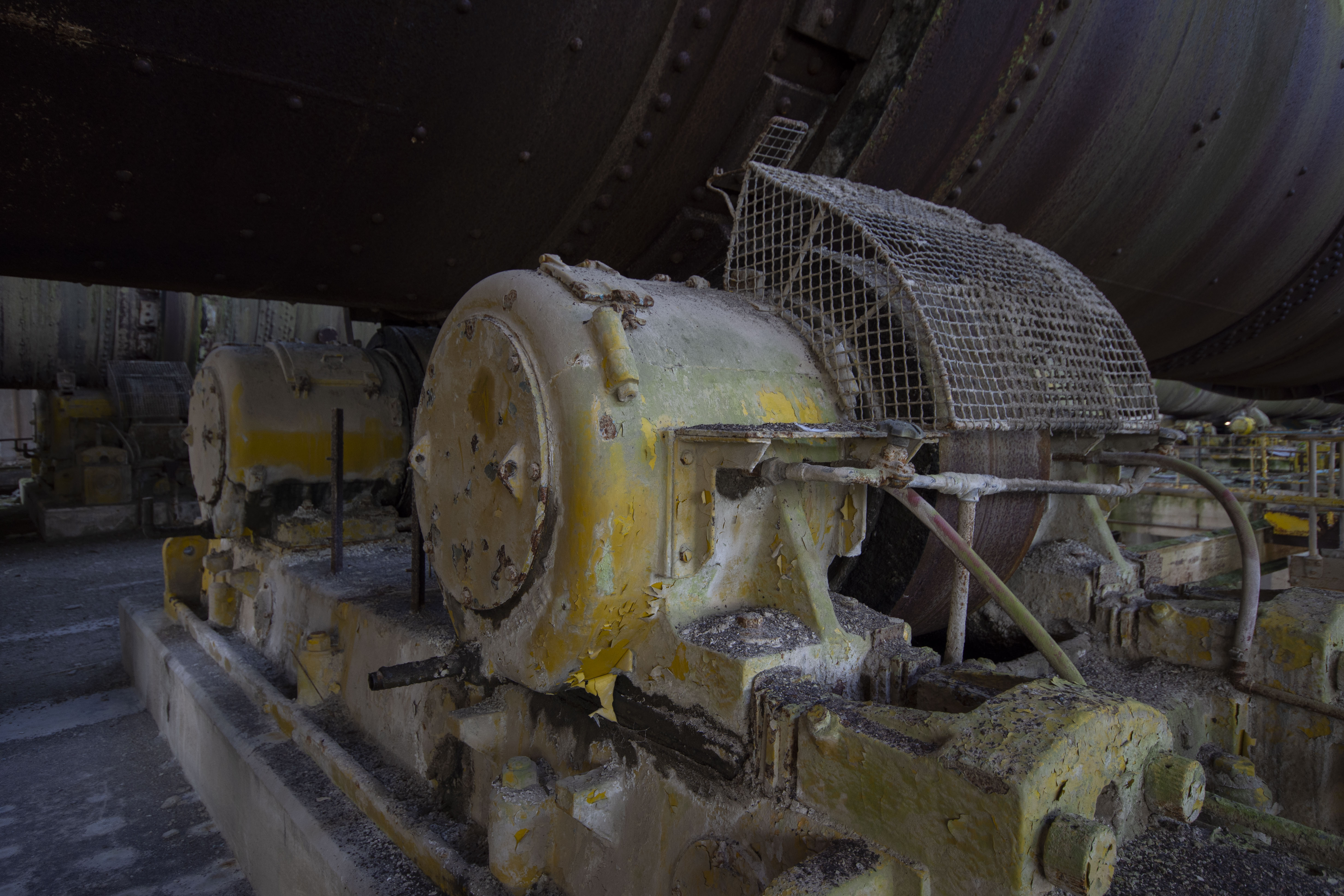
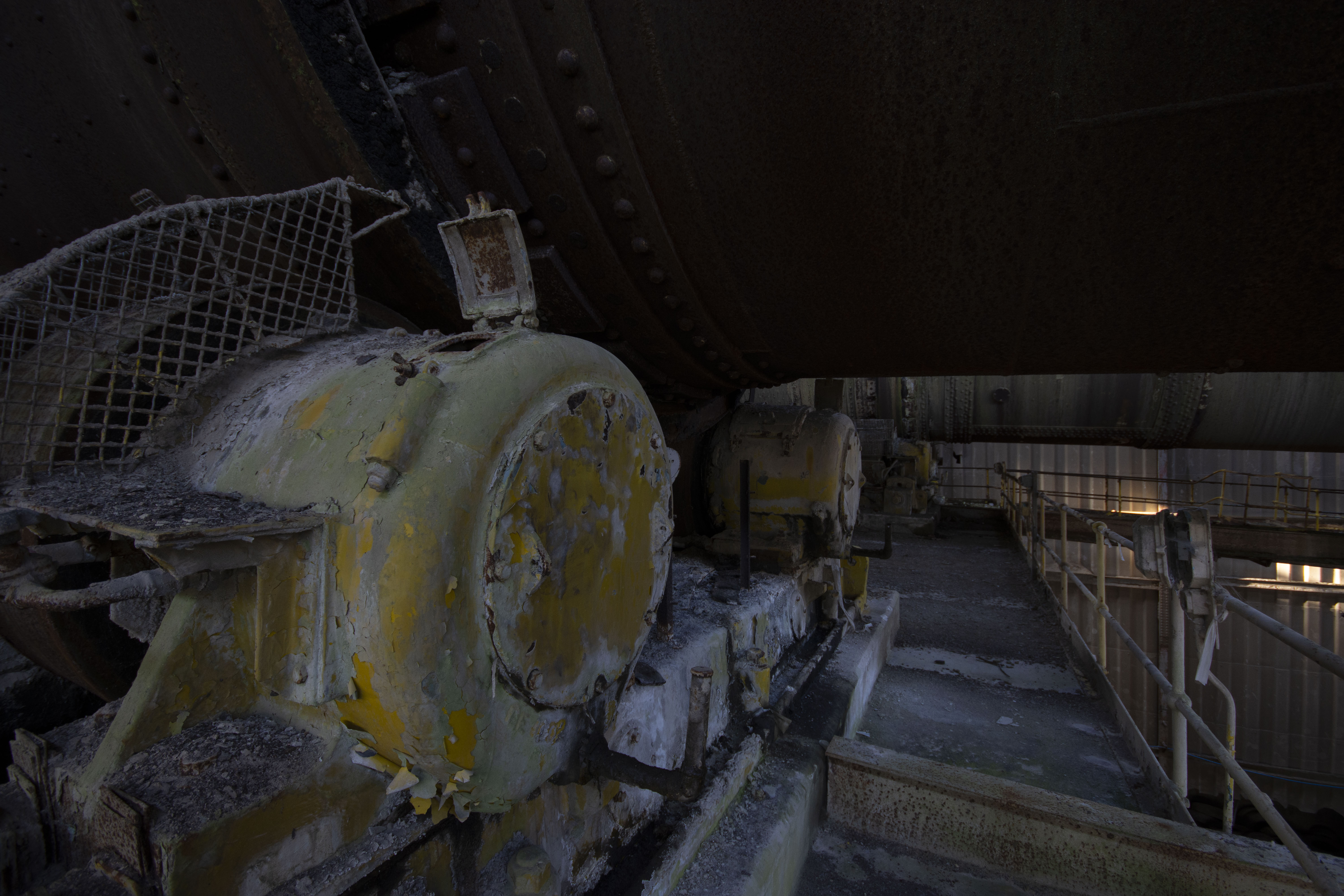
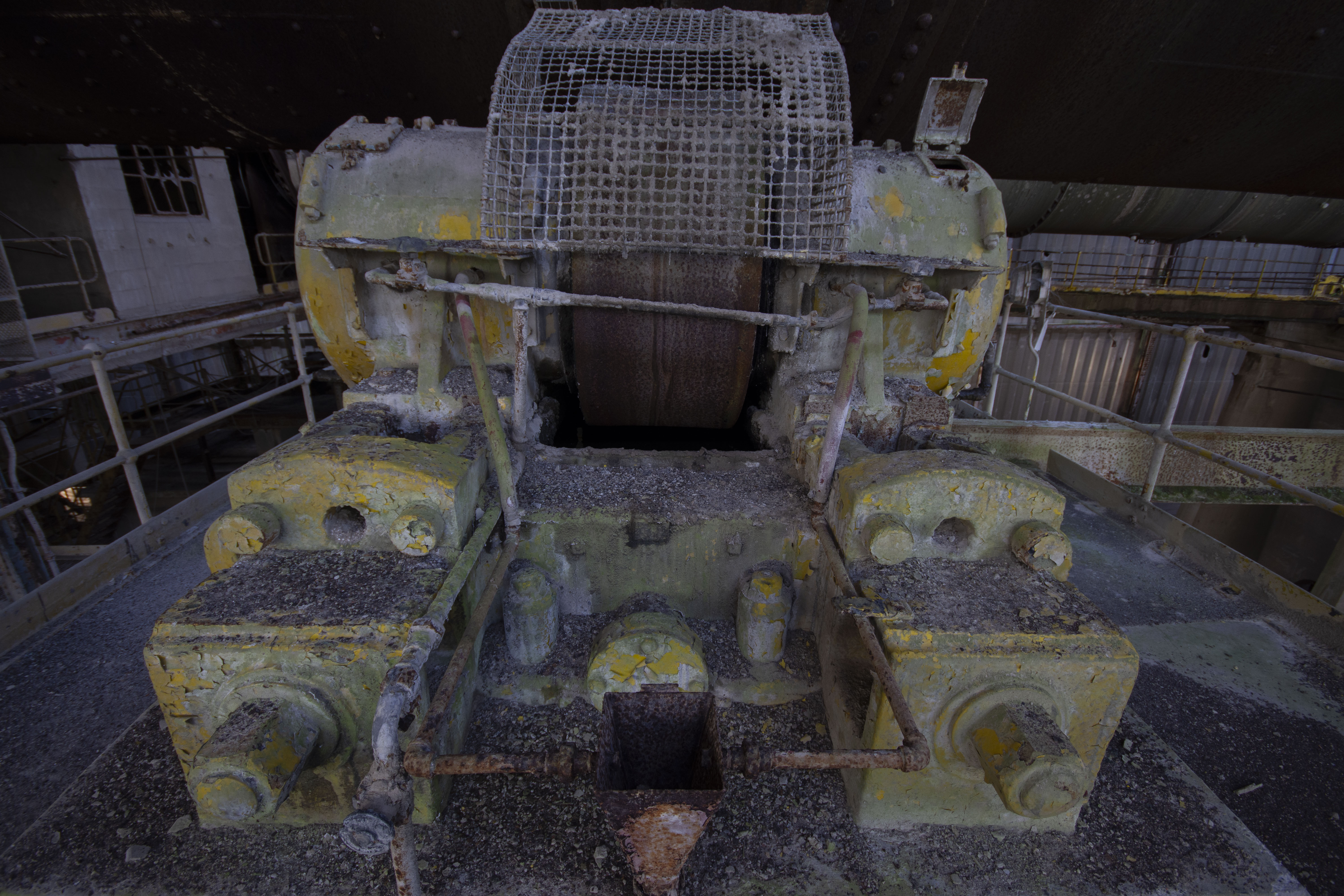
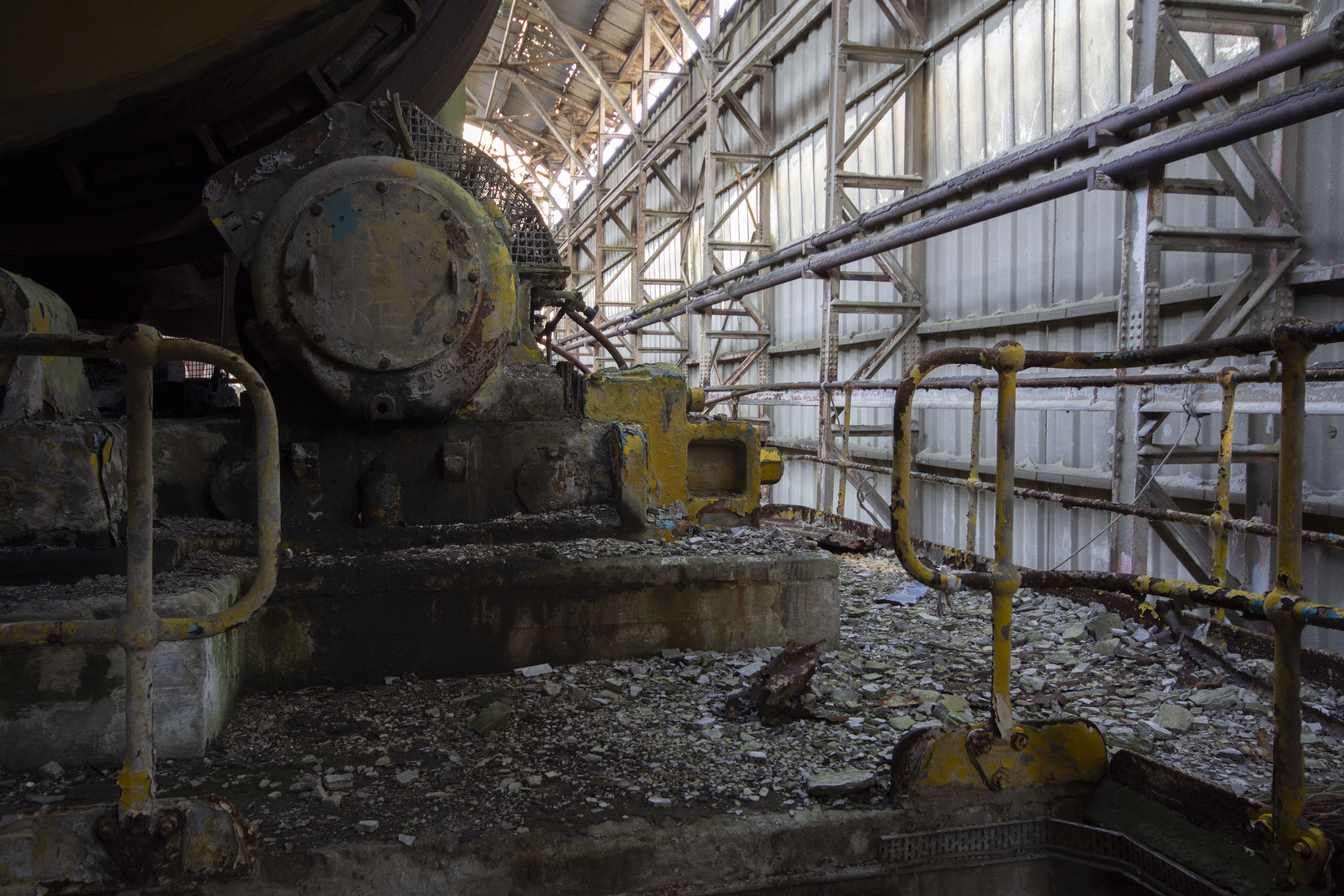
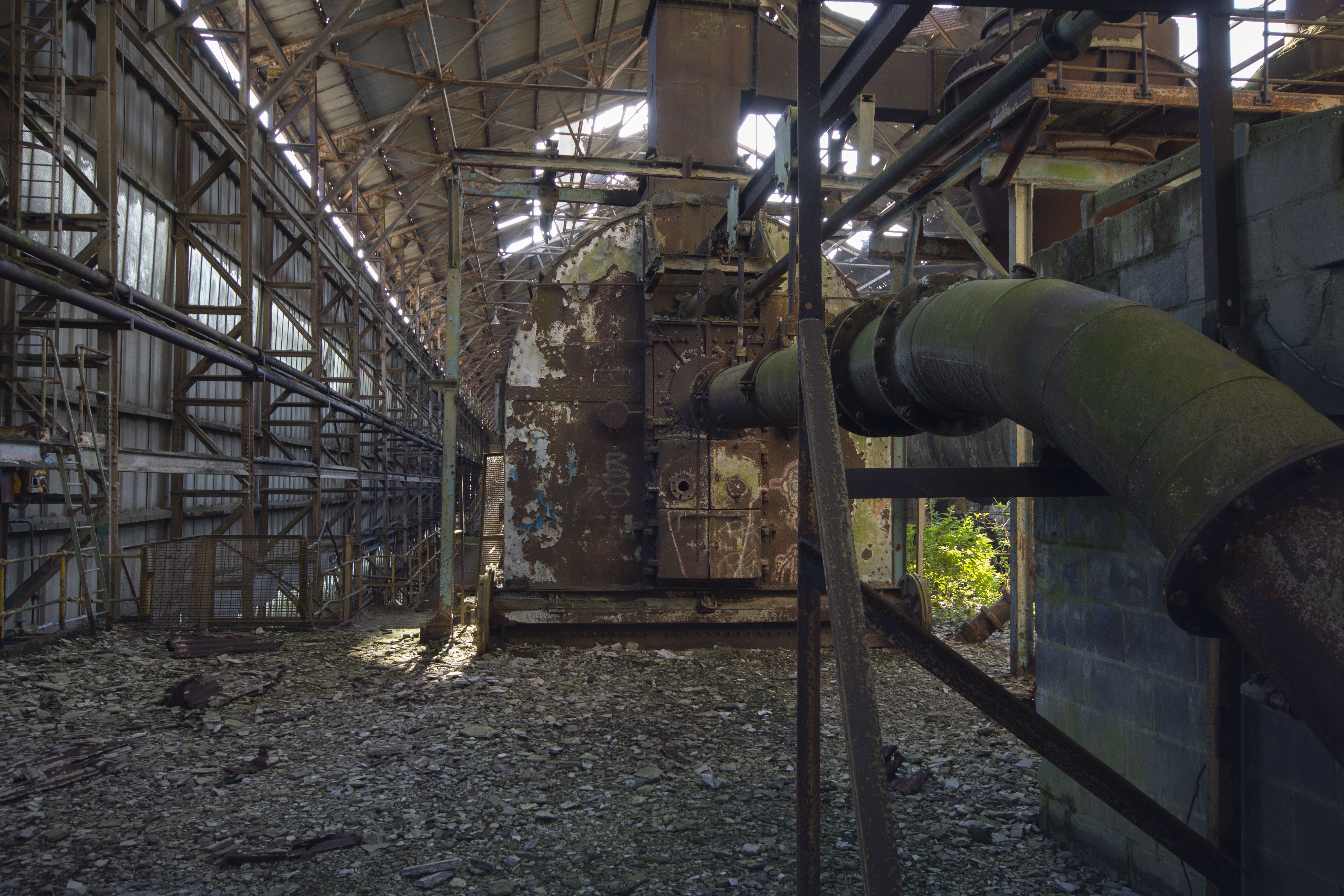
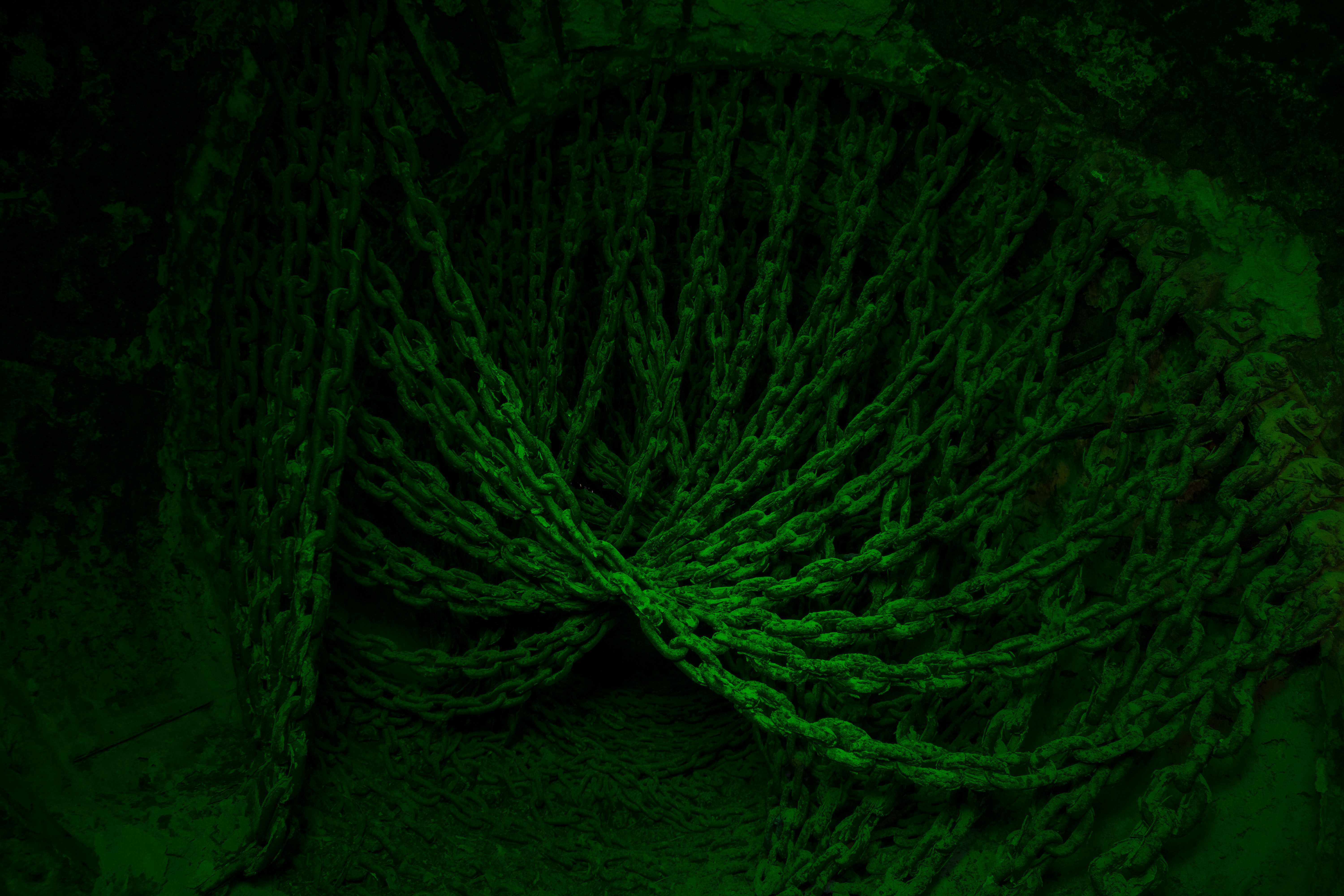
The vast kiln hall with the two rotary kilns.

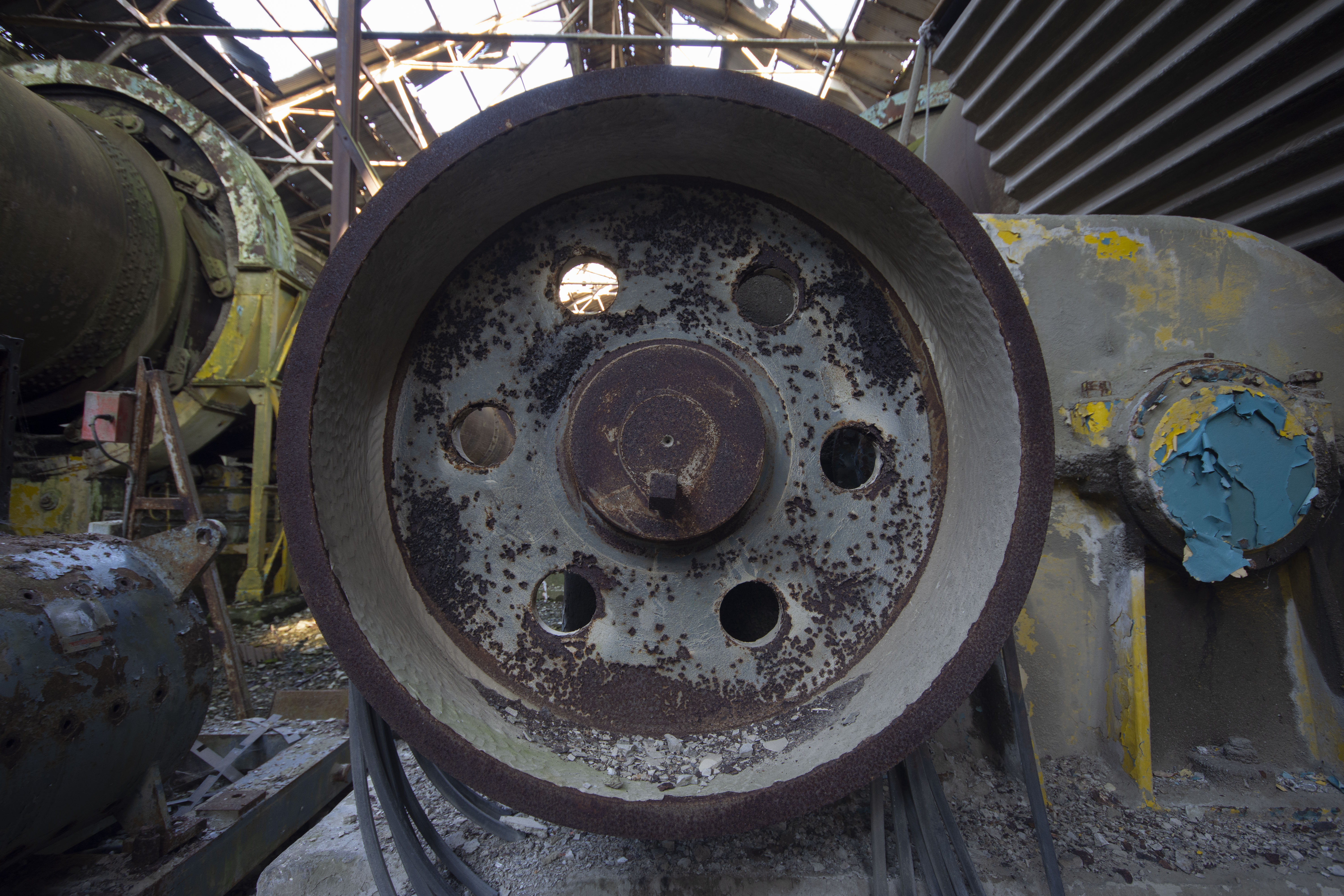
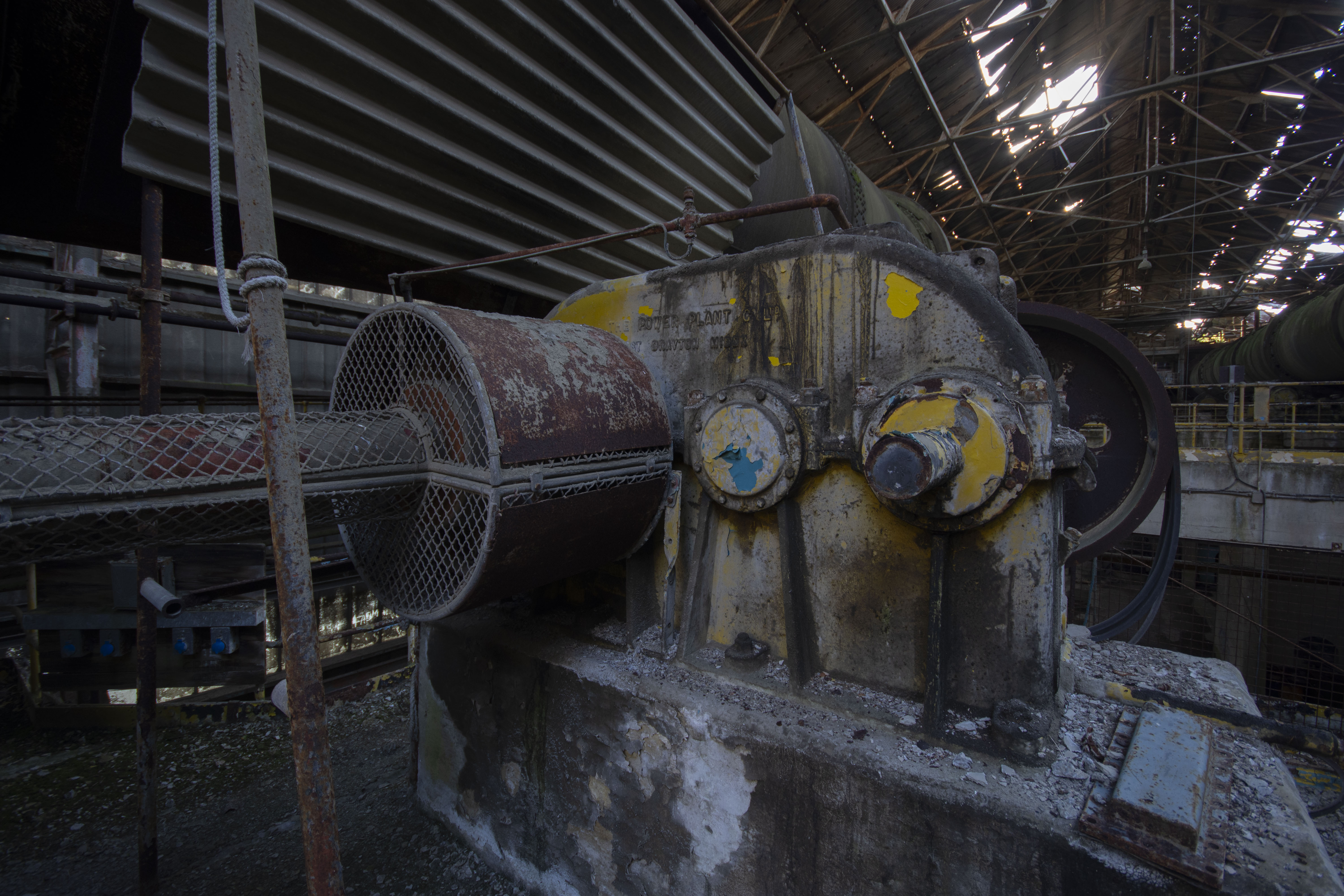
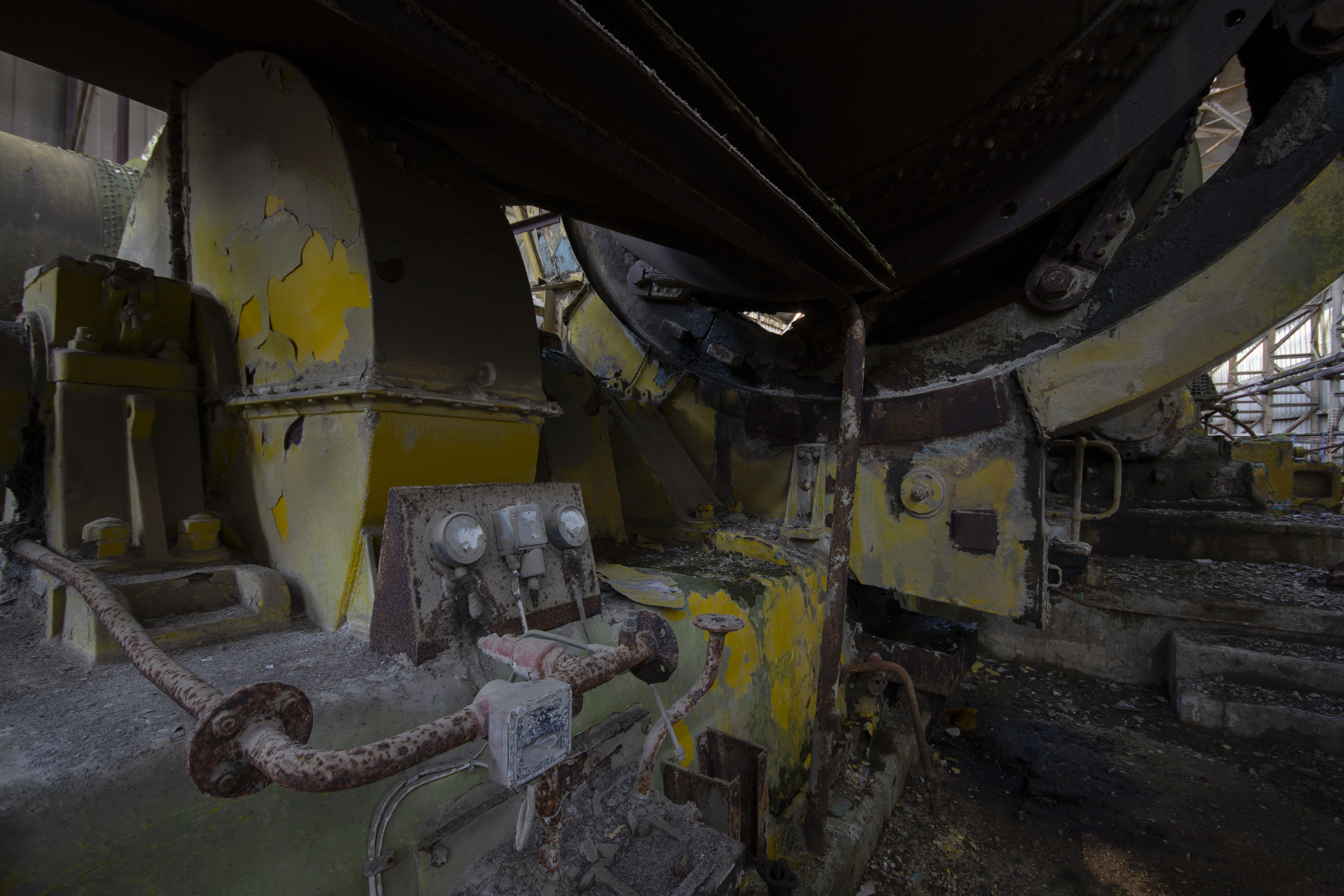
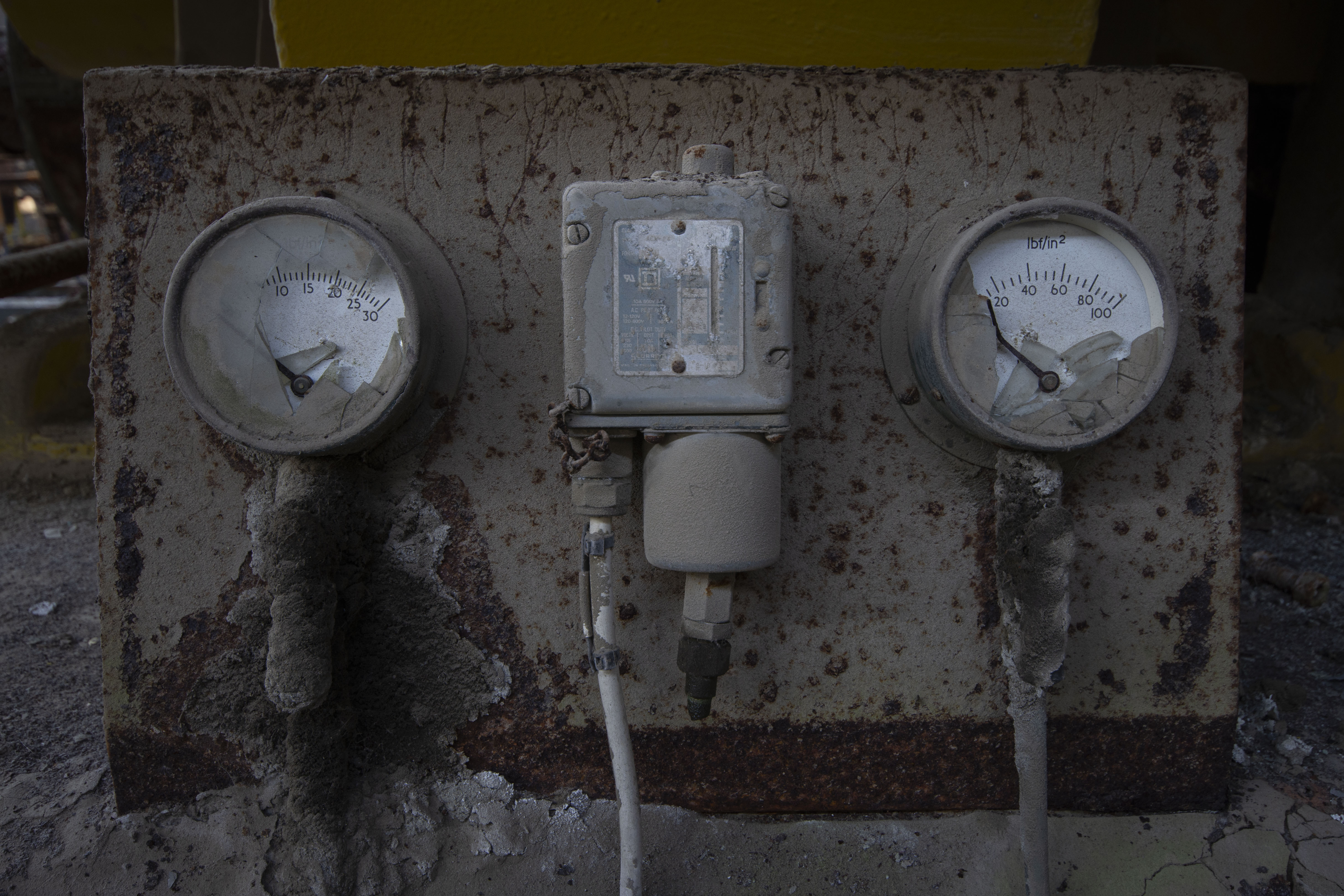
FURNACES
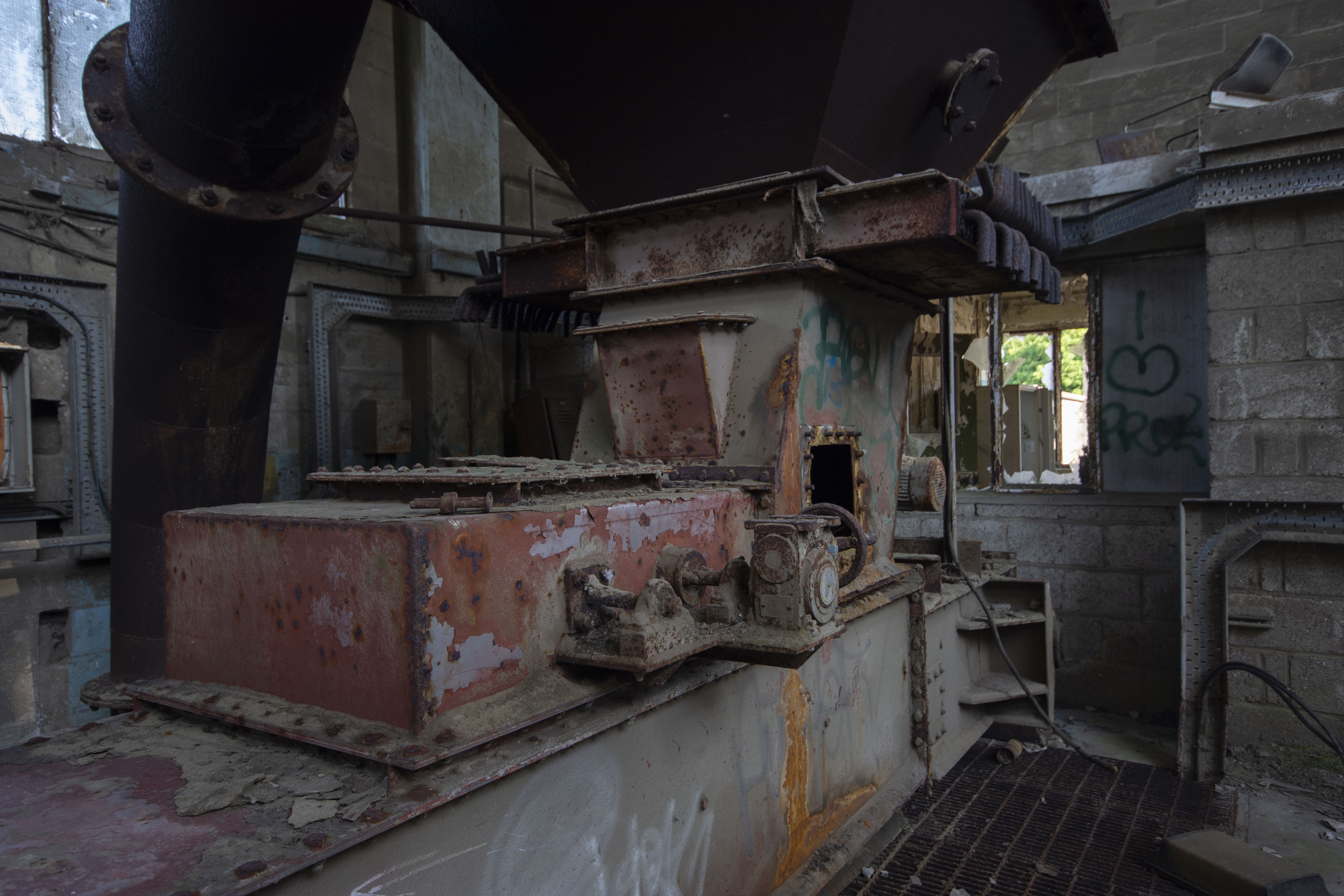
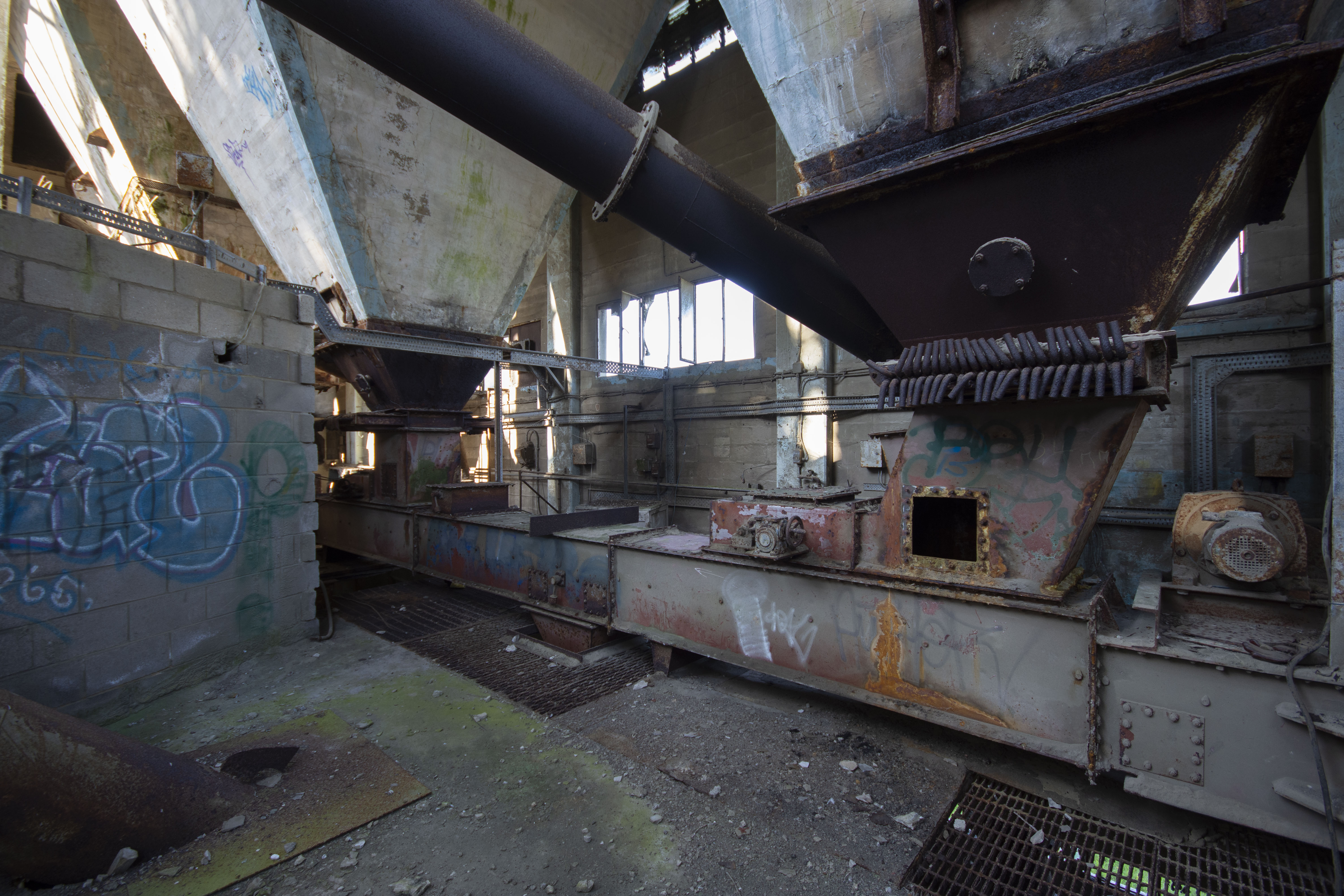
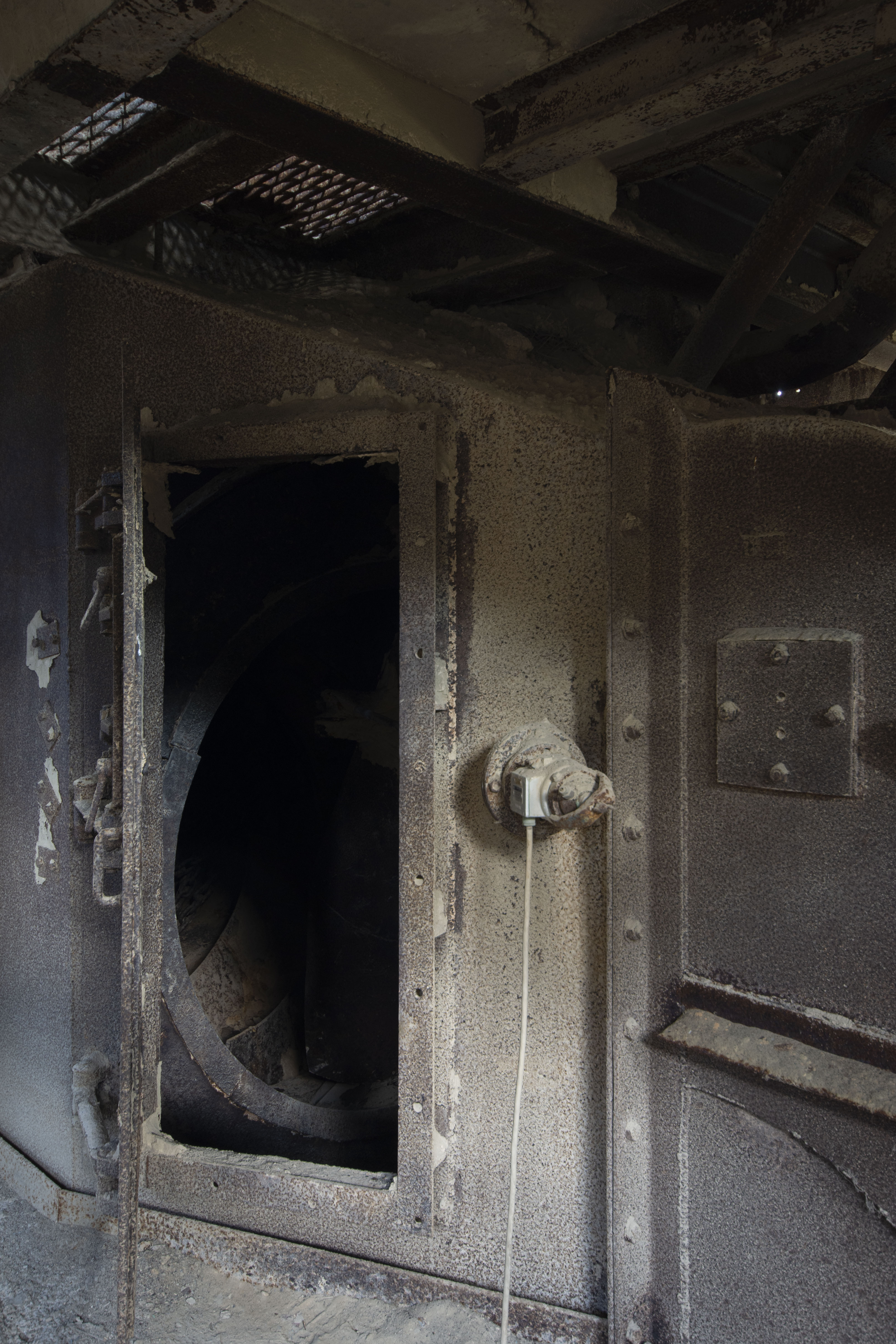
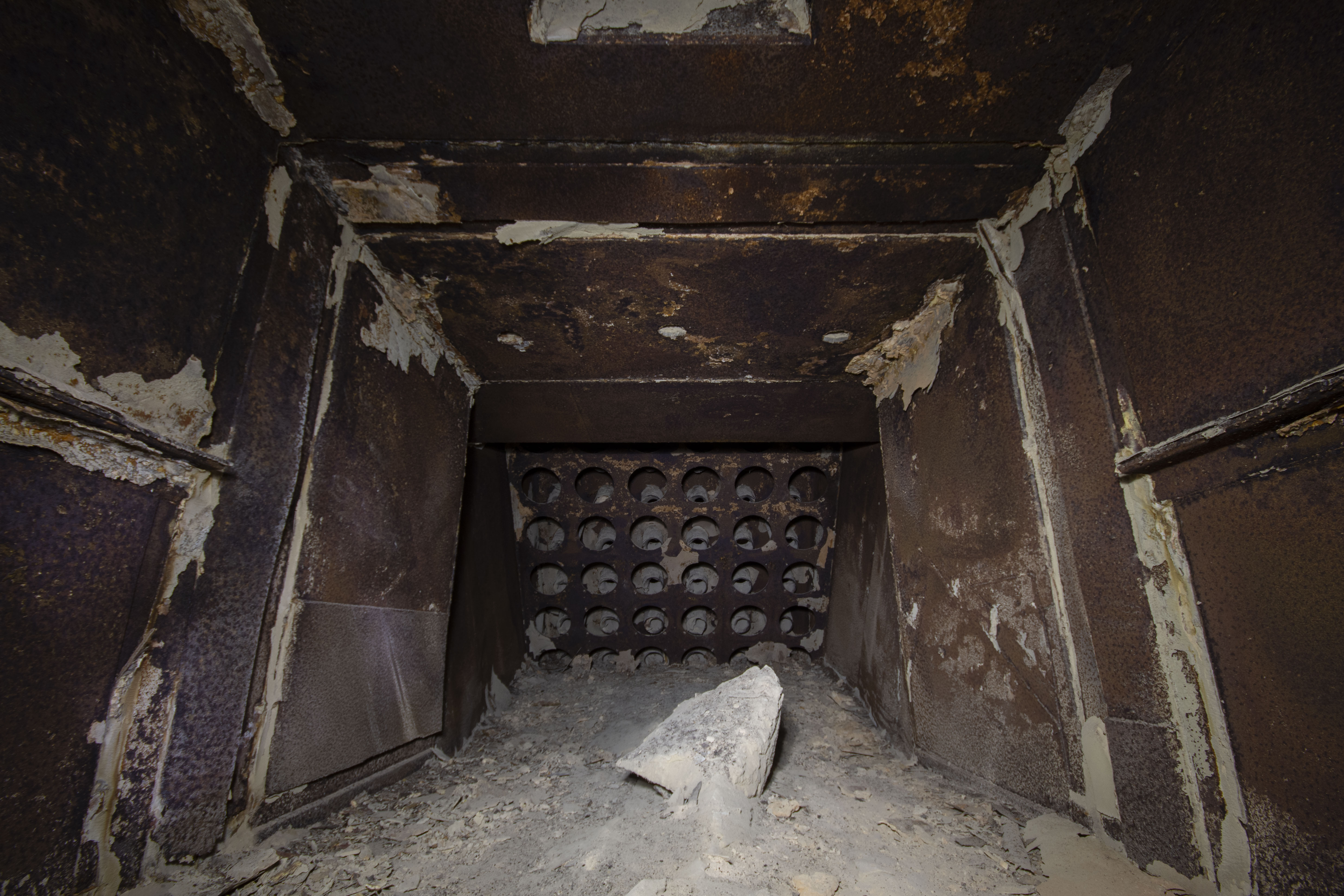
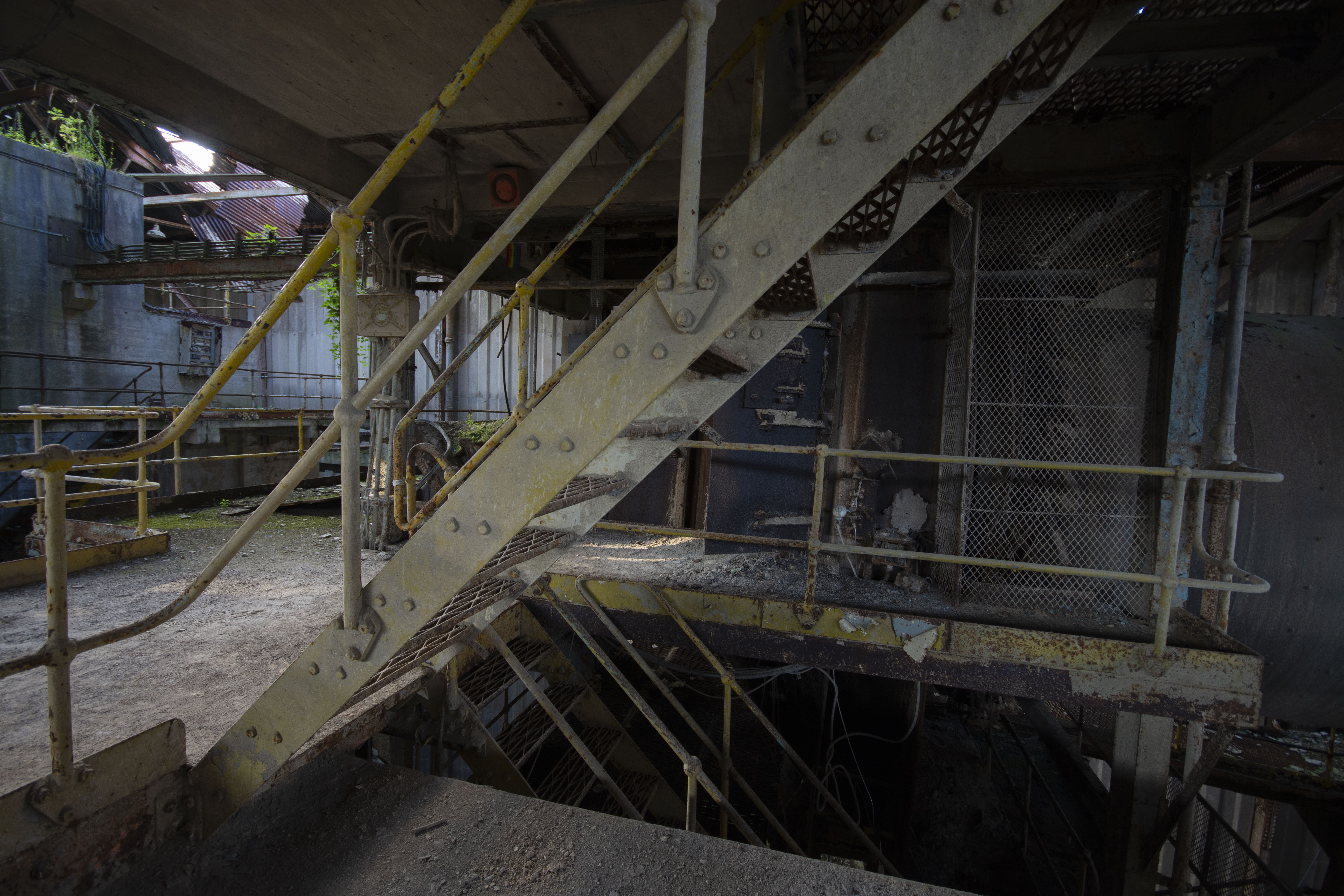
Each kiln was heated using a coal fired furnace.

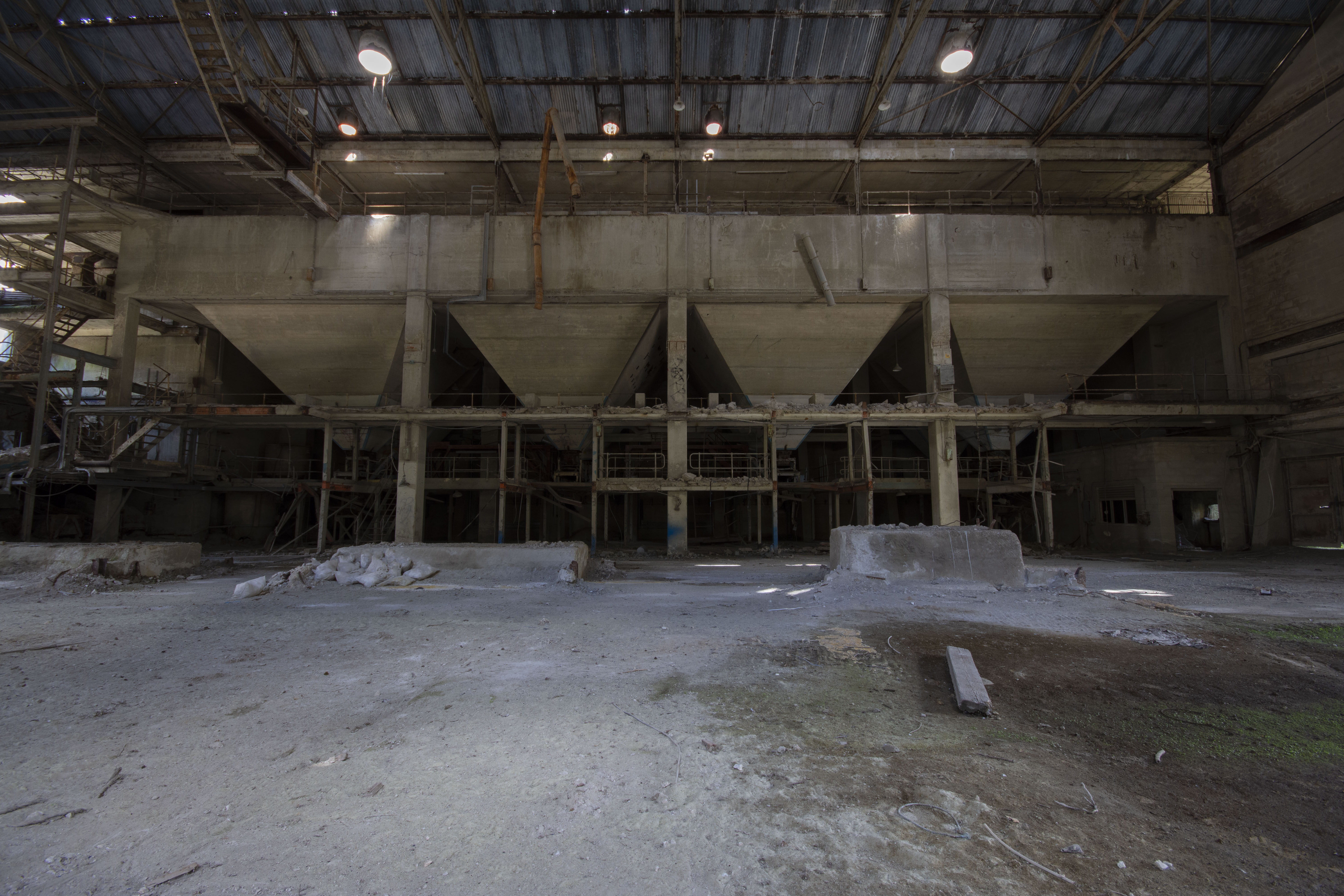
CLINKER STORES
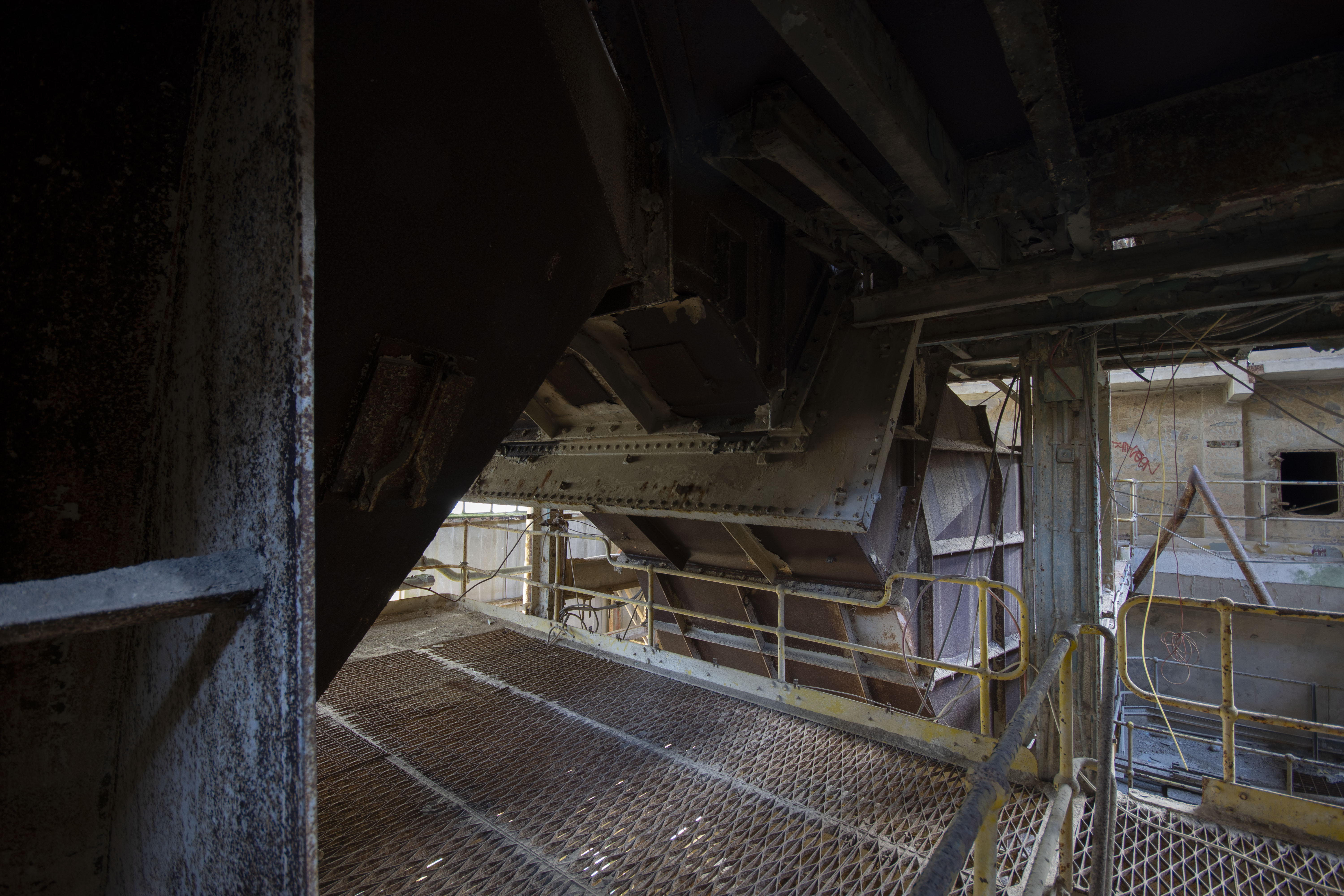
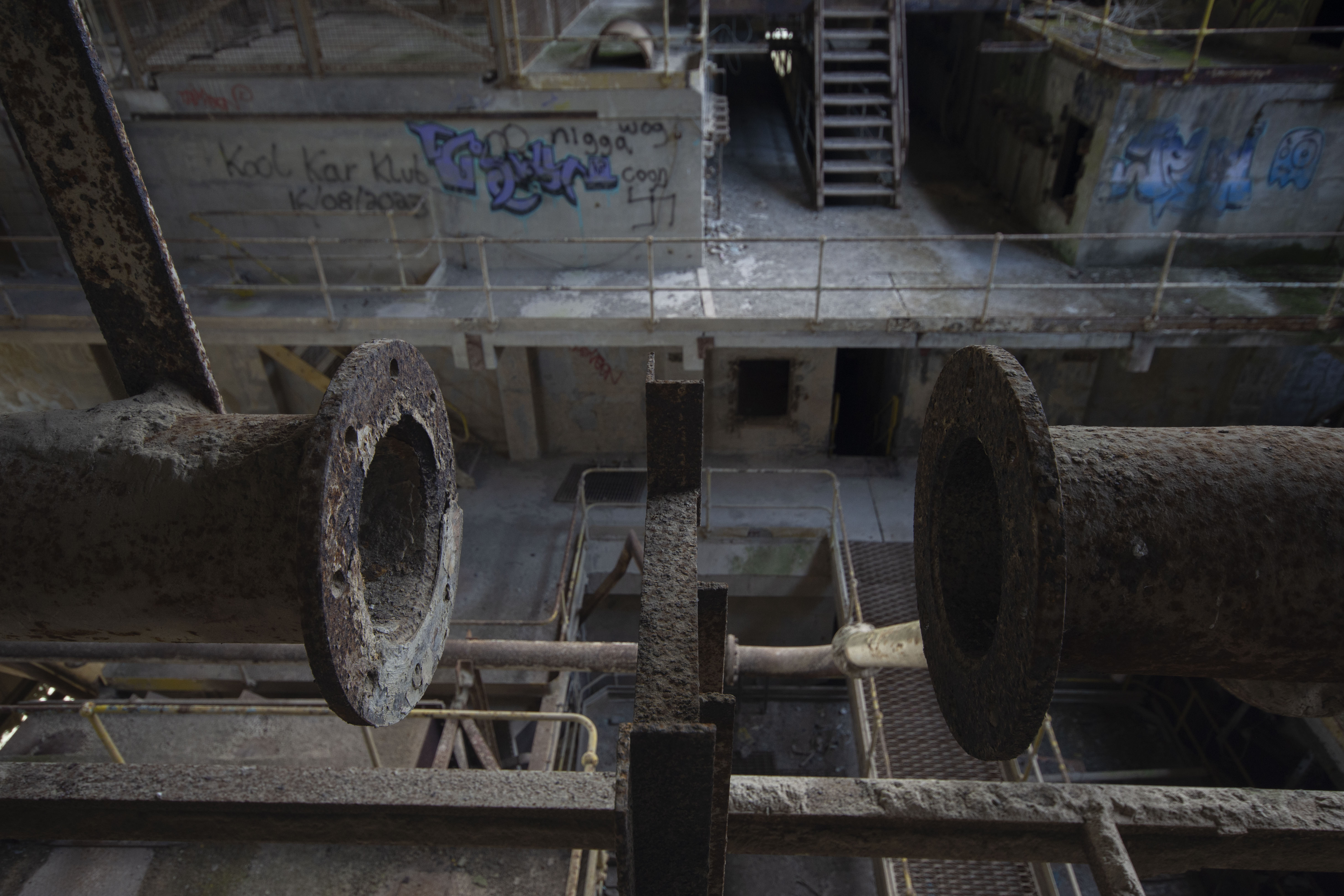
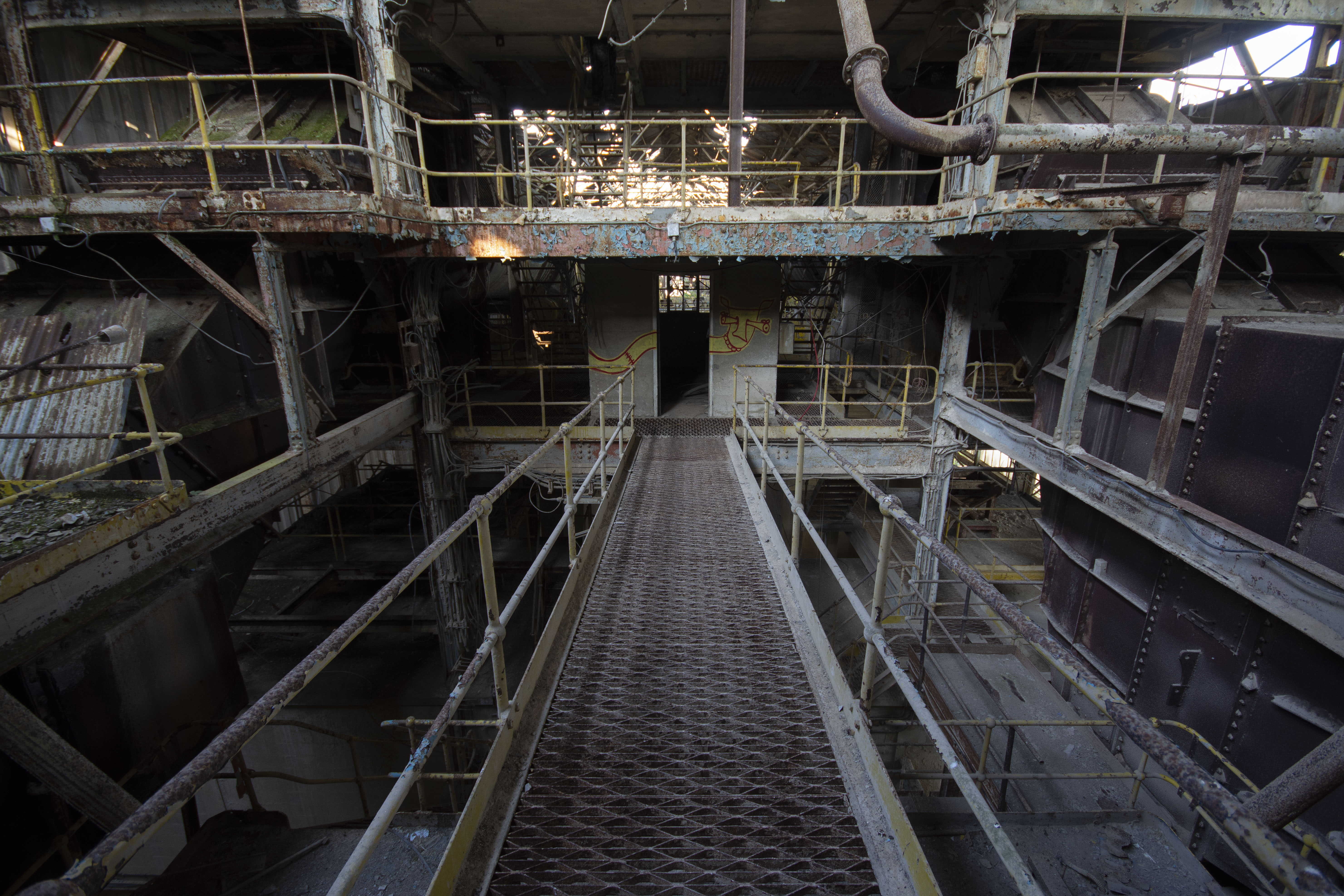
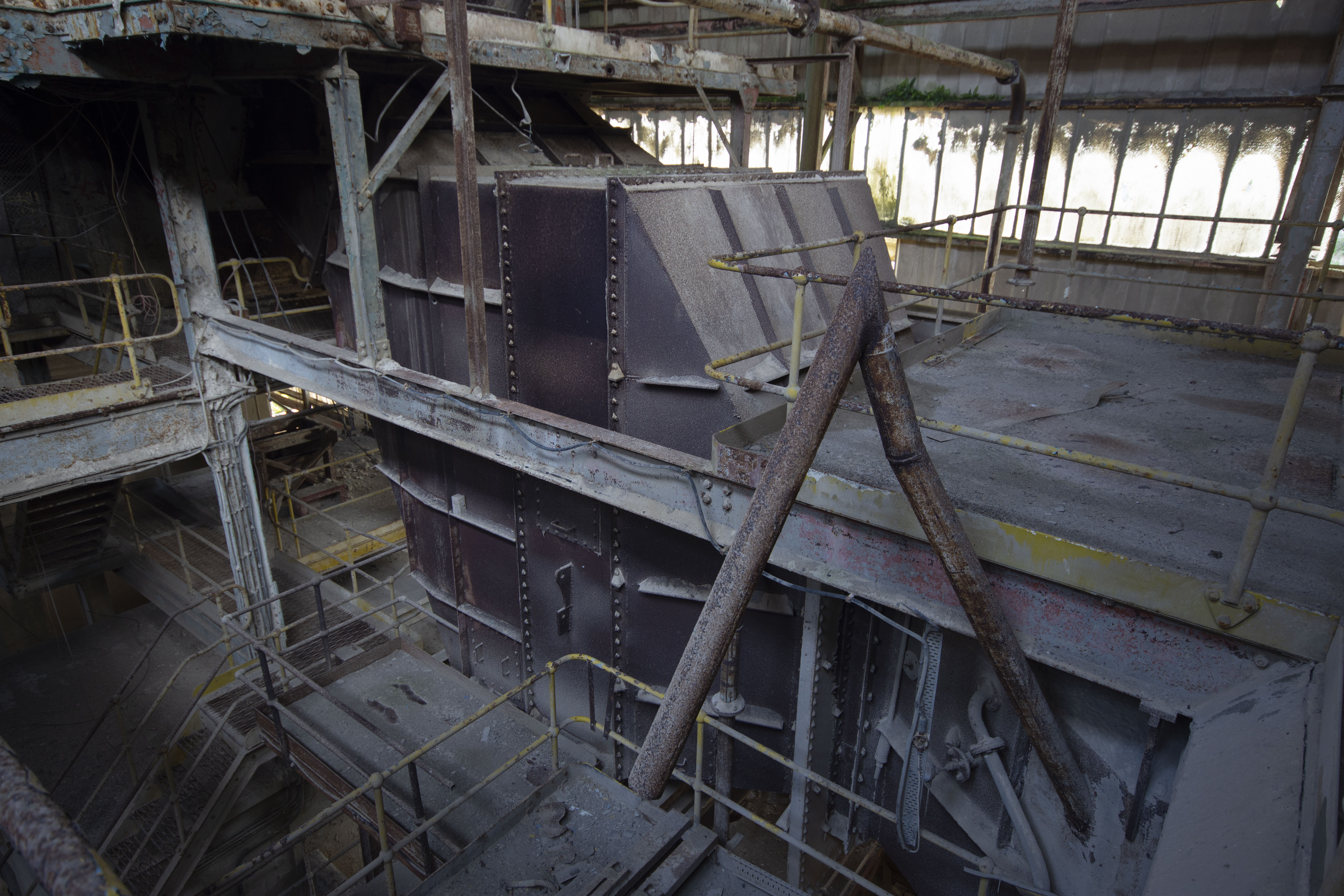
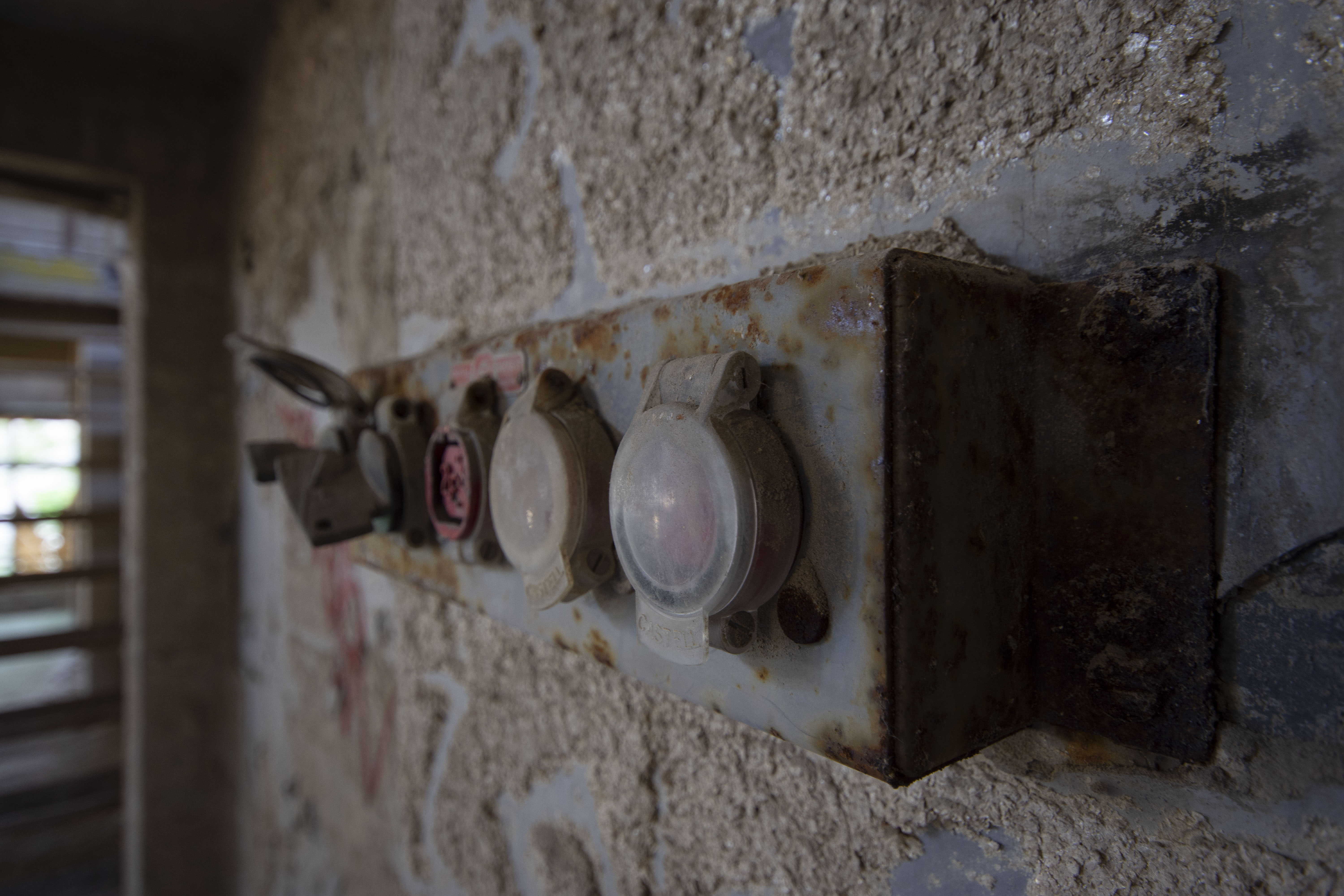
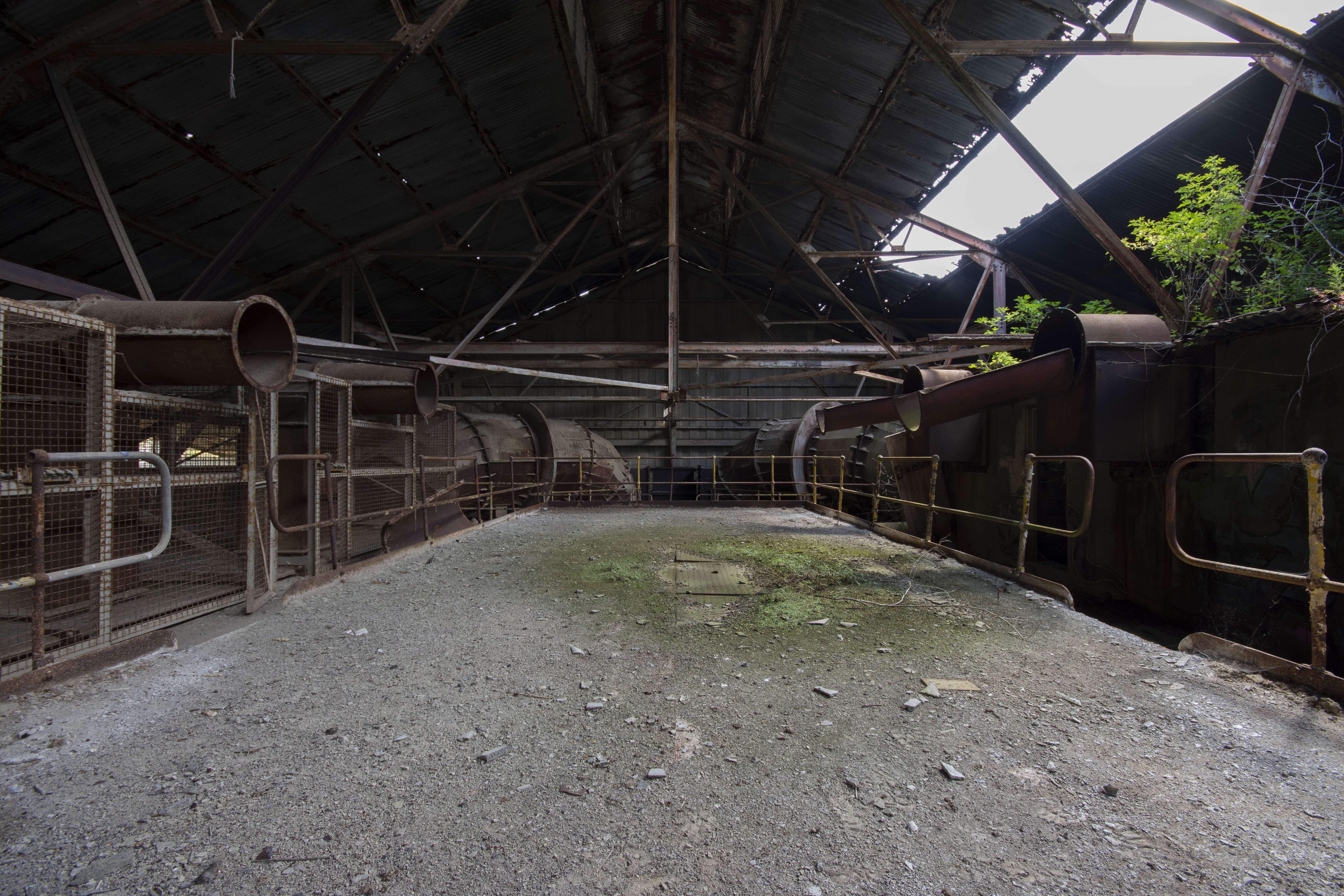
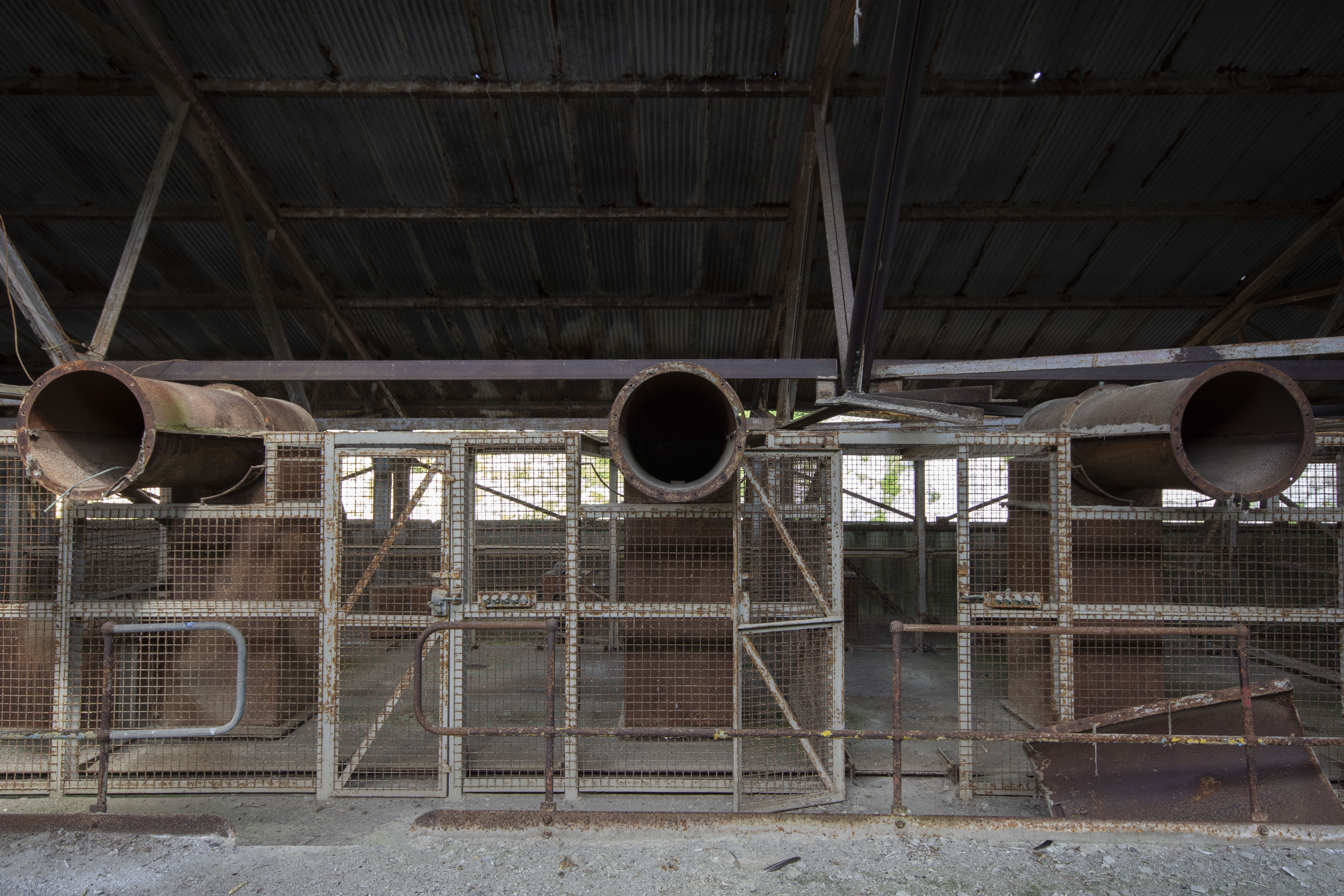
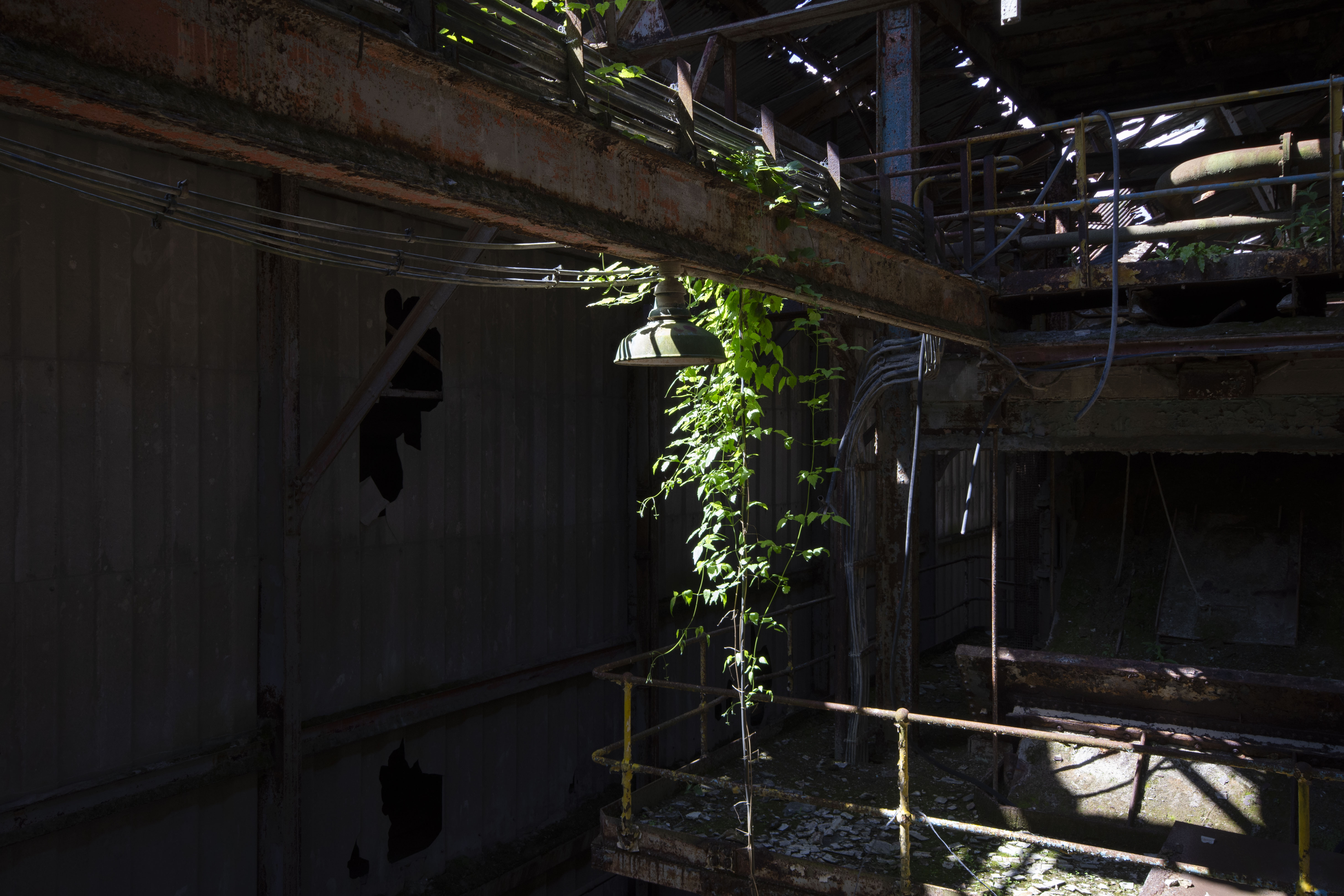
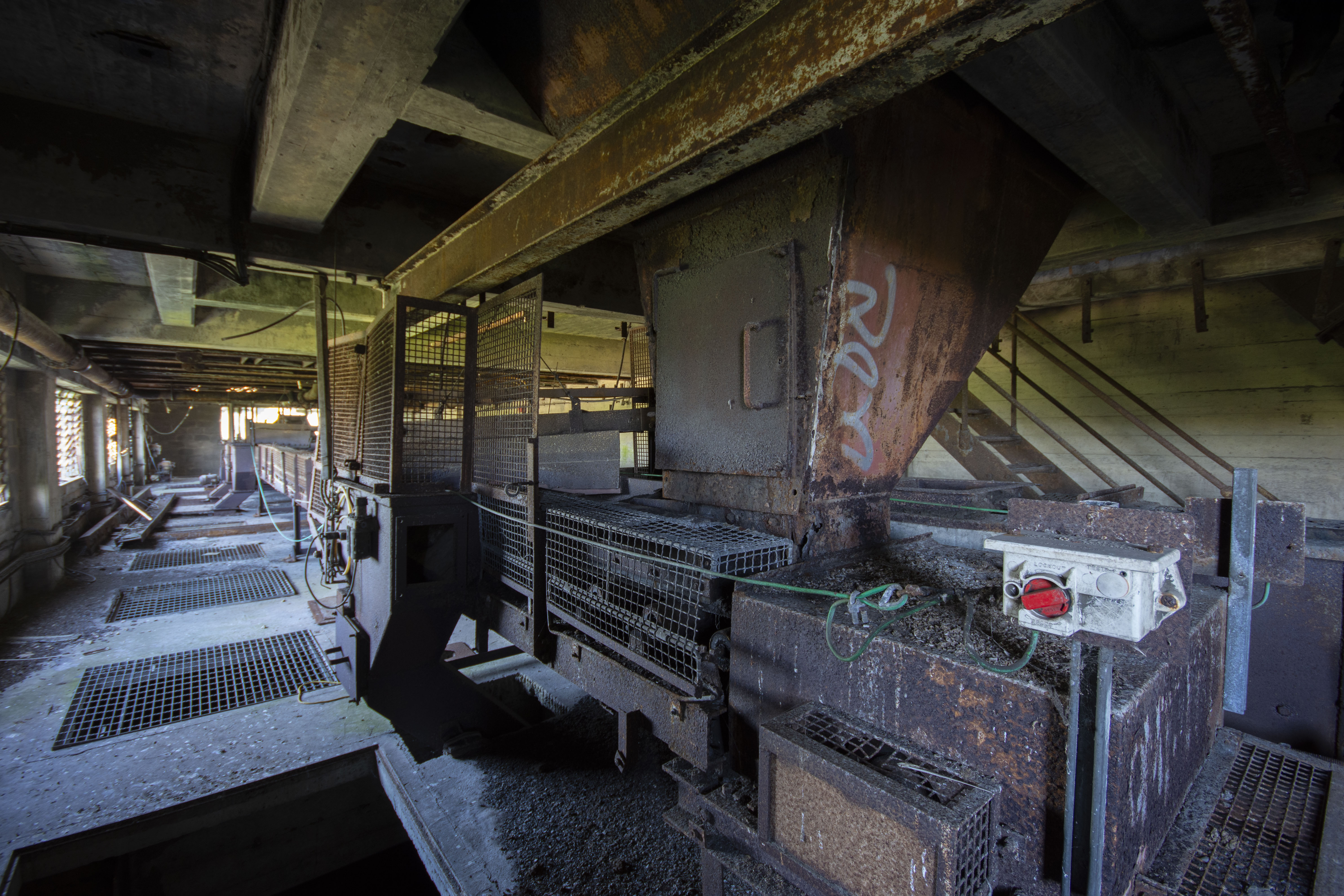
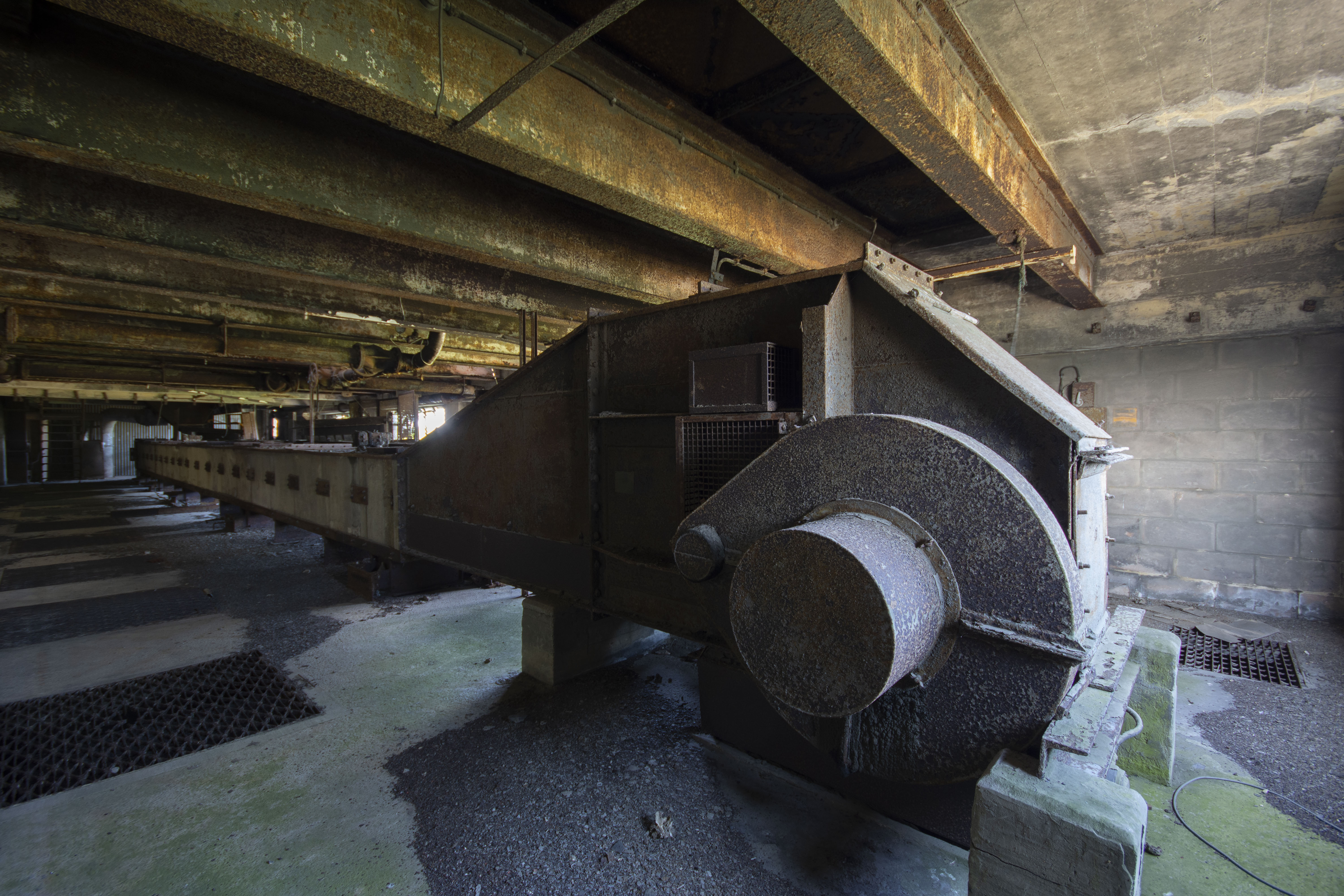
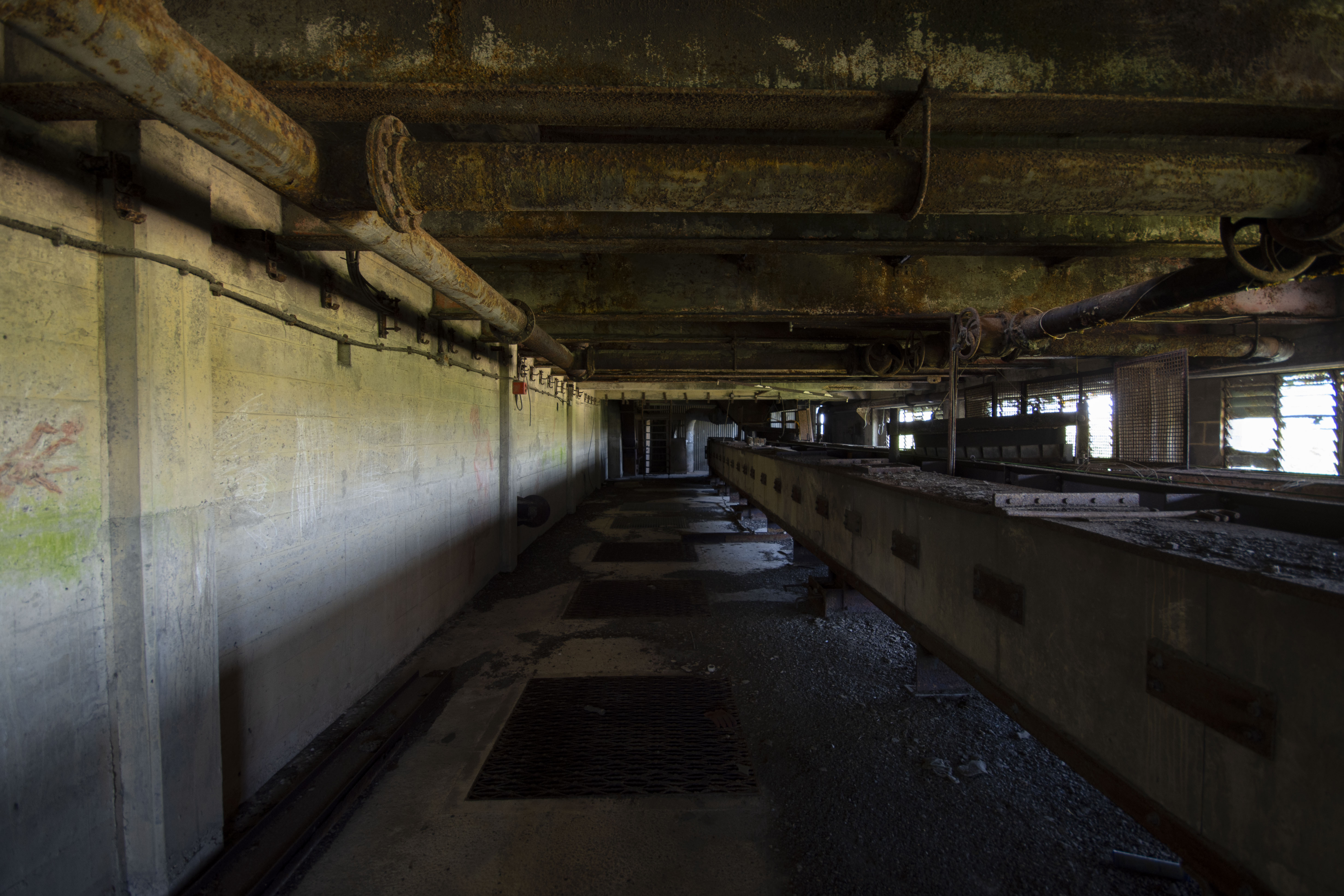
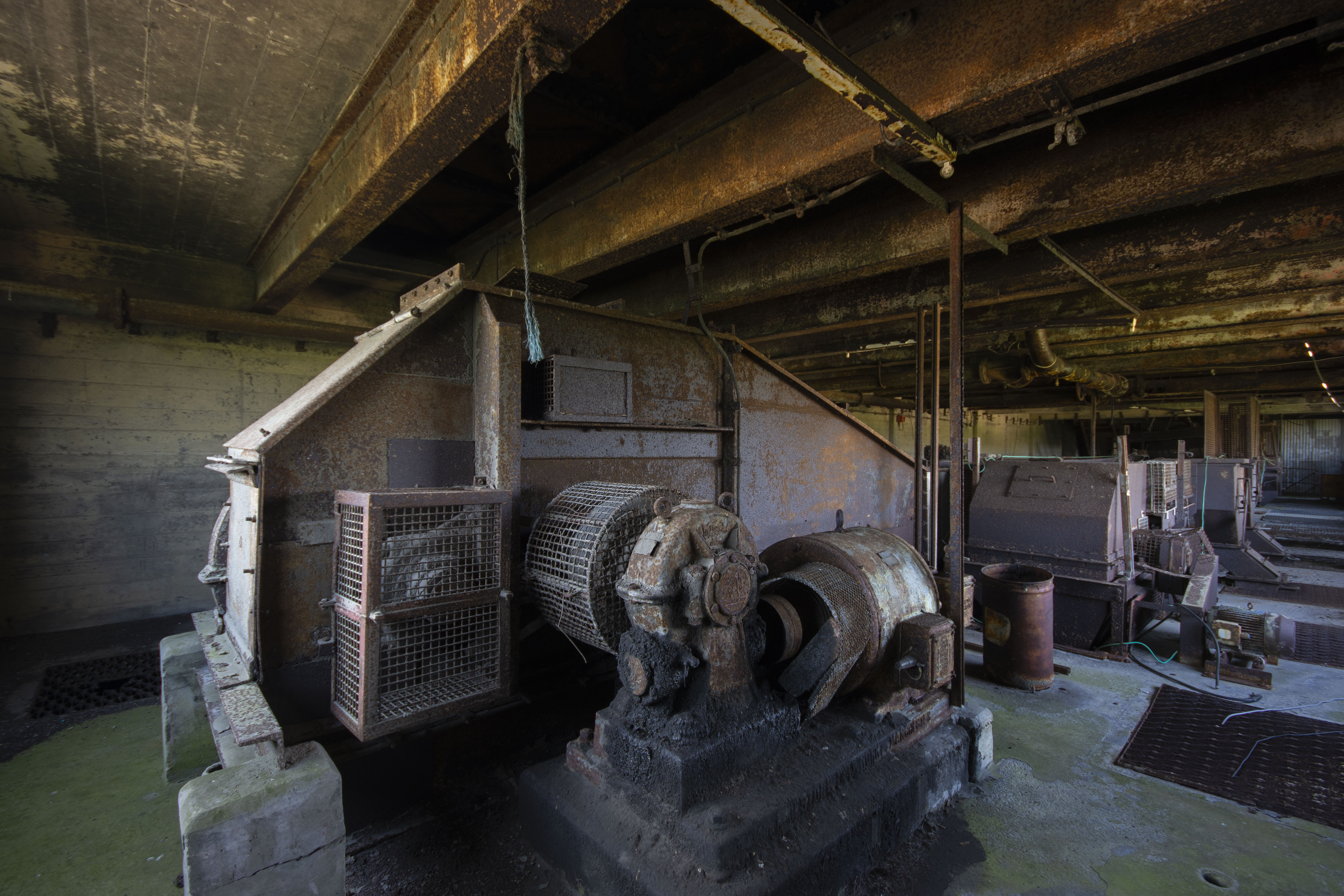
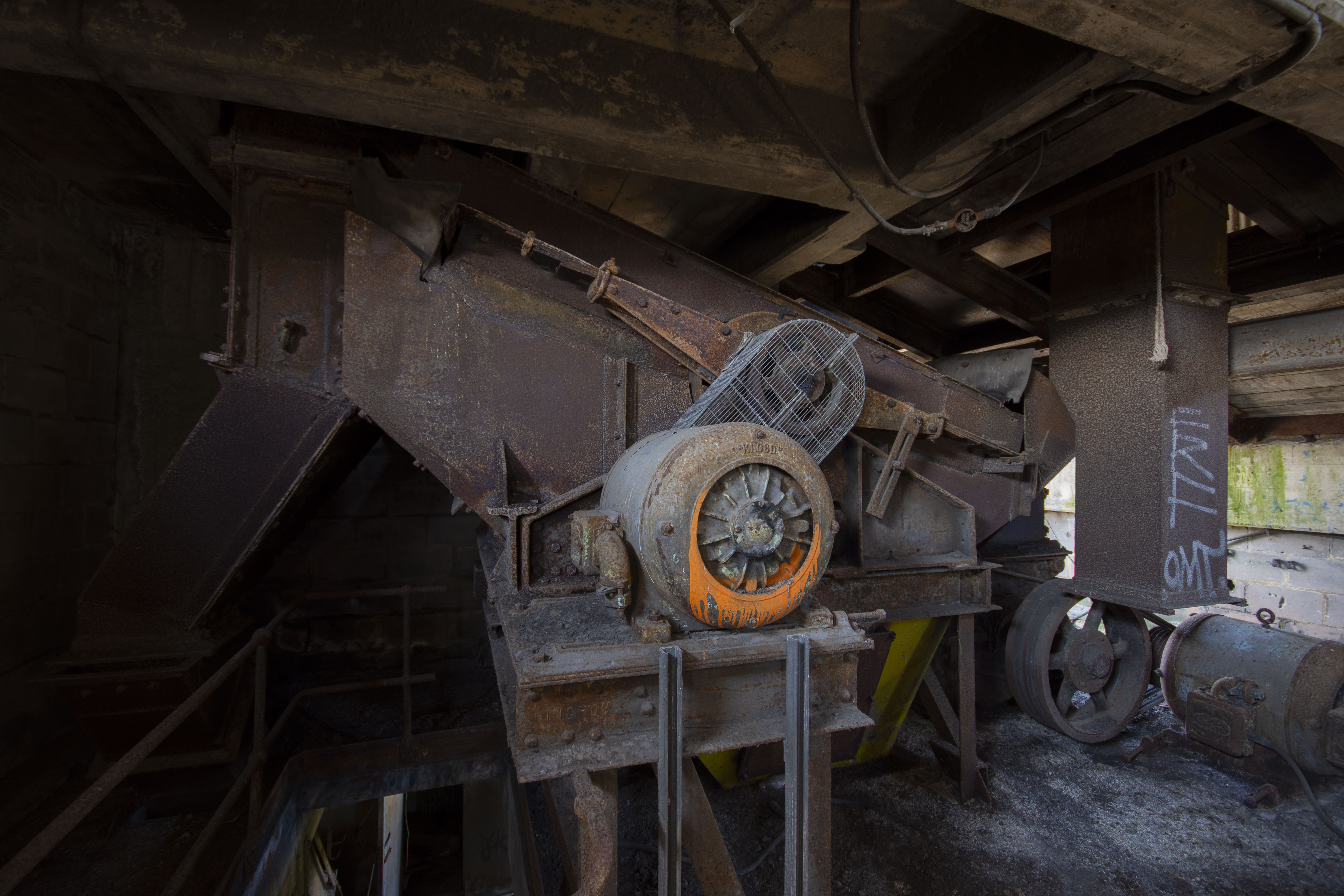
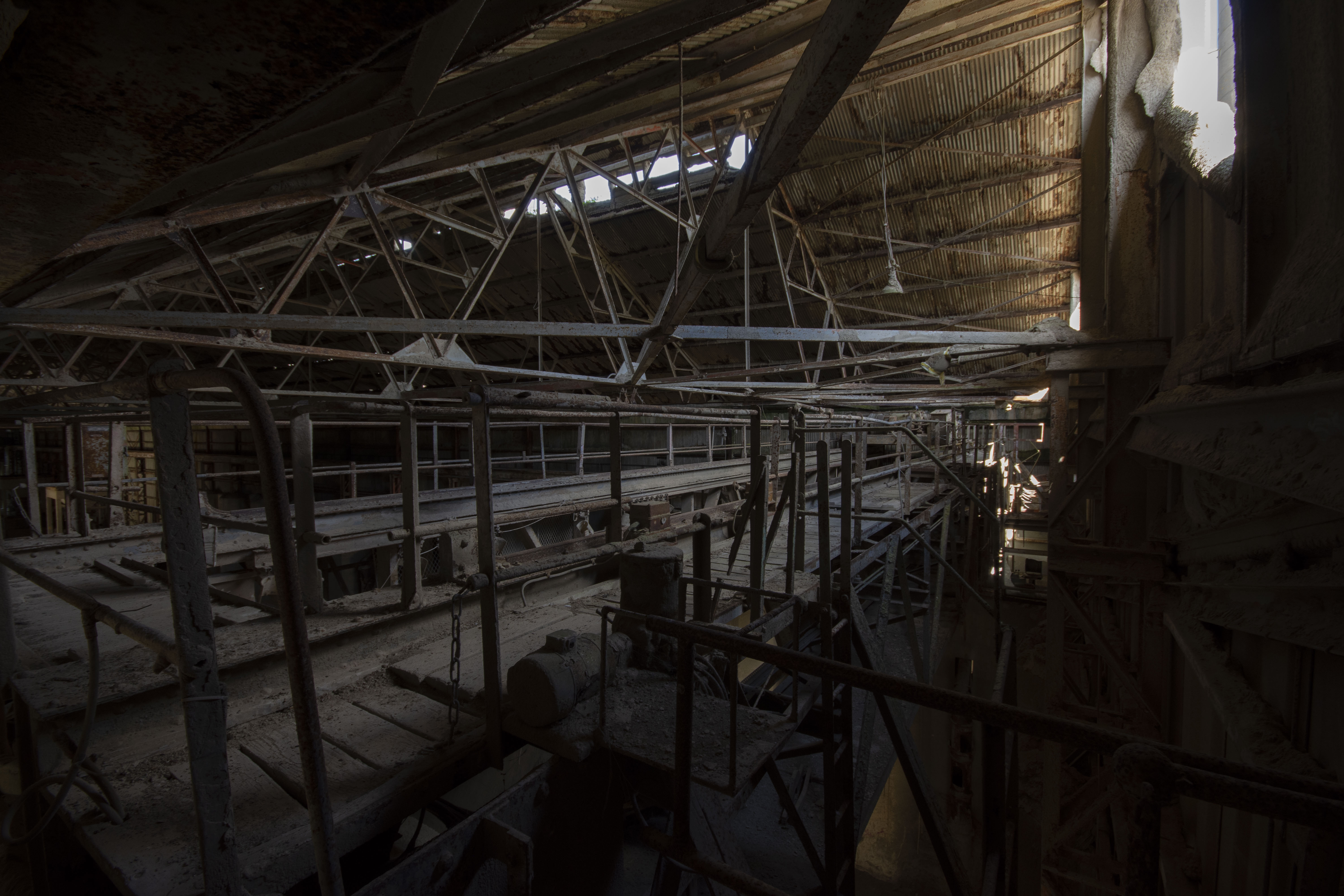
The southern side of the building contains the clinker and coal storage areas.

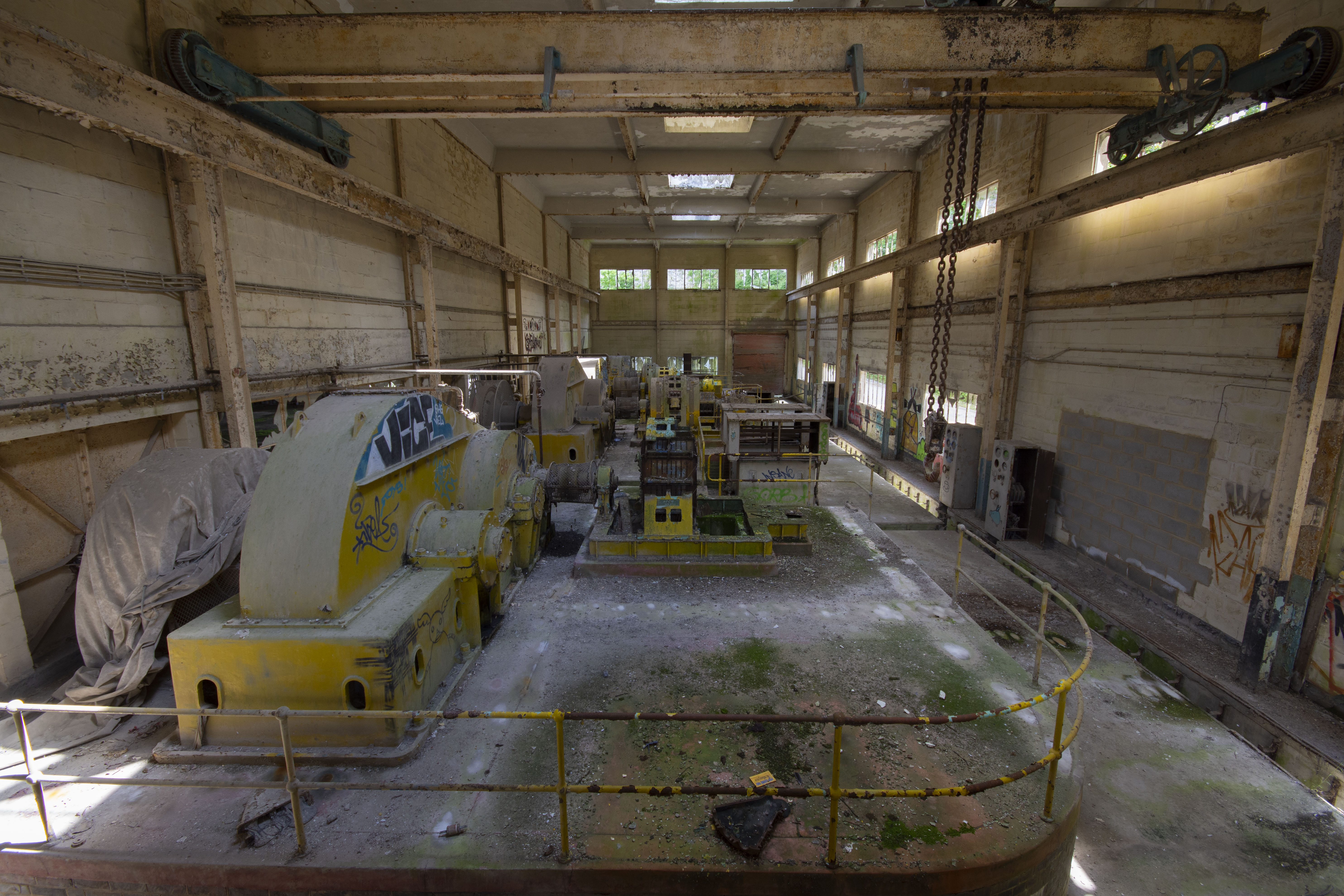
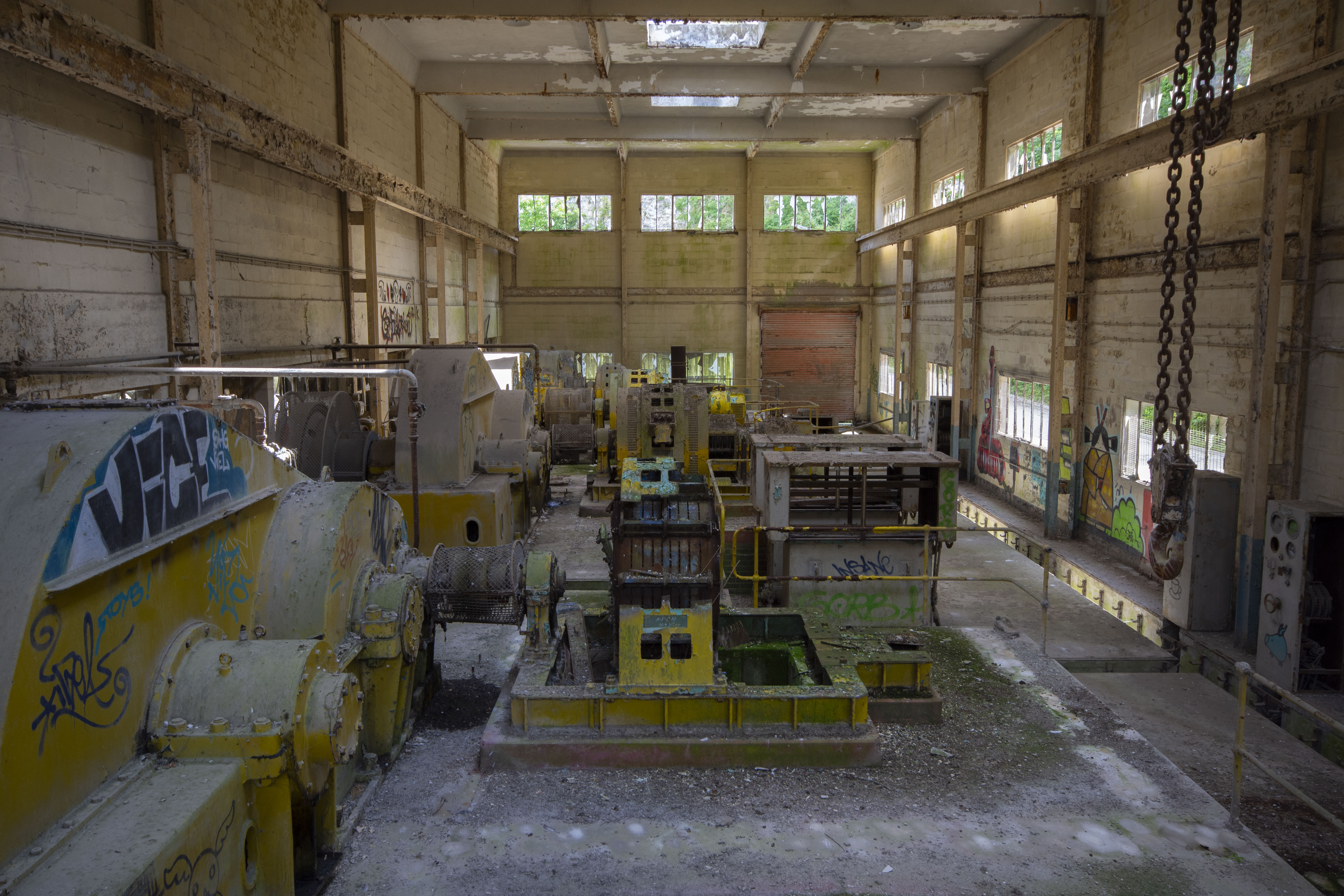
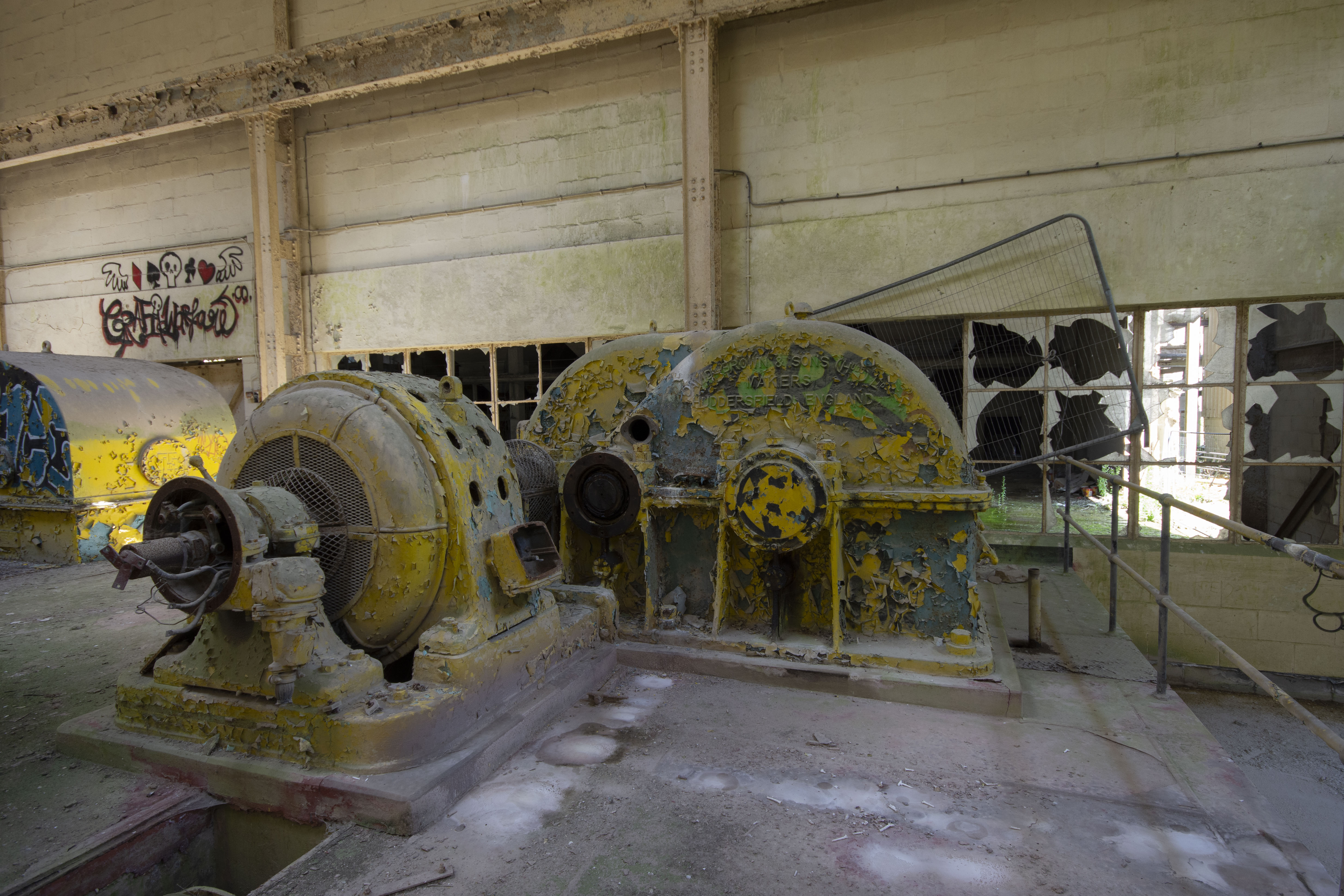
MOTOR HALL
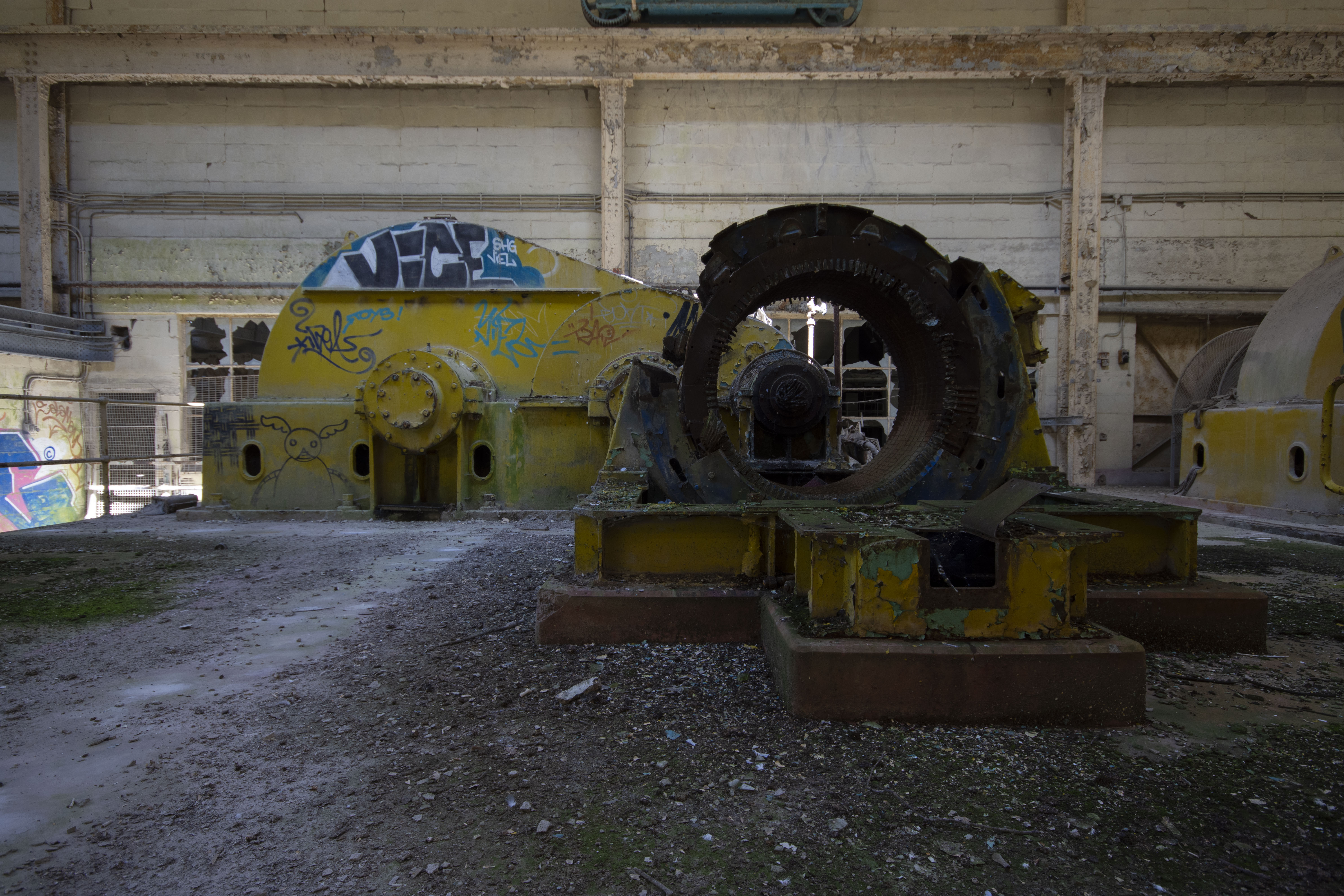
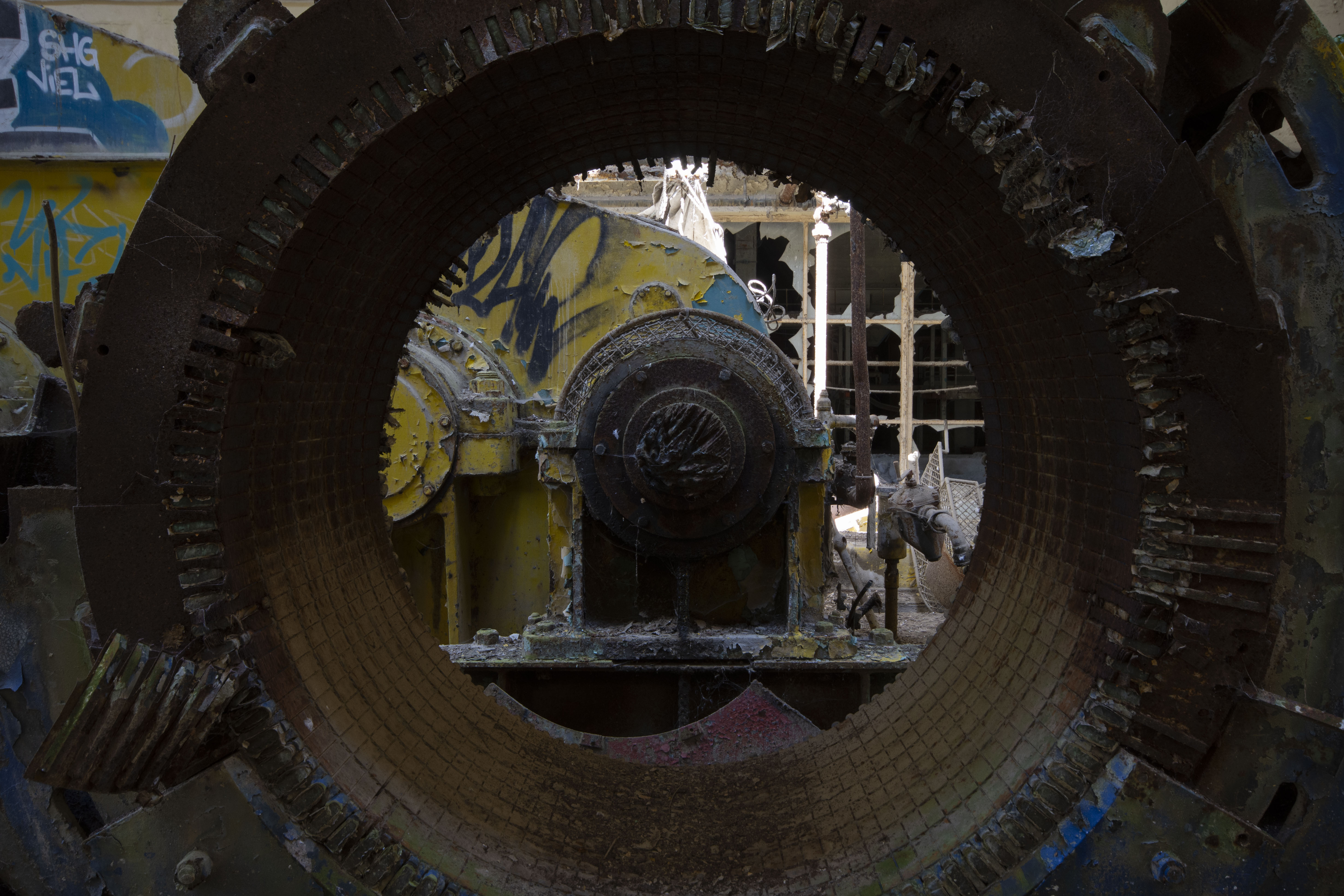
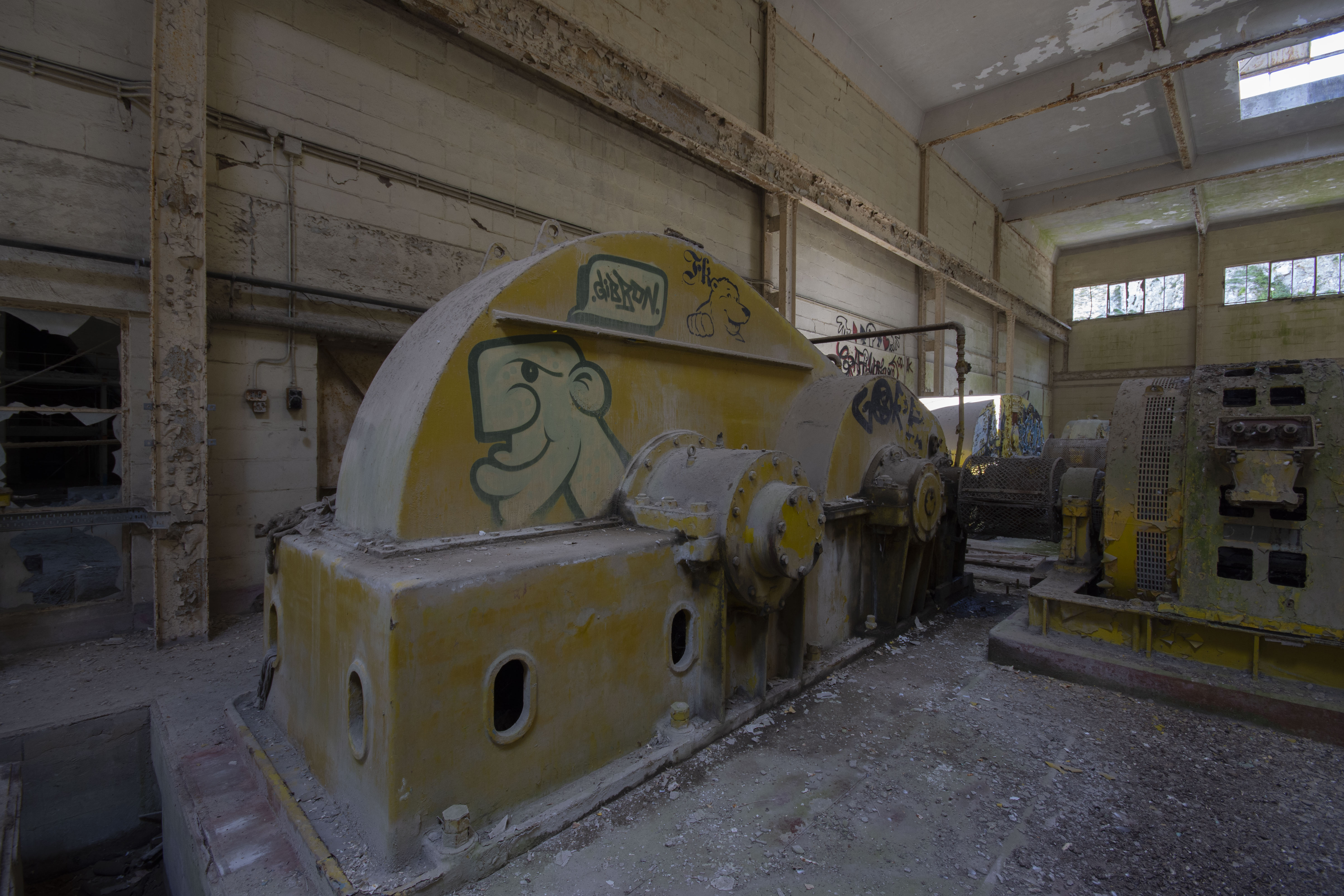
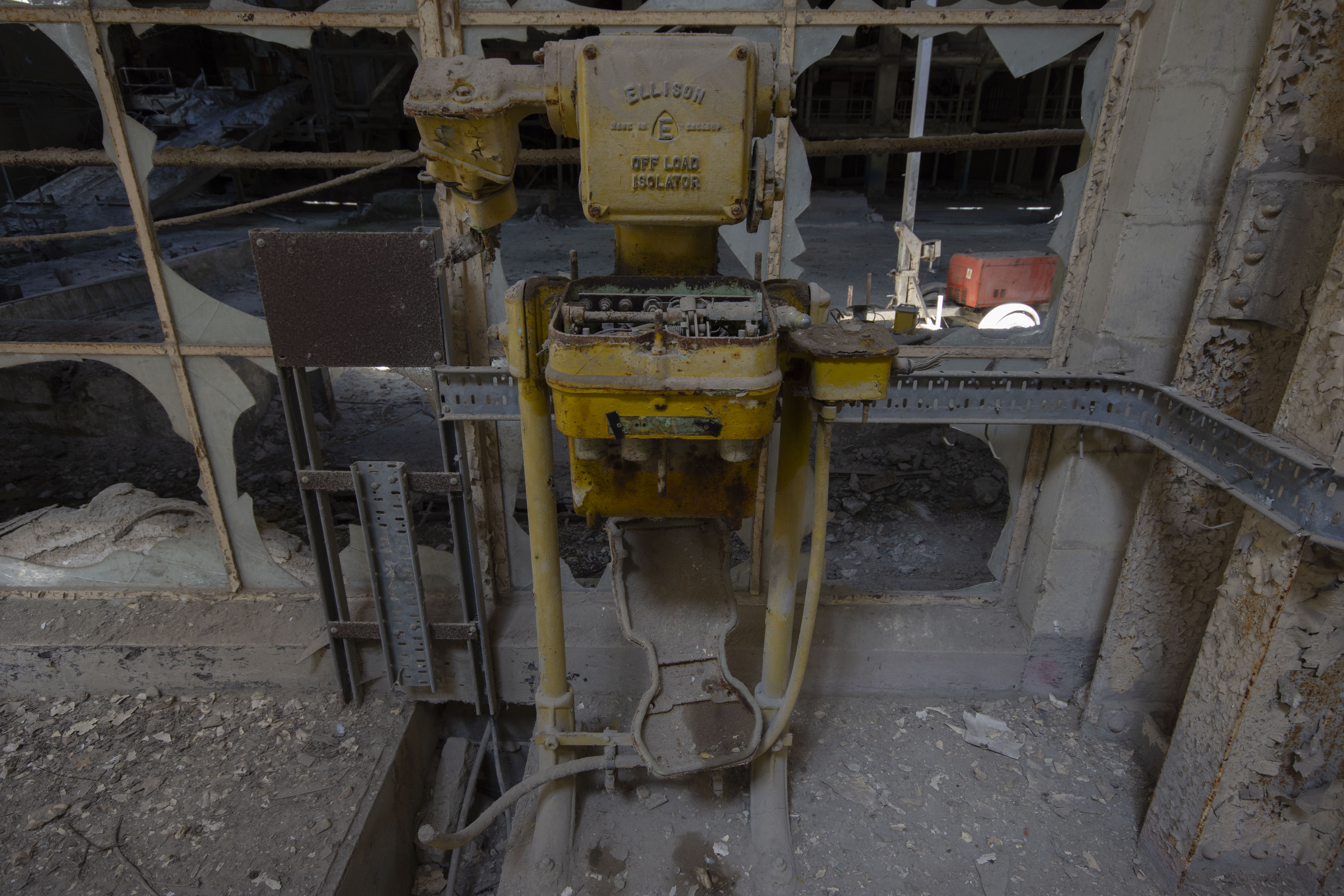
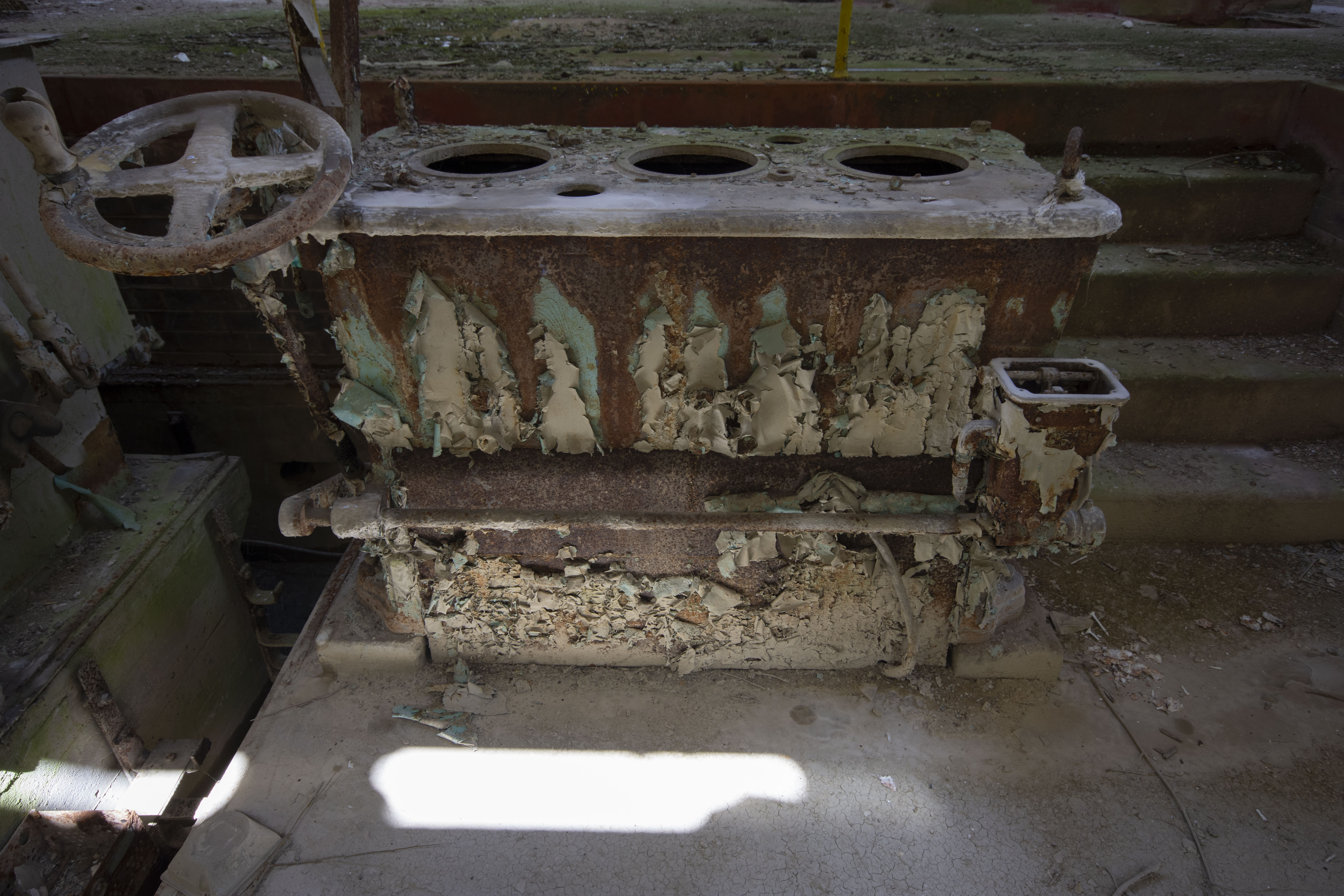
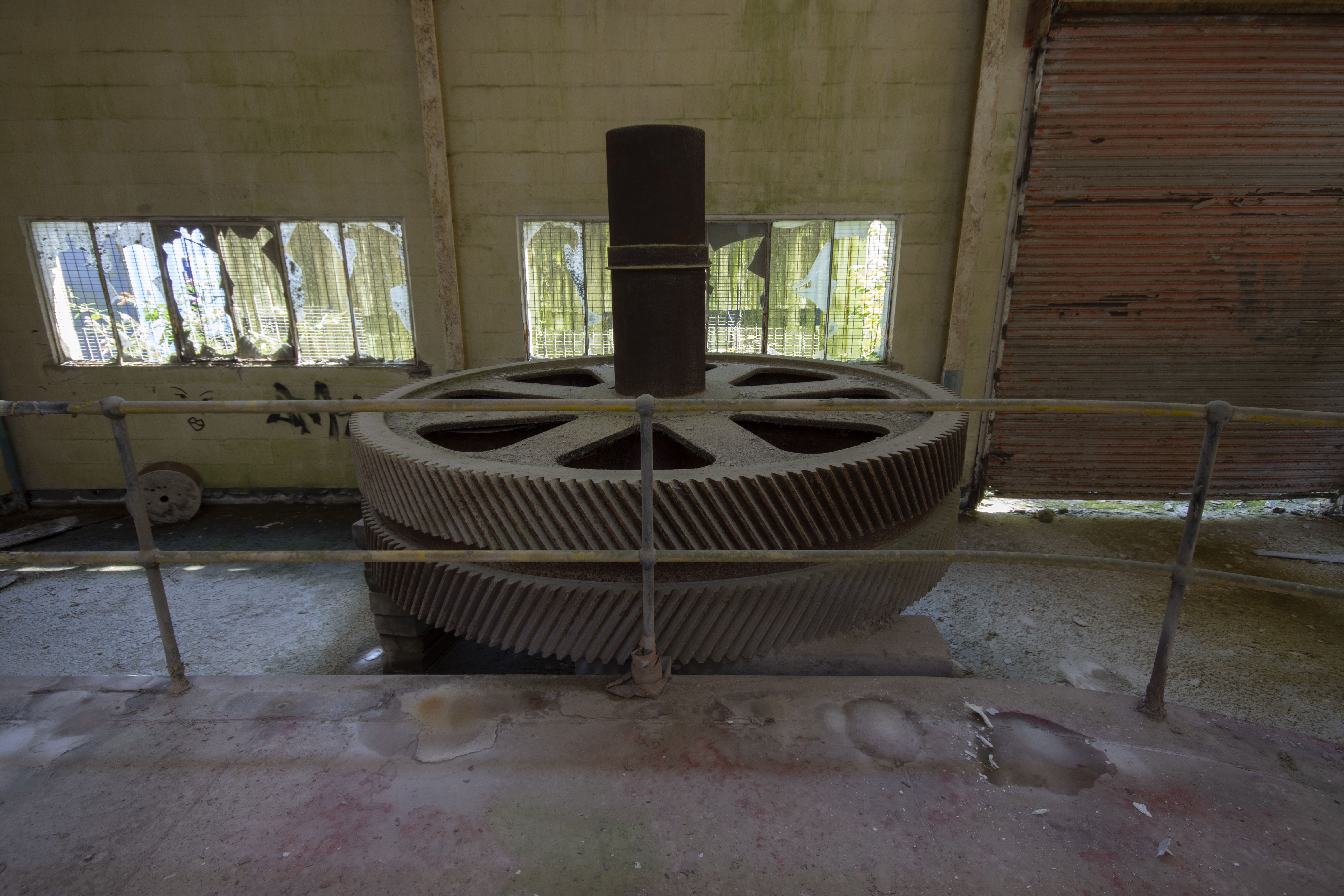
Containing four synchronous motors, this is the second highlight of the site.
STORAGE SILOS
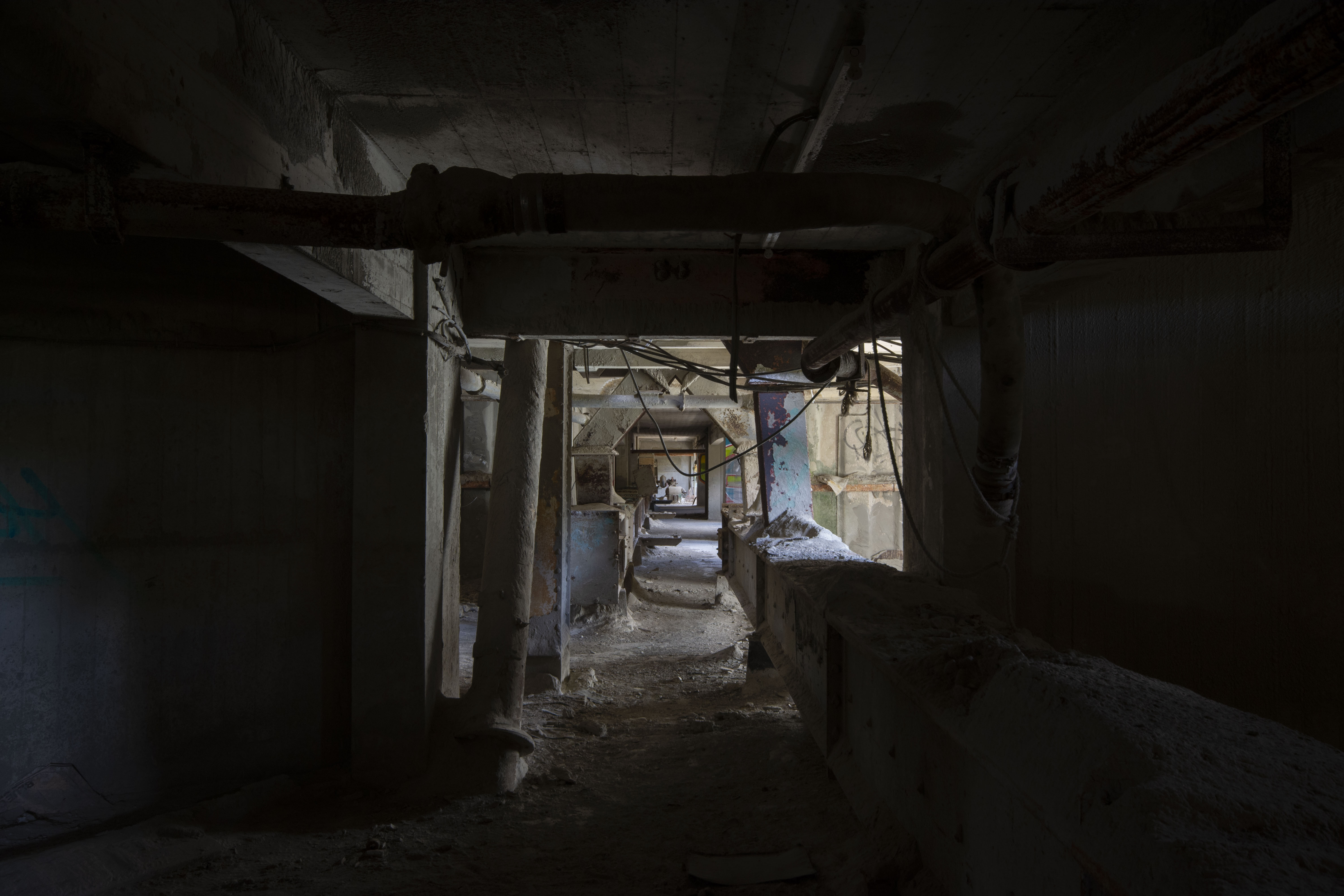
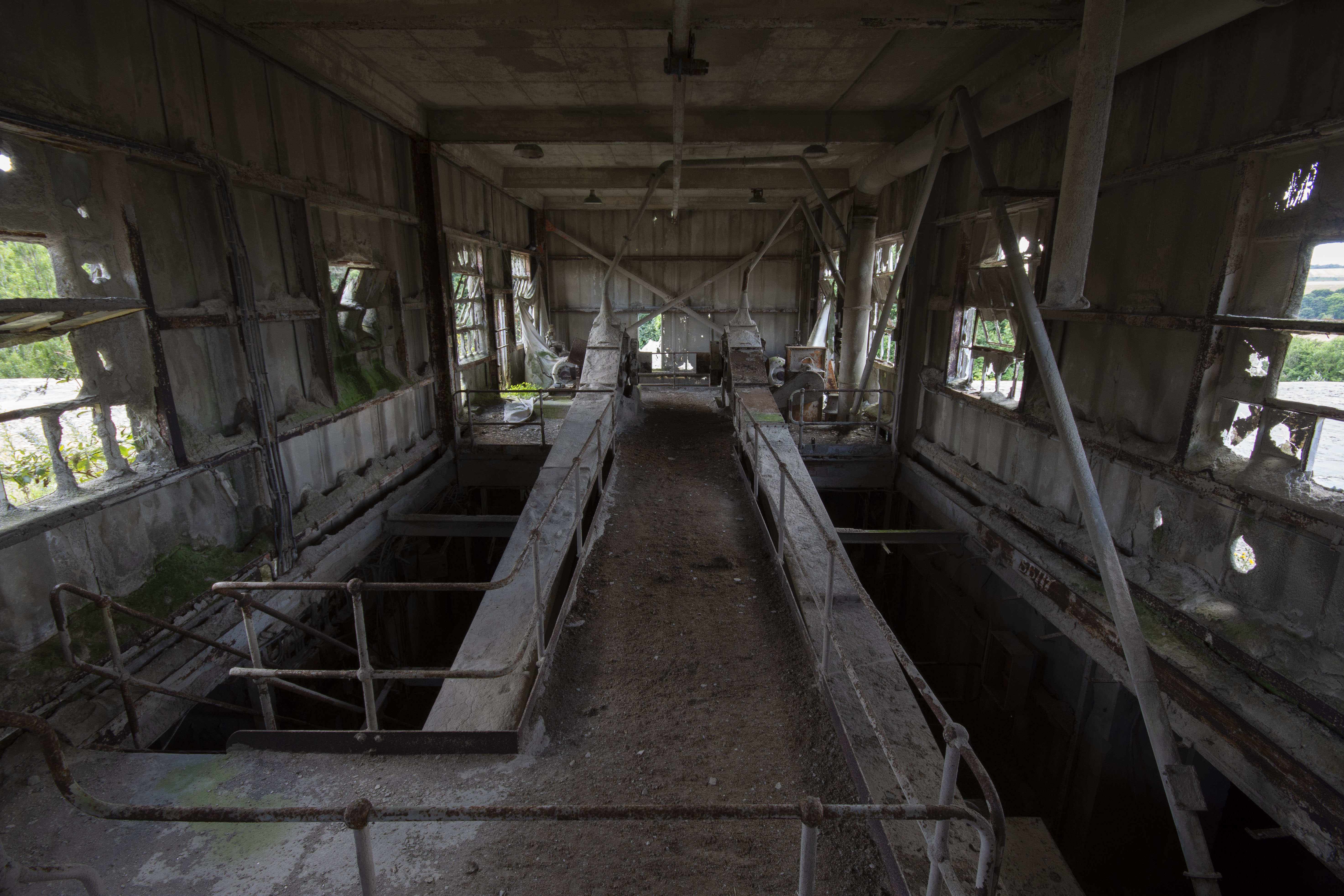
Where the finished cement powder was stored for shipping.
 Shadow Dragon